THE ADVENTURE COLLECTIVE® · Independent discovery and booking for outdoor travel

A compact, high-altitude hike on the Stok Kangri approach, the Gyamtsa–Phyang trek packs panoramic passes and village culture into a single day. Ideal for travelers short on time who want an authentic Ladakhi foothill walk with vehicle transfer back to Leh.
A compact, high-altitude hike on the Stok Kangri approach, the Gyamtsa–Phyang trek packs panoramic passes and village culture into a single day. Ideal for travelers short on time who want an authentic Ladakhi foothill walk with vehicle transfer back to Leh.
You step out of Leh's thin-air morning into a landscape that demands attention: a high valley opening toward a pale pass, wind moving like a thoughtful animal across scree and scrub. The trek from Gyamtsa (3,900 m) rises steadily, folding you into the Stok Kangri base route corridor as you climb toward Gyamtsa La.
Verified experiences and guided adventures in the surrounding area.
Operated by Ladakh Backpackers · Leh, Ladakh
You step out of Leh's thin-air morning into a landscape that demands attention: a high valley opening toward a pale pass, wind moving like a thoughtful animal across scree and scrub. The trek from Gyamtsa (3,900 m) rises steadily, folding you into the Stok Kangri base route corridor as you climb toward Gyamtsa La.
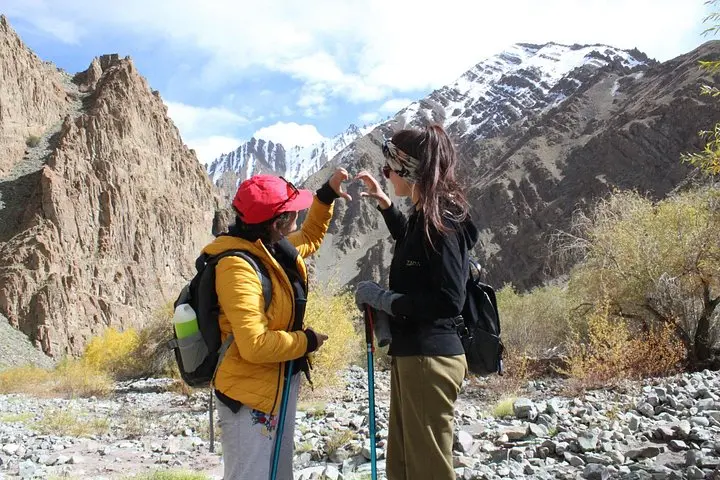
Geology here is immediate—glacially carved ridges, sandstone gullies and angular moraines framing the Indus Valley below. This trail follows old shepherd tracks and sections once used by traders moving between villages; Phyang itself is known for its 17th-century Drikung Kagyu monastery perched on a low ridge overlooking fields and stone houses.
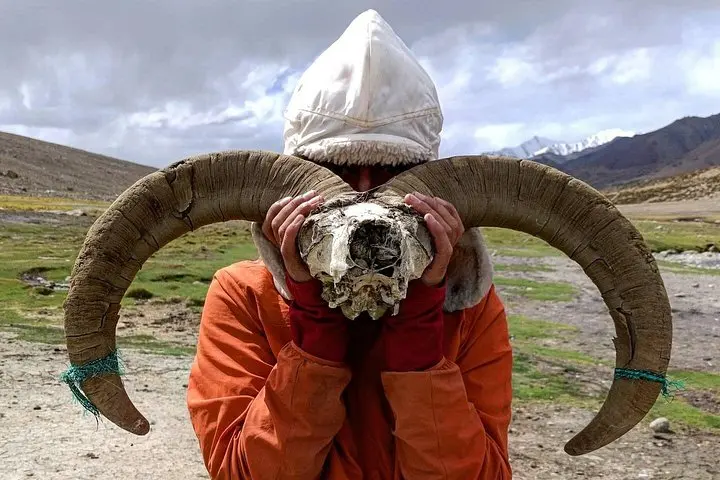
Vegetation is sparse but purposeful: hardy juniper, cushion plants and seasonal wildflowers that paint the slope in short-lived color. Wildlife watches with distance—Himalayan marmots whistle warnings while blue sheep may appear on distant cliffs. The route gives sweeping views of the Ladakh Range and the main Lasermo La approach, making each ascent payoff immediate and visible.
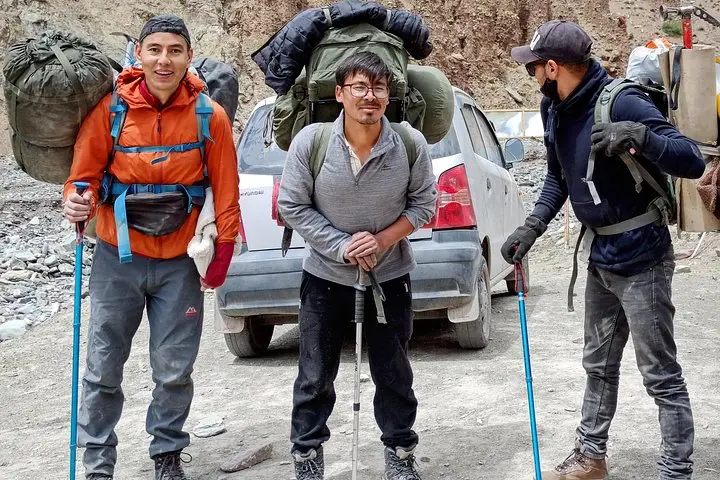
Practical edge: the walk is moderate but begins high—expect 2–3 hours of uphill to the pass, then a gradual descent to Phyang. Carry layered insulation, sun protection, at least 2–3 liters of water and a packed lunch; the operator provides walking sticks and a guide, and transport back to Leh is included. Acclimatize in Leh for a day or two before attempting to reduce altitude stress. Weather turns fast—start early, move deliberately, and let the valley set your pace.
Expect 2–3 hours of steady ascent from Gyamtsa with sections of loose rock; overall the day is rated moderate.
Yes—spend at least one night in Leh and avoid heavy exertion on arrival day to lower altitude-sickness risk.
Yes—vehicles meet the group in Phyang and return you to Leh as part of the tour inclusions.
Late May to September is ideal; winters are cold with deep snow and limited access.
Ladakh Backpackers operates guided outdoor trips and adventures with an emphasis on safety, stewardship, and memorable experiences.
You step out of Leh's thin-air morning into a landscape that demands attention: a high valley opening toward a pale pass, wind moving like a thoughtful animal across scree and scrub. The trek from Gyamtsa (3,900 m) rises steadily, folding you into the Stok Kangri base route corridor as you climb toward Gyamtsa La.
You step out of Leh's thin-air morning into a landscape that demands attention: a high valley opening toward a pale pass, wind moving like a thoughtful animal across scree and scrub. The trek from Gyamtsa (3,900 m) rises steadily, folding you into the Stok Kangri base route corridor as you climb toward Gyamtsa La.
Geology here is immediate—glacially carved ridges, sandstone gullies and angular moraines framing the Indus Valley below. This trail follows old shepherd tracks and sections once used by traders moving between villages; Phyang itself is known for its 17th-century Drikung Kagyu monastery perched on a low ridge overlooking fields and stone houses.
Vegetation is sparse but purposeful: hardy juniper, cushion plants and seasonal wildflowers that paint the slope in short-lived color. Wildlife watches with distance—Himalayan marmots whistle warnings while blue sheep may appear on distant cliffs. The route gives sweeping views of the Ladakh Range and the main Lasermo La approach, making each ascent payoff immediate and visible.
Practical edge: the walk is moderate but begins high—expect 2–3 hours of uphill to the pass, then a gradual descent to Phyang. Carry layered insulation, sun protection, at least 2–3 liters of water and a packed lunch; the operator provides walking sticks and a guide, and transport back to Leh is included. Acclimatize in Leh for a day or two before attempting to reduce altitude stress. Weather turns fast—start early, move deliberately, and let the valley set your pace.