THE ADVENTURE COLLECTIVE® · Independent discovery and booking for outdoor travel

Walk through a capital of an ancient Korean kingdom on an 8-hour tour that links Bulguksa Temple, Seokguram Grotto and royal tombs. This guided day trip pairs UNESCO sites with local context and includes lunch and entry fees.
Walk through a capital of an ancient Korean kingdom on an 8-hour tour that links Bulguksa Temple, Seokguram Grotto and royal tombs. This guided day trip pairs UNESCO sites with local context and includes lunch and entry fees.
Morning mist lifts off stone courtyards as the minivan threads country lanes toward Tohamsan. By mid-morning you stand before Bulguksa’s stepped terraces, where carved pagodas and bridgeways offer discipline and grace in equal measure. The mountain exhales around Seokguram, and the grotto’s granite figures meet the light with a quiet, careful gaze.
Verified experiences and guided adventures in the surrounding area.
Operated by Busan Tourism Center · Gyeongju, North Gyeongsang (Gyeongsangbuk-do)
Morning mist lifts off stone courtyards as the minivan threads country lanes toward Tohamsan. By mid-morning you stand before Bulguksa’s stepped terraces, where carved pagodas and bridgeways offer discipline and grace in equal measure. The mountain exhales around Seokguram, and the grotto’s granite figures meet the light with a quiet, careful gaze.
Gyeongju was the Silla capital for nearly a millennium; its burial mounds, observatory and palace ponds map a civilization that organized landscape and ritual with precision. Cheomseongdae, Asia’s oldest surviving observatory, still marks seasonal rhythms, while Wolji (formerly Anapji) reflects royal tastes in garden engineering. The geology here is dominated by granite ridges and low volcanic outcrops that guided temple placement and stone craftsmanship.
Culturally, the day is a study in Buddhist patronage and aristocratic display: Dabotap and Seokgatap pagodas, the golden images at Bulguksa and the stone-carved Buddhas inside Seokguram tell of skilled masons and a court that moved stone as narrative.
Practical notes: expect an 8-hour itinerary with mostly short walks on paved or packed-earth paths and several flights of stone steps to Seokguram. The tour includes entrance fees, lunch and round-trip transport; it’s rated easy for fitness but requires steady footing on temple steps. Wear sturdy shoes, sun protection and a light layer for breezy ridge tops. Respect temple etiquette — quiet voices and modest dress — and allot time for photography and quiet observation between scheduled stops.
Yes—round-trip transport by air-conditioned minivan is included, with hotel pickup and drop-off where offered.
All entrance fees and the included lunch are part of the tour price; a vegetarian option is available if requested at booking.
The tour involves mostly short walks across temple grounds and a moderate climb of stone steps to Seokguram; no long-distance hiking is required.
Children are permitted but must be accompanied by an adult; the itinerary is family-friendly though some sites have stairs and limited stroller access.
Busan Tourism Center operates guided outdoor trips and adventures with an emphasis on safety, stewardship, and memorable experiences.
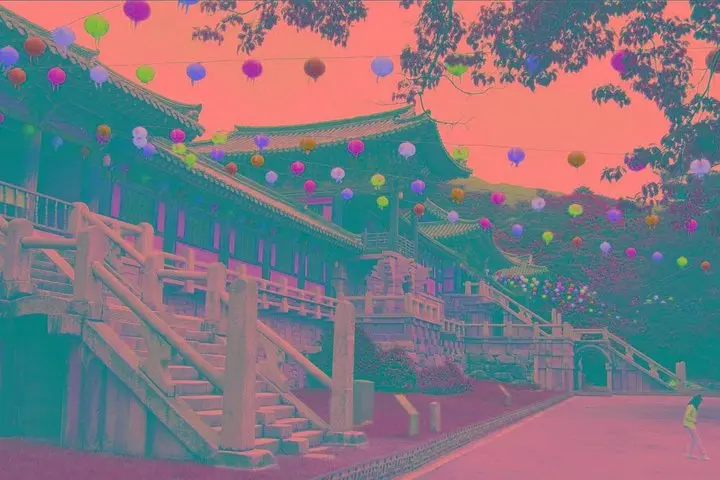
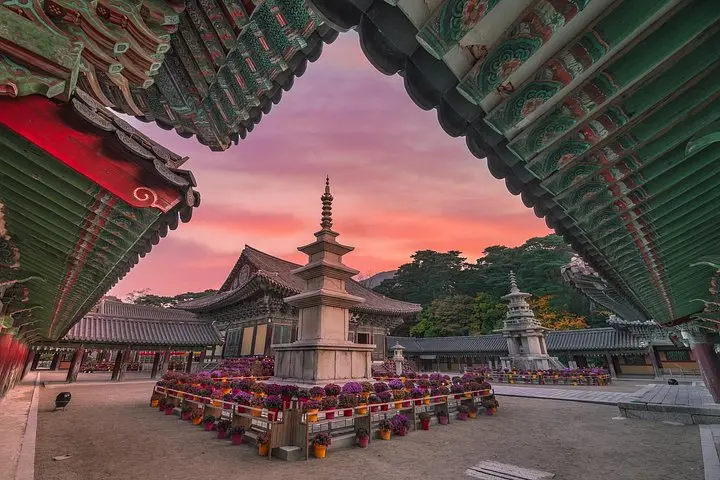
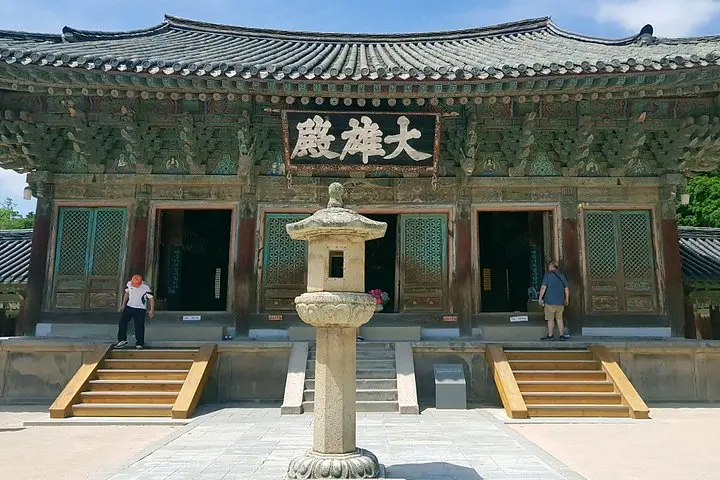
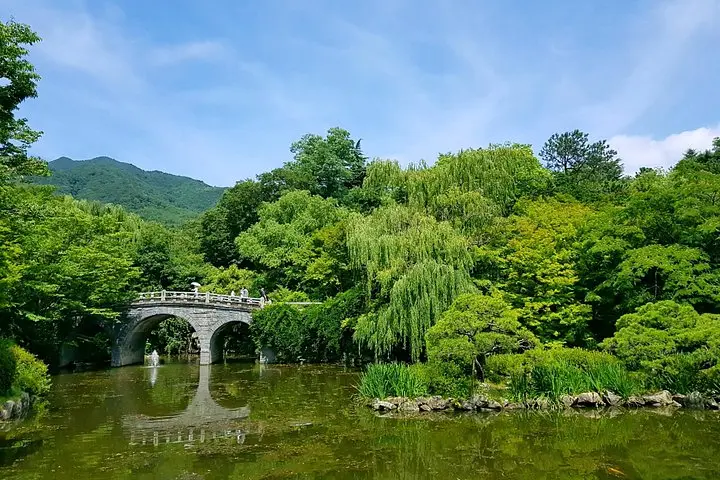
Morning mist lifts off stone courtyards as the minivan threads country lanes toward Tohamsan. By mid-morning you stand before Bulguksa’s stepped terraces, where carved pagodas and bridgeways offer discipline and grace in equal measure. The mountain exhales around Seokguram, and the grotto’s granite figures meet the light with a quiet, careful gaze.
Morning mist lifts off stone courtyards as the minivan threads country lanes toward Tohamsan. By mid-morning you stand before Bulguksa’s stepped terraces, where carved pagodas and bridgeways offer discipline and grace in equal measure. The mountain exhales around Seokguram, and the grotto’s granite figures meet the light with a quiet, careful gaze.
Gyeongju was the Silla capital for nearly a millennium; its burial mounds, observatory and palace ponds map a civilization that organized landscape and ritual with precision. Cheomseongdae, Asia’s oldest surviving observatory, still marks seasonal rhythms, while Wolji (formerly Anapji) reflects royal tastes in garden engineering. The geology here is dominated by granite ridges and low volcanic outcrops that guided temple placement and stone craftsmanship.
Culturally, the day is a study in Buddhist patronage and aristocratic display: Dabotap and Seokgatap pagodas, the golden images at Bulguksa and the stone-carved Buddhas inside Seokguram tell of skilled masons and a court that moved stone as narrative.
Practical notes: expect an 8-hour itinerary with mostly short walks on paved or packed-earth paths and several flights of stone steps to Seokguram. The tour includes entrance fees, lunch and round-trip transport; it’s rated easy for fitness but requires steady footing on temple steps. Wear sturdy shoes, sun protection and a light layer for breezy ridge tops. Respect temple etiquette — quiet voices and modest dress — and allot time for photography and quiet observation between scheduled stops.