THE ADVENTURE COLLECTIVE® · Independent discovery and booking for outdoor travel

Walk Gyeongju’s ancient tombs with a fifth-generation local who links excavation finds to family memory. This 90-minute tour blends archaeology, local lore and close-up views of Silla-era discoveries.
Walk Gyeongju’s ancient tombs with a fifth-generation local who links excavation finds to family memory. This 90-minute tour blends archaeology, local lore and close-up views of Silla-era discoveries.
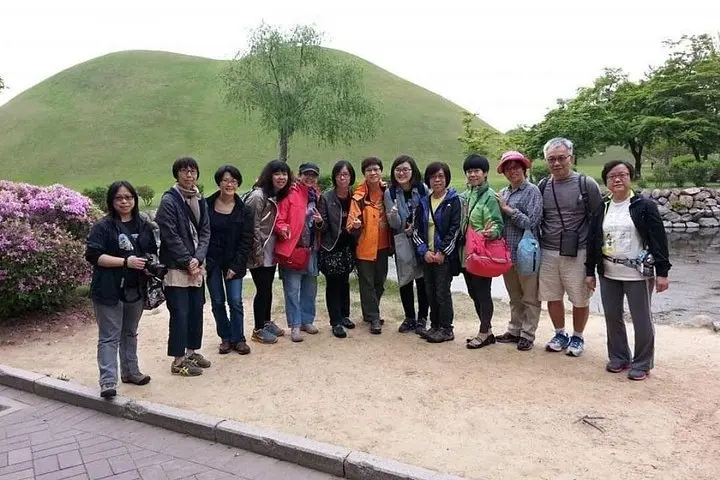
You step off the quiet street into a landscape where earth rises in low, grassy domes and centuries-old trees shade narrow paths. The guide—born and raised here—moves easily between excavation tales and the small details that give the tumuli life: where pottery changed hands, where a gold crown was first unearthed, how colonial-era digs reshaped local memory.
Verified experiences and guided adventures in the surrounding area.
Operated by Walking Tours Gyeongju · Gyeongju, North Gyeongsang
You step off the quiet street into a landscape where earth rises in low, grassy domes and centuries-old trees shade narrow paths. The guide—born and raised here—moves easily between excavation tales and the small details that give the tumuli life: where pottery changed hands, where a gold crown was first unearthed, how colonial-era digs reshaped local memory.
Gyeongju was the heart of the Silla Kingdom (57 BCE–935 CE), and much of its history is visible in the burial mounds, stone pagodas and scattered excavation sites. The city sits on older marine and river terraces, which preserved these low hills as tombs rather than farmland. Cultural threads—Buddhist temples, royal funerary practices and early archaeological work during the 20th century—surface naturally on a short walking route that pairs tangible finds with human stories.
Expect close-up views of excavation displays, a stop at a large tumulus crowned by trees, and anecdotes about the Silla gold crown and bells. The pace is gentle but focused: short walks between interpretive stops, each built around a single discovery or local memory.
Practical guidance: wear sturdy walking shoes and bring water; paths are uneven and may be grassy or paved. The tour is roughly 90 minutes and suits most fitness levels, but bring a light jacket in shoulder seasons and sun protection in summer. Confirm meeting point and language at booking, and respect signs—these mounds are protected archaeological features.
This walk pairs archaeology and neighborhood-level culture—ideal for travelers who want history grounded in place rather than museum distance.
The tour runs approximately 90 minutes and includes several short stops at excavation sites and mounds.
Admission fees cited in the listing are included; confirm exact inclusions on your booking confirmation.
The listing notes wheelchair-accessible options, but some grass or uneven areas may be challenging—contact the operator to confirm accessibility for your needs.
Language options can vary—confirm the guide language at booking so you have the appropriate interpretation for the tour.
Walking Tours Gyeongju operates guided outdoor trips and adventures with an emphasis on safety, stewardship, and memorable experiences.

You step off the quiet street into a landscape where earth rises in low, grassy domes and centuries-old trees shade narrow paths. The guide—born and raised here—moves easily between excavation tales and the small details that give the tumuli life: where pottery changed hands, where a gold crown was first unearthed, how colonial-era digs reshaped local memory.
You step off the quiet street into a landscape where earth rises in low, grassy domes and centuries-old trees shade narrow paths. The guide—born and raised here—moves easily between excavation tales and the small details that give the tumuli life: where pottery changed hands, where a gold crown was first unearthed, how colonial-era digs reshaped local memory.
Gyeongju was the heart of the Silla Kingdom (57 BCE–935 CE), and much of its history is visible in the burial mounds, stone pagodas and scattered excavation sites. The city sits on older marine and river terraces, which preserved these low hills as tombs rather than farmland. Cultural threads—Buddhist temples, royal funerary practices and early archaeological work during the 20th century—surface naturally on a short walking route that pairs tangible finds with human stories.
Expect close-up views of excavation displays, a stop at a large tumulus crowned by trees, and anecdotes about the Silla gold crown and bells. The pace is gentle but focused: short walks between interpretive stops, each built around a single discovery or local memory.
Practical guidance: wear sturdy walking shoes and bring water; paths are uneven and may be grassy or paved. The tour is roughly 90 minutes and suits most fitness levels, but bring a light jacket in shoulder seasons and sun protection in summer. Confirm meeting point and language at booking, and respect signs—these mounds are protected archaeological features.
This walk pairs archaeology and neighborhood-level culture—ideal for travelers who want history grounded in place rather than museum distance.