THE ADVENTURE COLLECTIVE® · Independent discovery and booking for outdoor travel

Three days on the Ha Giang Loop deliver towering karst ridges, the vertigo of Ma Pi Leng Pass, and intimate homestay nights with Hmong and Dao communities. Expect long drives, short treks, and vivid cultural encounters.
Three days on the Ha Giang Loop deliver towering karst ridges, the vertigo of Ma Pi Leng Pass, and intimate homestay nights with Hmong and Dao communities. Expect long drives, short treks, and vivid cultural encounters.
Dawn breaks over a ribbon of road as the sleeper bus unwinds from Hanoi into highlands that seem to be shaped by wind itself. By mid-morning on day two you crest Ma Pi Leng, where cliffs fall away and the Nho Que River dares you to follow its green ribbon through a canyon. The Sky Path offers a raw, vertical panorama; villages cling to terraces like hand-stitched patches on a jacket.
Verified experiences and guided adventures in the surrounding area.
Operated by Chat Tourist · Ha Giang, Ha Giang Province
Dawn breaks over a ribbon of road as the sleeper bus unwinds from Hanoi into highlands that seem to be shaped by wind itself. By mid-morning on day two you crest Ma Pi Leng, where cliffs fall away and the Nho Que River dares you to follow its green ribbon through a canyon. The Sky Path offers a raw, vertical panorama; villages cling to terraces like hand-stitched patches on a jacket.
The Dong Van Karst Plateau is more than scenic drama — it’s a UNESCO Global Geopark with limestone folded and weathered into jagged towers and fertile pockets where Hmong, Dao, and Tay communities have farmed for centuries. The Hmong King’s Palace at Sa Phin recalls 20th-century local governance and the region’s layered history of trade, migration, and resistance. Culture here is tactile: embroidered textiles, hill-track markets, and homestays where stories and rice wine are shared at low tables.
Practically, the loop is a rhythm of riding, short treks, and village stops. Weather changes fast — sun gives way to wind, then rain — so pack layers, sturdy shoes for the Sky Path, and enough cash for remote villages. Expect long vehicle transfers (overnight sleeper bus), narrow mountain roads, and a moderate fitness requirement for short hikes and getting on/off motorbikes. Respect local customs, keep to marked paths on fragile karst, and carry water and basic first-aid. When the river calls, consider a guided boat trip down Nho Que: the canyon pushes forward, and the landscape rewards those who move deliberately.
Most tours include hotel pickup in Hanoi Old Quarter and an overnight sleeper bus to Ha Giang — confirm your exact pickup point when booking.
The Sky Path is a steep, exposed walking route that requires sure footing but no technical climbing gear; trekking poles can help.
Ma Pi Leng reaches roughly 2,000 meters at its highest viewpoints, where conditions can be windy and cooler than the lowlands.
Homestays are basic but hospitable; expect simple bedding and shared facilities — carriers typically vet hosts for comfort and safety.
Chat Tourist operates guided outdoor trips and adventures with an emphasis on safety, stewardship, and memorable experiences.
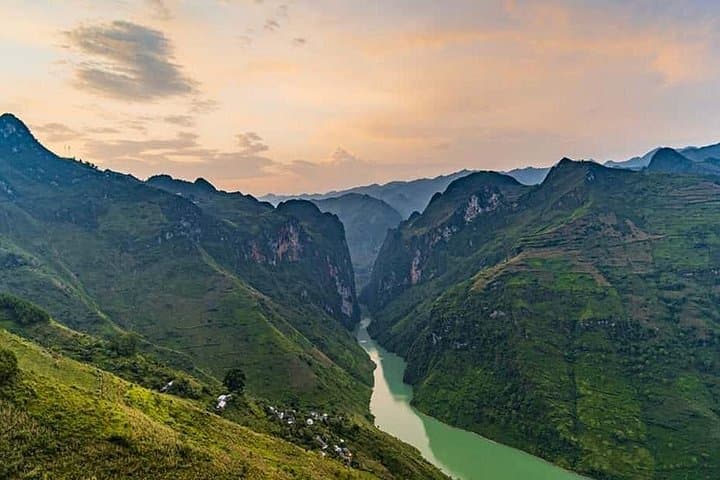
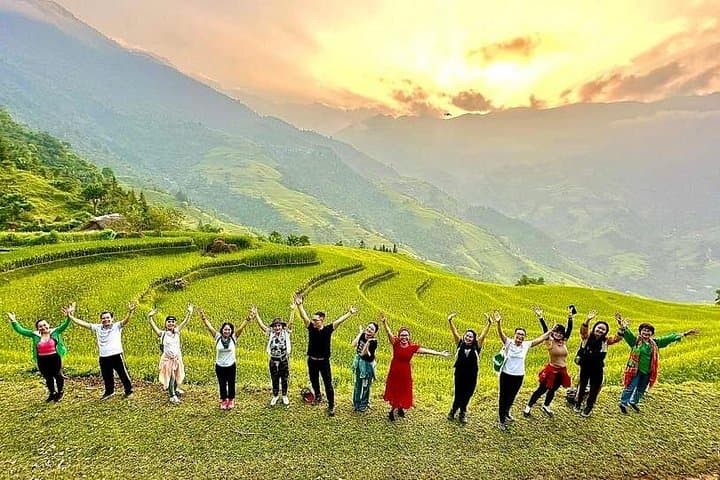


Dawn breaks over a ribbon of road as the sleeper bus unwinds from Hanoi into highlands that seem to be shaped by wind itself. By mid-morning on day two you crest Ma Pi Leng, where cliffs fall away and the Nho Que River dares you to follow its green ribbon through a canyon. The Sky Path offers a raw, vertical panorama; villages cling to terraces like hand-stitched patches on a jacket.
Dawn breaks over a ribbon of road as the sleeper bus unwinds from Hanoi into highlands that seem to be shaped by wind itself. By mid-morning on day two you crest Ma Pi Leng, where cliffs fall away and the Nho Que River dares you to follow its green ribbon through a canyon. The Sky Path offers a raw, vertical panorama; villages cling to terraces like hand-stitched patches on a jacket.
The Dong Van Karst Plateau is more than scenic drama — it’s a UNESCO Global Geopark with limestone folded and weathered into jagged towers and fertile pockets where Hmong, Dao, and Tay communities have farmed for centuries. The Hmong King’s Palace at Sa Phin recalls 20th-century local governance and the region’s layered history of trade, migration, and resistance. Culture here is tactile: embroidered textiles, hill-track markets, and homestays where stories and rice wine are shared at low tables.
Practically, the loop is a rhythm of riding, short treks, and village stops. Weather changes fast — sun gives way to wind, then rain — so pack layers, sturdy shoes for the Sky Path, and enough cash for remote villages. Expect long vehicle transfers (overnight sleeper bus), narrow mountain roads, and a moderate fitness requirement for short hikes and getting on/off motorbikes. Respect local customs, keep to marked paths on fragile karst, and carry water and basic first-aid. When the river calls, consider a guided boat trip down Nho Que: the canyon pushes forward, and the landscape rewards those who move deliberately.