THE ADVENTURE COLLECTIVE® · Independent discovery and booking for outdoor travel

Four days on semi-automatic bikes through the Dong Van Karst Plateau—expect high passes, deep canyon boat trips, and homestay nights with local music. This easy-driving loop balances raw mountain roads with guided logistics for first-time long-distance riders.
Four days on semi-automatic bikes through the Dong Van Karst Plateau—expect high passes, deep canyon boat trips, and homestay nights with local music. This easy-driving loop balances raw mountain roads with guided logistics for first-time long-distance riders.
Morning light slices through limestone teeth as you push away from Ha Giang town on a semi-automatic motorbike, the valley air pulling at your jacket. Over four days the road flips from rice terraces to raw karst ridgelines; Ma Pi Leng and Mapileng passes unfurl like chapters, and the Nho Que River dares you to look down into Tu San Canyon.
Verified experiences and guided adventures in the surrounding area.
Operated by Vietnam Travel Top · Ha Giang, Ha Giang
Morning light slices through limestone teeth as you push away from Ha Giang town on a semi-automatic motorbike, the valley air pulling at your jacket. Over four days the road flips from rice terraces to raw karst ridgelines; Ma Pi Leng and Mapileng passes unfurl like chapters, and the Nho Que River dares you to look down into Tu San Canyon.
This loop threads through the Dong Van Karst Plateau Geopark, a UNESCO-recognized landscape carved from ancient limestone and uplifted by the collision of the Indochina and South China blocks. Local culture is visible at every bend: Hmong and Tay villages, the stone houses of the Mong (Vuong) family and roadside corn-wine stalls where Tay families sing. Lung Khuy Cave and Lung Cu Flag Tower punctuate geology with history—places that speak to borderland life and old trade routes.
Expect daily rides of 3–6 hours on mixed sealed and rough mountain roads; elevation fluctuates between roughly 300–1,600 m and winds can come suddenly. Accommodations are homestays with shared facilities and local meals; guides handle permits and most logistics. Bring a well-fitted helmet, layered clothing for cold mornings, and a compact repair kit; hydration and sunscreen are essential. Riders get short training on the semi-automatic bikes before departure; prior basic riding experience is strongly recommended.
Practical timing: start in Hanoi early, reserve time for weather delays, and budget for cash-only purchases in villages. The loop rewards patient riders—curves, cliffs and coffee stops make for one of Vietnam’s most concentrated motorbike adventures.
Local rules vary; guide-provided semi-automatic bikes and a local permit are included, but carry an international or national motorcycle license if you plan to ride independently.
Yes—this is a multi-day loop with daily riding between homestays, though legs are segmented with sightseeing stops and shorter options if needed.
Homestays are basic but clean, offering shared facilities and local meals—expect cultural hospitality rather than hotel amenities.
Operators may alter or cancel sections in heavy rain or landslide risk; cancellation policies apply and safety takes priority.
Vietnam Travel Top operates guided outdoor trips and adventures with an emphasis on safety, stewardship, and memorable experiences.


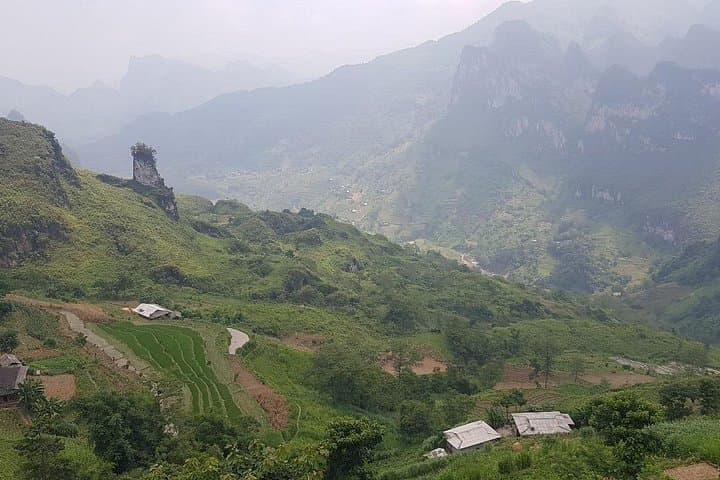
Morning light slices through limestone teeth as you push away from Ha Giang town on a semi-automatic motorbike, the valley air pulling at your jacket. Over four days the road flips from rice terraces to raw karst ridgelines; Ma Pi Leng and Mapileng passes unfurl like chapters, and the Nho Que River dares you to look down into Tu San Canyon.
Morning light slices through limestone teeth as you push away from Ha Giang town on a semi-automatic motorbike, the valley air pulling at your jacket. Over four days the road flips from rice terraces to raw karst ridgelines; Ma Pi Leng and Mapileng passes unfurl like chapters, and the Nho Que River dares you to look down into Tu San Canyon.
This loop threads through the Dong Van Karst Plateau Geopark, a UNESCO-recognized landscape carved from ancient limestone and uplifted by the collision of the Indochina and South China blocks. Local culture is visible at every bend: Hmong and Tay villages, the stone houses of the Mong (Vuong) family and roadside corn-wine stalls where Tay families sing. Lung Khuy Cave and Lung Cu Flag Tower punctuate geology with history—places that speak to borderland life and old trade routes.
Expect daily rides of 3–6 hours on mixed sealed and rough mountain roads; elevation fluctuates between roughly 300–1,600 m and winds can come suddenly. Accommodations are homestays with shared facilities and local meals; guides handle permits and most logistics. Bring a well-fitted helmet, layered clothing for cold mornings, and a compact repair kit; hydration and sunscreen are essential. Riders get short training on the semi-automatic bikes before departure; prior basic riding experience is strongly recommended.
Practical timing: start in Hanoi early, reserve time for weather delays, and budget for cash-only purchases in villages. The loop rewards patient riders—curves, cliffs and coffee stops make for one of Vietnam’s most concentrated motorbike adventures.