THE ADVENTURE COLLECTIVE® · Independent discovery and booking for outdoor travel

This private three‑day loop from Hanoi packs the Dong Van Karst Plateau’s highest drama into a compact itinerary: Ma Pi Leng’s cliff roads, the Nho Que gorge, and homestays with H’mong and Tay families. Expect long drives, stellar photo ops, and intimate cultural encounters.
This private three‑day loop from Hanoi packs the Dong Van Karst Plateau’s highest drama into a compact itinerary: Ma Pi Leng’s cliff roads, the Nho Que gorge, and homestays with H’mong and Tay families. Expect long drives, stellar photo ops, and intimate cultural encounters.
You step out of the limousine onto a ridge road and the mountains push the sky aside — limestone spires and folded ridgelines drop into the Nho Que gorge like pages torn from the earth.
Verified experiences and guided adventures in the surrounding area.
Operated by LOCAL TOURS VIETNAM · Ha Giang Town, Ha Giang Province
You step out of the limousine onto a ridge road and the mountains push the sky aside — limestone spires and folded ridgelines drop into the Nho Que gorge like pages torn from the earth.
Over three days this private, chauffeured loop moves from Hanoi’s flat rice plain into the high, cool Dong Van Karst Plateau. The region’s human history reads in stone and stitch: H’mong, Dao and Tay communities carve terraced fields into steep slopes and raise ornate, woven jackets that mark family and valley. Geologically the plateau is old coral reef and limestone, uplifted and carved into pinnacles, plateaux and one of Vietnam’s few UNESCO Global Geoparks.
Key stops include the Quan Ba Twin Mountains (Tam Son), the historic H’mong Palace, the dizzying Ma Pi Leng Pass — a hair-raising overlook at roughly 1,200 m — and the Nho Que River gorge where jade water challenges gravity. Nights are spent in family-run homestays where local food is simple, hearty and based on mountain pork, corn and steamed greens.
Practical guide: expect long road-time — plan on roughly 6–8 hours driving each way from Hanoi (≈300–320 km) with many short scenic stops. Roads are paved but narrow with frequent switchbacks; those prone to motion sickness should plan anti-nausea meds. Dress in layers (temperatures drop on the plateau), bring a rain shell, and carry cash for remote villages. Permits to enter parts of the border region are purchased locally as noted on the itinerary; your guide handles the process. Aim for early mornings and late afternoons for the best light and fewer tour buses. Hydrate, move slowly on steep lookouts, and leave no trace: the karst landscapes are fragile and communities rely on respectful tourism.
Yes—foreign visitors must obtain a local travel permit for parts of Ha Giang; the tour notes a stop at the immigration office and the guide typically handles the paperwork.
The drive is approximately 300–320 km and usually takes 6–8 hours each way, depending on stops and traffic.
Roads are paved but narrow with steep drop‑offs and many switchbacks; experienced drivers handle them, but caution is necessary, especially in rain or fog.
Yes—accommodation is in private rooms and the tour lists ‘physical easy’; however, long drives and rough roads may be tiring for very young children or those with limited mobility.
LOCAL TOURS VIETNAM operates guided outdoor trips and adventures with an emphasis on safety, stewardship, and memorable experiences.

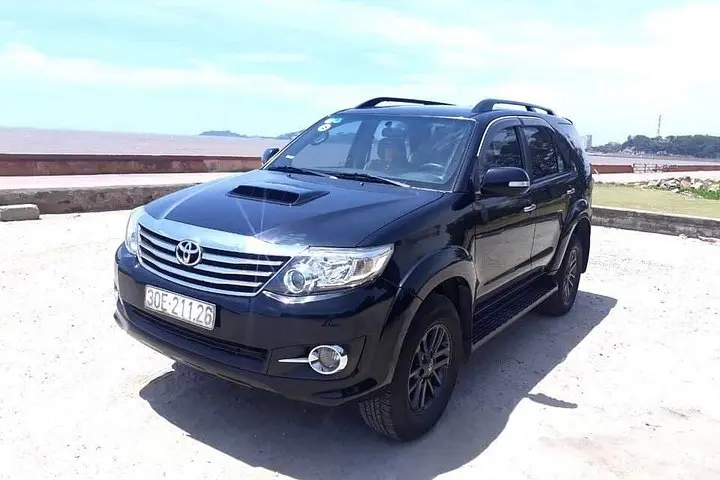


You step out of the limousine onto a ridge road and the mountains push the sky aside — limestone spires and folded ridgelines drop into the Nho Que gorge like pages torn from the earth.
You step out of the limousine onto a ridge road and the mountains push the sky aside — limestone spires and folded ridgelines drop into the Nho Que gorge like pages torn from the earth.
Over three days this private, chauffeured loop moves from Hanoi’s flat rice plain into the high, cool Dong Van Karst Plateau. The region’s human history reads in stone and stitch: H’mong, Dao and Tay communities carve terraced fields into steep slopes and raise ornate, woven jackets that mark family and valley. Geologically the plateau is old coral reef and limestone, uplifted and carved into pinnacles, plateaux and one of Vietnam’s few UNESCO Global Geoparks.
Key stops include the Quan Ba Twin Mountains (Tam Son), the historic H’mong Palace, the dizzying Ma Pi Leng Pass — a hair-raising overlook at roughly 1,200 m — and the Nho Que River gorge where jade water challenges gravity. Nights are spent in family-run homestays where local food is simple, hearty and based on mountain pork, corn and steamed greens.
Practical guide: expect long road-time — plan on roughly 6–8 hours driving each way from Hanoi (≈300–320 km) with many short scenic stops. Roads are paved but narrow with frequent switchbacks; those prone to motion sickness should plan anti-nausea meds. Dress in layers (temperatures drop on the plateau), bring a rain shell, and carry cash for remote villages. Permits to enter parts of the border region are purchased locally as noted on the itinerary; your guide handles the process. Aim for early mornings and late afternoons for the best light and fewer tour buses. Hydrate, move slowly on steep lookouts, and leave no trace: the karst landscapes are fragile and communities rely on respectful tourism.