THE ADVENTURE COLLECTIVE® · Independent discovery and booking for outdoor travel

Three days across the Dong Van Karst Plateau deliver towering limestone ridges, the hairpin drama of Ma Pi Leng Pass and deep river canyons carved by the Nho Que. Expect long drives, cultural homestays and a compact dose of northern Vietnam’s highland life.
Three days across the Dong Van Karst Plateau deliver towering limestone ridges, the hairpin drama of Ma Pi Leng Pass and deep river canyons carved by the Nho Que. Expect long drives, cultural homestays and a compact dose of northern Vietnam’s highland life.
The bus eases out of Hanoi at night and the low hum of tires becomes the first cadence of this trip — you sleep while the mountains near and then, before sunrise, the karst ridgelines slice the horizon.
Verified experiences and guided adventures in the surrounding area.
Operated by Red Gecko Travel · Ha Giang, Ha Giang Province
The bus eases out of Hanoi at night and the low hum of tires becomes the first cadence of this trip — you sleep while the mountains near and then, before sunrise, the karst ridgelines slice the horizon.
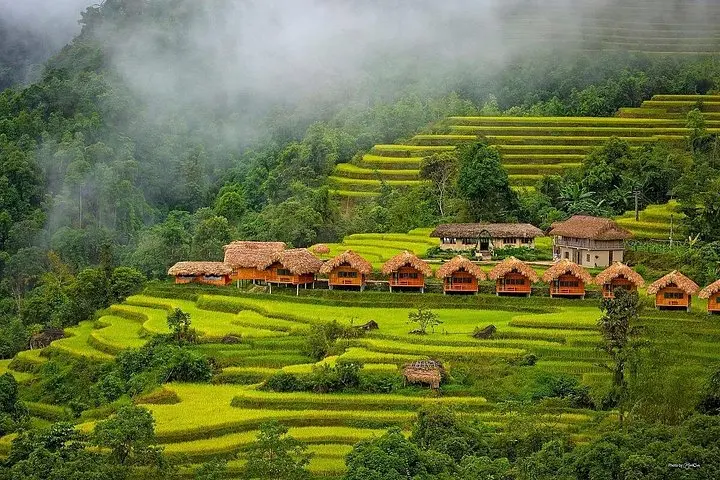
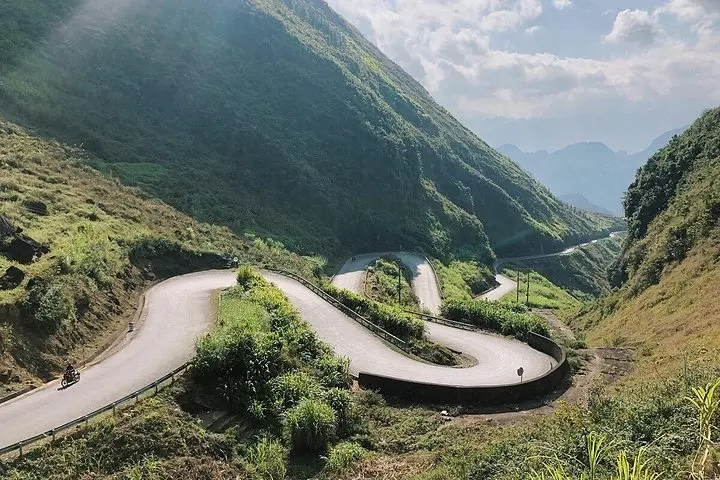
Over three days the route threads through Bac Sum’s 8 km slope, the Quan Ba Heaven Gate at ~1,500m, the 21 km Ma Pi Leng Pass and the Tu San gorge where the Nho Que river cuts a canyon up to 1,500 m deep. Limestone towers and stony plateaus dominate the Dong Van Karst Plateau, a UNESCO-recognized area shaped by ancient marine sediments folded and uplifted over millions of years. Cultural history arrives at every stop: Hmong and Dao villages, the Vuong family chief’s house in Dong Van, Lung Cu Flag Tower marking Vietnam’s northern frontier, and Lung Tam’s brocade workshops preserving centuries-old textile techniques.
Practicalities are straightforward: travel is primarily by shared minibus with one night in a Dong Van guesthouse, two lunches and two dinners included, and a short boat on the Nho Que river through Tu San canyon. Expect long drives with frequent photo and market stops, simple accommodation (shared rooms), and pockets of thin air on the higher passes.
Bring layers for cold mornings, cash for rural markets, and comfortable shoes for village walks. Plan for early starts and variable weather — a lightweight rain shell and sun protection will carry you. This is a route for travelers who want dramatic geology, visible history and close cultural encounters without technical hiking — the land does the hard work of impressing you.
Late spring and fall (March–May, September–November) offer the most stable weather and clearer views; summer brings rain and winter can be cold on the high passes.
Most tours include round-trip bus transfers from Hanoi (overnight buses of ~7–9 hours). Private transfers and self-drive options are also possible if you prefer more flexibility.
Elevations reach around 1,500 m at some passes; most travelers acclimatize quickly, but those sensitive to altitude should move slowly, hydrate and notify the guide if symptoms appear.
A short boat on the Nho Que river through Tu San canyon is included; operators use standard small boats — wear a life jacket and follow crew instructions for safety.
Red Gecko Travel operates guided outdoor trips and adventures with an emphasis on safety, stewardship, and memorable experiences.

The bus eases out of Hanoi at night and the low hum of tires becomes the first cadence of this trip — you sleep while the mountains near and then, before sunrise, the karst ridgelines slice the horizon.
The bus eases out of Hanoi at night and the low hum of tires becomes the first cadence of this trip — you sleep while the mountains near and then, before sunrise, the karst ridgelines slice the horizon.
Over three days the route threads through Bac Sum’s 8 km slope, the Quan Ba Heaven Gate at ~1,500m, the 21 km Ma Pi Leng Pass and the Tu San gorge where the Nho Que river cuts a canyon up to 1,500 m deep. Limestone towers and stony plateaus dominate the Dong Van Karst Plateau, a UNESCO-recognized area shaped by ancient marine sediments folded and uplifted over millions of years. Cultural history arrives at every stop: Hmong and Dao villages, the Vuong family chief’s house in Dong Van, Lung Cu Flag Tower marking Vietnam’s northern frontier, and Lung Tam’s brocade workshops preserving centuries-old textile techniques.
Practicalities are straightforward: travel is primarily by shared minibus with one night in a Dong Van guesthouse, two lunches and two dinners included, and a short boat on the Nho Que river through Tu San canyon. Expect long drives with frequent photo and market stops, simple accommodation (shared rooms), and pockets of thin air on the higher passes.
Bring layers for cold mornings, cash for rural markets, and comfortable shoes for village walks. Plan for early starts and variable weather — a lightweight rain shell and sun protection will carry you. This is a route for travelers who want dramatic geology, visible history and close cultural encounters without technical hiking — the land does the hard work of impressing you.