THE ADVENTURE COLLECTIVE® · Independent discovery and booking for outdoor travel

Three days on the Ha Giang Loop take you across Ma Pi Leng, Tham Ma and Dong Van’s karst plateaus on guided motorbikes and open jeeps. Expect sweeping river gorges, ethnic villages, and homestays — all paced across long, unforgettable riding days.
Three days on the Ha Giang Loop take you across Ma Pi Leng, Tham Ma and Dong Van’s karst plateaus on guided motorbikes and open jeeps. Expect sweeping river gorges, ethnic villages, and homestays — all paced across long, unforgettable riding days.
Morning mist lifts off the terraces as the engine coughs to life — you’re on the back of a comfortable motorbike, fingers wrapped around a plastic helmet, and the road unfurls into limestone teeth and green valleys. The first day threads through Bac Sum and Heaven Gate, where switchbacks shave cliffs into serpent-like ribbons; by dusk you’ll reach Dong Van and a traditional guesthouse for the night.
Verified experiences and guided adventures in the surrounding area.
Operated by Ha Giang Peak Riders · Ha Giang, Ha Giang Province
Morning mist lifts off the terraces as the engine coughs to life — you’re on the back of a comfortable motorbike, fingers wrapped around a plastic helmet, and the road unfurls into limestone teeth and green valleys. The first day threads through Bac Sum and Heaven Gate, where switchbacks shave cliffs into serpent-like ribbons; by dusk you’ll reach Dong Van and a traditional guesthouse for the night.
This loop runs through the Dong Van Karst Plateau, a landscape carved from Devonian limestone and shaped by millennia of erosion. Hmong and Dao communities have farmed steep slopes here for generations; the Hmong King Palace (built in 1902) and market towns still hold older rhythms of life. Geologically dramatic passes — Ma Pi Leng and Tham Ma — give sudden, raw views of the Nho Que River slicing the valley below.
Expect long days of riding or sitting in an open jeep, frequent viewpoint stops, and narrow backroads that demand attention. Local guides will handle navigation and safety briefings; accommodation alternates between simple homestays and guesthouses with basic comforts. Practical notes: bring layered clothing for cold mornings, a waterproof shell for sudden rain, and enough cash for market snacks. Hydrate between stops — altitude and wind dry you faster than you think. Ride sessions are scenic rather than technical, but the roads are real mountain roads: maintain focus, respect local traffic, and give yourself time to pause and walk viewpoints. By the final day, the loop slides back toward Ha Giang with terraces and small villages lingering in the rearview, the kind of trip that rewards patience and curiosity.
No — professional riders drive the bikes for passengers; basic comfort with sitting on a bike and holding on is sufficient.
Autumn (September–November) and spring (March–May) offer clearer skies and milder temperatures; the rainy season (June–August) brings lush scenery but more rain on mountain roads.
Tours typically handle one main bag per person that’s transferred between accommodations; keep a small daypack for essentials while riding.
Elevations are moderate but windy roads can cause motion sickness; sit forward, look at the horizon, hydrate, and bring medication if you’re prone to nausea.
Ha Giang Peak Riders operates guided outdoor trips and adventures with an emphasis on safety, stewardship, and memorable experiences.
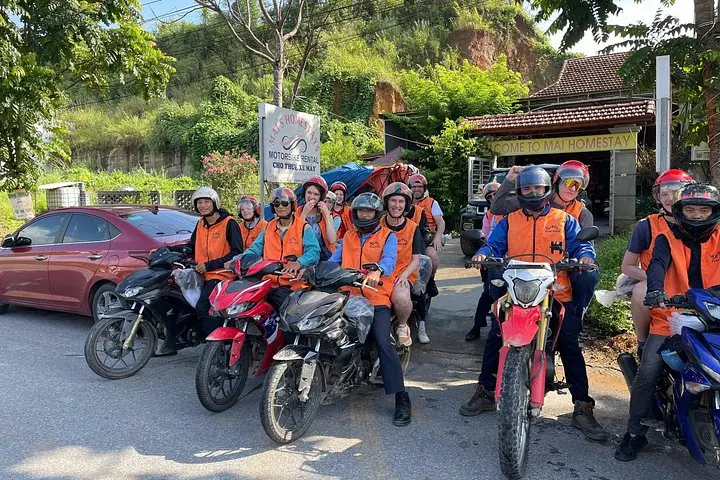
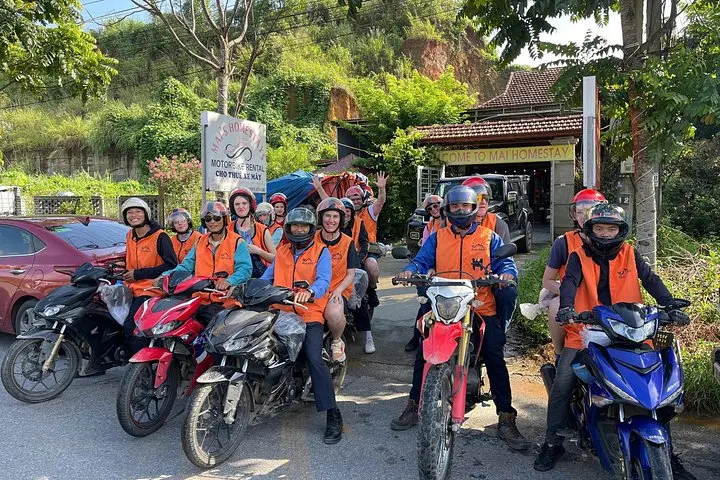
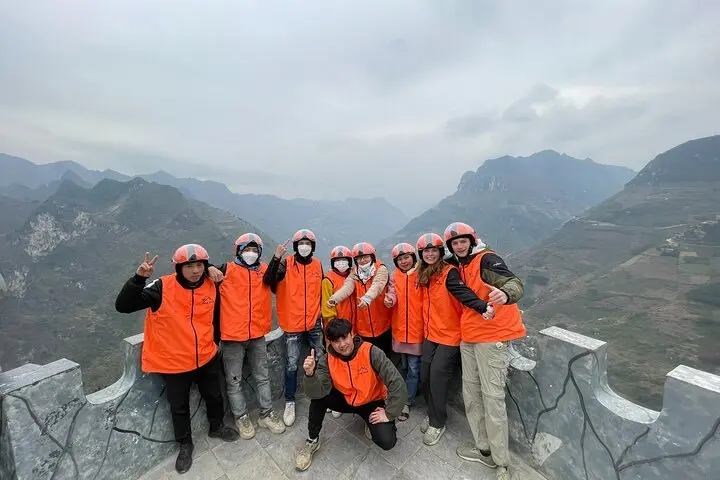
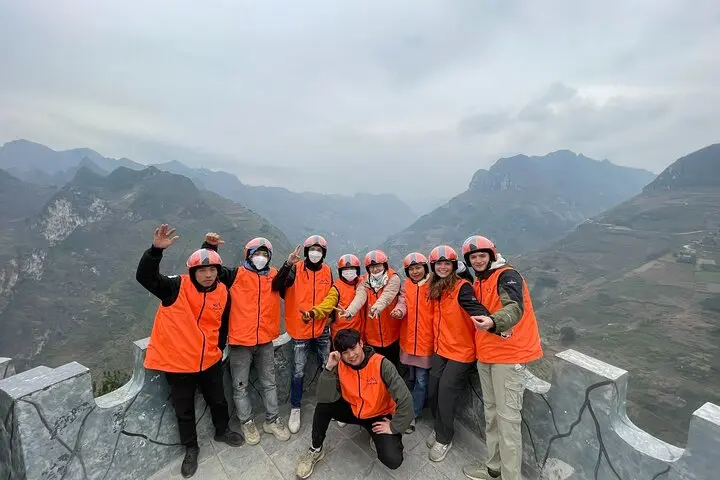
Morning mist lifts off the terraces as the engine coughs to life — you’re on the back of a comfortable motorbike, fingers wrapped around a plastic helmet, and the road unfurls into limestone teeth and green valleys. The first day threads through Bac Sum and Heaven Gate, where switchbacks shave cliffs into serpent-like ribbons; by dusk you’ll reach Dong Van and a traditional guesthouse for the night.
Morning mist lifts off the terraces as the engine coughs to life — you’re on the back of a comfortable motorbike, fingers wrapped around a plastic helmet, and the road unfurls into limestone teeth and green valleys. The first day threads through Bac Sum and Heaven Gate, where switchbacks shave cliffs into serpent-like ribbons; by dusk you’ll reach Dong Van and a traditional guesthouse for the night.
This loop runs through the Dong Van Karst Plateau, a landscape carved from Devonian limestone and shaped by millennia of erosion. Hmong and Dao communities have farmed steep slopes here for generations; the Hmong King Palace (built in 1902) and market towns still hold older rhythms of life. Geologically dramatic passes — Ma Pi Leng and Tham Ma — give sudden, raw views of the Nho Que River slicing the valley below.
Expect long days of riding or sitting in an open jeep, frequent viewpoint stops, and narrow backroads that demand attention. Local guides will handle navigation and safety briefings; accommodation alternates between simple homestays and guesthouses with basic comforts. Practical notes: bring layered clothing for cold mornings, a waterproof shell for sudden rain, and enough cash for market snacks. Hydrate between stops — altitude and wind dry you faster than you think. Ride sessions are scenic rather than technical, but the roads are real mountain roads: maintain focus, respect local traffic, and give yourself time to pause and walk viewpoints. By the final day, the loop slides back toward Ha Giang with terraces and small villages lingering in the rearview, the kind of trip that rewards patience and curiosity.