THE ADVENTURE COLLECTIVE® · Independent discovery and booking for outdoor travel

A four-day motorbike loop from Hanoi that covers about 350 km of highland roads, Ma Pi Leng Pass and a boat trip through Tu San canyon on the Nho Que River. Expect narrow mountain roads, homestay nights and a blend of geology, culture and tight riding lines.
A four-day motorbike loop from Hanoi that covers about 350 km of highland roads, Ma Pi Leng Pass and a boat trip through Tu San canyon on the Nho Que River. Expect narrow mountain roads, homestay nights and a blend of geology, culture and tight riding lines.
The sleeper bus exhales at dawn and you step into a sky that feels sharper in the mountains. Engines warm, the guide hands you a helmet and the seasoned rider takes the lead; over the next four days you’ll trace roughly 350 km across narrow ridgelines, hairpin passes and limestone plateaus where wind and weather shape the road.
Verified experiences and guided adventures in the surrounding area.
Operated by TripBestie Ha Giang · Ha Giang, Ha Giang Province
The sleeper bus exhales at dawn and you step into a sky that feels sharper in the mountains. Engines warm, the guide hands you a helmet and the seasoned rider takes the lead; over the next four days you’ll trace roughly 350 km across narrow ridgelines, hairpin passes and limestone plateaus where wind and weather shape the road.
This route threads through the Dong Van Karst Plateau, a geologically young landscape of tower-like limestone, steep gorges and the Tu San canyon carved by the Nho Que River. Local Hmong, Tay and Dao communities have farmed these slopes for generations; the Hmong King’s Palace and Lung Tam weaving village spotlight regional crafts and early 20th-century history. Rivers here dare you with sudden rapids, while the passes push you to focus—Ma Pi Leng is the dramatic spine of the loop.
Expect narrow, often steep mountain roads with sections of loose gravel, frequent hairpins and dramatic drops. Days mix guided riding with short hikes, a boat trip through Tu San canyon, swims beneath Du Gia waterfall and homestay evenings where local meals replace the tourist pace.
Practicalities: pack layered clothing and a waterproof shell—weather can flip between sun and rain—bring sturdy shoes for short walks, and hydrate; mountain air and long saddle time make fatigue real. If you’re prone to motion sickness, plan meds and move frequently to stretch. The trip balances spectacle and logistics: follow your guide’s cadence, respect local customs, and budget phone power and cash—connectivity is spotty but the scenery demands your attention.
No — the tour supplies a motorbike plus an experienced rider; guests usually travel as pillion passengers, though some operators allow experienced riders to ride solo if pre-arranged.
Roads include paved and unpaved sections, narrow shoulders, hairpins and occasional loose gravel—sensible caution and steady riding are required.
Accommodation ranges from simple homestays to 3-star hotels and shared sleeper buses; homestays provide authentic local meals and basic comforts.
Yes — the Nho Que river boat trip through Tu San canyon is included; operators use life jackets and local guides familiar with river conditions.
TripBestie Ha Giang operates guided outdoor trips and adventures with an emphasis on safety, stewardship, and memorable experiences.
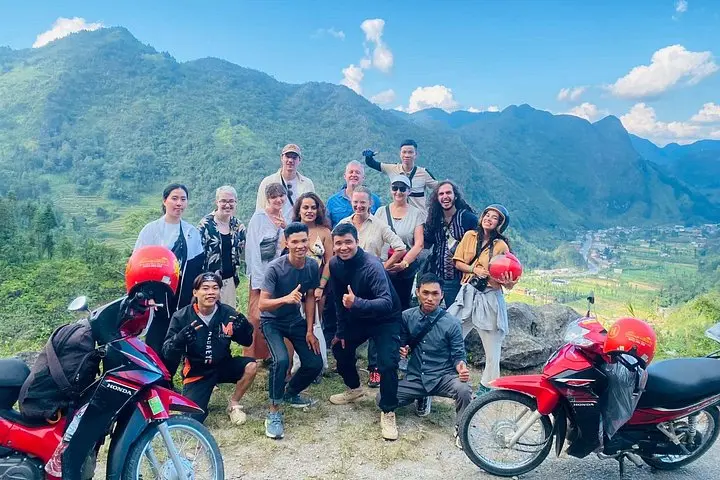
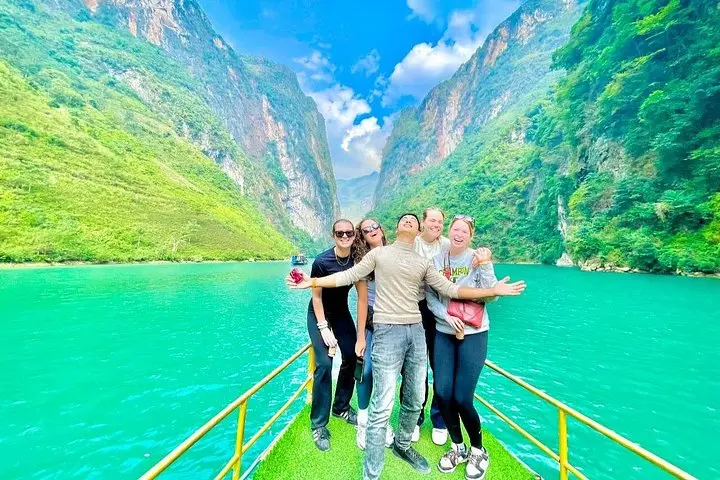
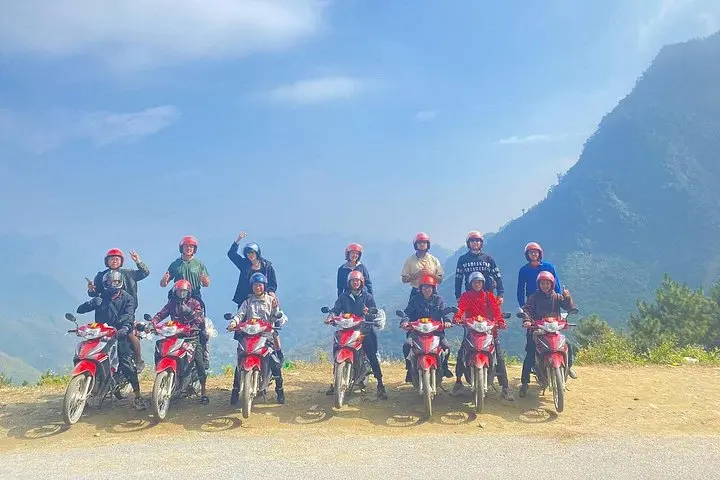
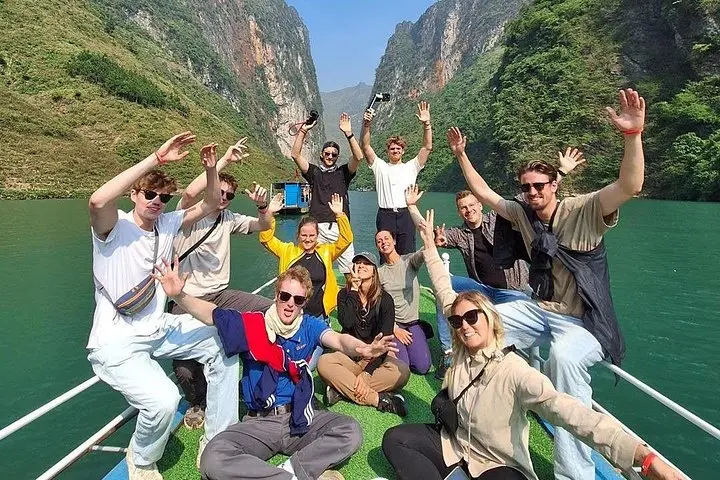
The sleeper bus exhales at dawn and you step into a sky that feels sharper in the mountains. Engines warm, the guide hands you a helmet and the seasoned rider takes the lead; over the next four days you’ll trace roughly 350 km across narrow ridgelines, hairpin passes and limestone plateaus where wind and weather shape the road.
The sleeper bus exhales at dawn and you step into a sky that feels sharper in the mountains. Engines warm, the guide hands you a helmet and the seasoned rider takes the lead; over the next four days you’ll trace roughly 350 km across narrow ridgelines, hairpin passes and limestone plateaus where wind and weather shape the road.
This route threads through the Dong Van Karst Plateau, a geologically young landscape of tower-like limestone, steep gorges and the Tu San canyon carved by the Nho Que River. Local Hmong, Tay and Dao communities have farmed these slopes for generations; the Hmong King’s Palace and Lung Tam weaving village spotlight regional crafts and early 20th-century history. Rivers here dare you with sudden rapids, while the passes push you to focus—Ma Pi Leng is the dramatic spine of the loop.
Expect narrow, often steep mountain roads with sections of loose gravel, frequent hairpins and dramatic drops. Days mix guided riding with short hikes, a boat trip through Tu San canyon, swims beneath Du Gia waterfall and homestay evenings where local meals replace the tourist pace.
Practicalities: pack layered clothing and a waterproof shell—weather can flip between sun and rain—bring sturdy shoes for short walks, and hydrate; mountain air and long saddle time make fatigue real. If you’re prone to motion sickness, plan meds and move frequently to stretch. The trip balances spectacle and logistics: follow your guide’s cadence, respect local customs, and budget phone power and cash—connectivity is spotty but the scenery demands your attention.