THE ADVENTURE COLLECTIVE® · Independent discovery and booking for outdoor travel

Ride carved mountain roads, stand at Vietnam’s northernmost Lung Cu Flag Pole, and stay with local homestays on this 5‑day Ha Giang Loop from Hanoi. Expect dramatic passes like Ma Pi Leng and real cultural encounters off the beaten path.
Ride carved mountain roads, stand at Vietnam’s northernmost Lung Cu Flag Pole, and stay with local homestays on this 5‑day Ha Giang Loop from Hanoi. Expect dramatic passes like Ma Pi Leng and real cultural encounters off the beaten path.
Night on the sleeper bus, and the city lights of Hanoi dissolve into a black ribbon. Dawn finds you in Ha Giang province: windswept karst ridges, terraced fields clinging like pages to steep slopes, and a road that coils through limestone teeth toward the sky. The first ride out of town feels cinematic—hairpin after hairpin, villages of earthen houses, and mountain passes that insist you slow down and look.
Verified experiences and guided adventures in the surrounding area.
Operated by Up Travel Vietnam · Ha Giang, Ha Giang Province
Night on the sleeper bus, and the city lights of Hanoi dissolve into a black ribbon. Dawn finds you in Ha Giang province: windswept karst ridges, terraced fields clinging like pages to steep slopes, and a road that coils through limestone teeth toward the sky. The first ride out of town feels cinematic—hairpin after hairpin, villages of earthen houses, and mountain passes that insist you slow down and look.
This region sits on the northern edge of Vietnam where the Yunnan Plateau drops into narrow valleys. The geology is dramatic: weathered limestone and sandstone carved by millennia into sheer cliffs and narrow canyons, with the Nho Que River threading green through the lowest basins. Culturally, Ha Giang is home to H’mong, Tay, Lo Lo and Dao communities; traditional weaving and clan houses remain integral to daily life, and Lung Cu Flag Pole marks Vietnam’s northernmost reach.
Practical guidance: expect long road days and basic homestay comforts—bring layers, waterproofs, and sturdy shoes for short village walks. Road surfaces vary from smooth asphalt to gravel shoulders; a confident motorbike stance or an experienced driver is essential. Carry cash (small notes) for remote purchases and modest tips; mobile service is intermittent beyond main towns. Respect local customs—ask before photographing people and remove shoes when invited into homes.
Timing: aim for clear skies in spring or autumn for the best light; winter brings chill and rain can turn secondary tracks muddy. Hydration, a charged power bank, and patience for slow-moving mountain time will make the loop memorable rather than rushed.
No—most tours provide experienced drivers; however, if you plan to ride solo you should be comfortable on a manual motorbike on steep, narrow roads.
Homestays typically offer private or shared rooms with simple furnishings, squat or western toilets vary, and meals are home-cooked regional dishes.
Altitudes here reach around 1,500–2,000 m in places; most visitors experience only mild effects—stay hydrated, rest if you feel dizzy, and avoid strenuous exertion on arrival.
Use Vietnamese Dong (VND) in villages; ATMs are scarce outside Ha Giang and Dong Van. Mobile coverage is patchy—download maps and keep a paper itinerary handy.
Up Travel Vietnam operates guided outdoor trips and adventures with an emphasis on safety, stewardship, and memorable experiences.

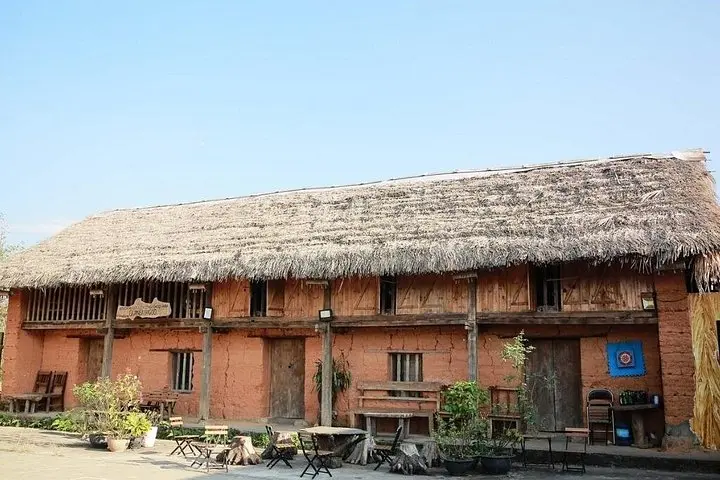

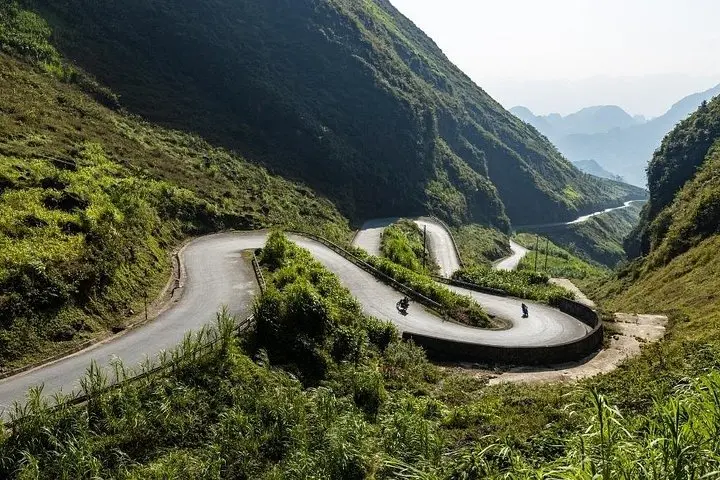
Night on the sleeper bus, and the city lights of Hanoi dissolve into a black ribbon. Dawn finds you in Ha Giang province: windswept karst ridges, terraced fields clinging like pages to steep slopes, and a road that coils through limestone teeth toward the sky. The first ride out of town feels cinematic—hairpin after hairpin, villages of earthen houses, and mountain passes that insist you slow down and look.
Night on the sleeper bus, and the city lights of Hanoi dissolve into a black ribbon. Dawn finds you in Ha Giang province: windswept karst ridges, terraced fields clinging like pages to steep slopes, and a road that coils through limestone teeth toward the sky. The first ride out of town feels cinematic—hairpin after hairpin, villages of earthen houses, and mountain passes that insist you slow down and look.
This region sits on the northern edge of Vietnam where the Yunnan Plateau drops into narrow valleys. The geology is dramatic: weathered limestone and sandstone carved by millennia into sheer cliffs and narrow canyons, with the Nho Que River threading green through the lowest basins. Culturally, Ha Giang is home to H’mong, Tay, Lo Lo and Dao communities; traditional weaving and clan houses remain integral to daily life, and Lung Cu Flag Pole marks Vietnam’s northernmost reach.
Practical guidance: expect long road days and basic homestay comforts—bring layers, waterproofs, and sturdy shoes for short village walks. Road surfaces vary from smooth asphalt to gravel shoulders; a confident motorbike stance or an experienced driver is essential. Carry cash (small notes) for remote purchases and modest tips; mobile service is intermittent beyond main towns. Respect local customs—ask before photographing people and remove shoes when invited into homes.
Timing: aim for clear skies in spring or autumn for the best light; winter brings chill and rain can turn secondary tracks muddy. Hydration, a charged power bank, and patience for slow-moving mountain time will make the loop memorable rather than rushed.