THE ADVENTURE COLLECTIVE® · Independent discovery and booking for outdoor travel

Ride the Ha Giang Loop over three days to cross the Dong Van karst plateau, crest Ma Pi Leng Pass and survey the Nho Que canyon. This private motorbike tour pairs mountain roads with homestays and cultural visits for a compact northern Vietnam odyssey.
Ride the Ha Giang Loop over three days to cross the Dong Van karst plateau, crest Ma Pi Leng Pass and survey the Nho Que canyon. This private motorbike tour pairs mountain roads with homestays and cultural visits for a compact northern Vietnam odyssey.
The road rises under your wheels and the limestone plateaus open like folded maps. On this 3-day Ha Giang motorbike loop you move from Ha Giang city through Quan Ba’s twin mountains, climb hairpins to Dong Van, and crest Ma Pi Leng Pass to peer down at the Nho Que River carving the deepest canyon in northern Vietnam.
Verified experiences and guided adventures in the surrounding area.
Operated by Local Tours HALONG · Ha Giang City, Ha Giang Province
The road rises under your wheels and the limestone plateaus open like folded maps. On this 3-day Ha Giang motorbike loop you move from Ha Giang city through Quan Ba’s twin mountains, climb hairpins to Dong Van, and crest Ma Pi Leng Pass to peer down at the Nho Que River carving the deepest canyon in northern Vietnam.
The landscape here is defined by the Dong Van Karst Plateau—ancient limestone folded and uplifted over millions of years—where ethnic H'Mong, Tay and Dao communities have farmed steep terraces for generations. Historic markers include the Vuong family mansion in Dong Van, a mix of H'Mong and French colonial architecture, and Lung Tam weaving village where traditional textiles are still made on backstrap looms.
Expect roughly 250–300 km of riding spread over mountain passes that can reach 1,500–1,800 m elevation, with paved but narrow roads, frequent switchbacks, and occasional unpaved sections near villages. The itinerary includes homestay nights, a boat option on the Nho Que River to view Tu San canyon, and cultural stops like Pao’s House and Tam Giac Mach fields in season.
Practical edge: start early to avoid mid-day heat and local traffic, keep fuel and cash in small towns, and pack a light rain shell—mountain weather shifts fast. If you’re self-riding, be comfortable with long days in the saddle and steep descents; otherwise choose an Easy Rider option with a trained local driver. Respect local customs at homestays, carry a reusable water bottle, and give the plateau time—its views are best slowly earned.
If you choose the self-riding option you should have a valid local or international motorcycle license; the Easy Rider option requires no riding skill—local drivers handle the bike.
The tour uses local homestays and simple guesthouses—expect dormitory-style or private rooms with basic amenities and shared bathrooms.
A boat excursion to view Tu San canyon is listed in the itinerary—confirm whether it’s included for your selected booking option at time of reservation.
Monsoon months increase landslide and flood risk on mountain roads; operators may alter routes or schedules—follow local guidance and consider traveling outside peak rains.
Local Tours HALONG operates guided outdoor trips and adventures with an emphasis on safety, stewardship, and memorable experiences.
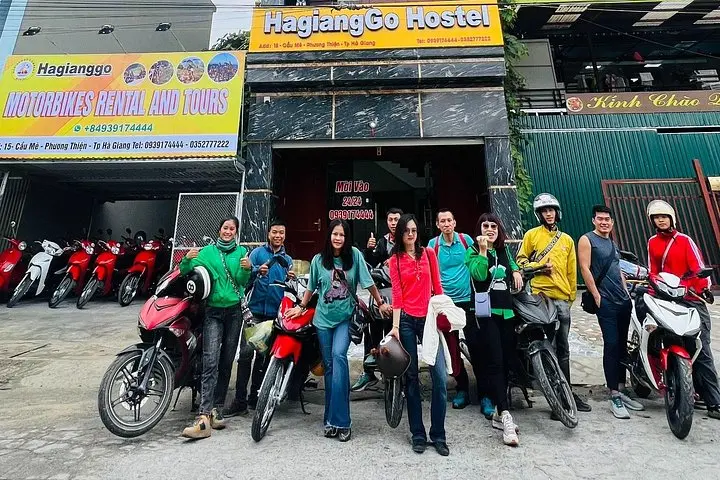


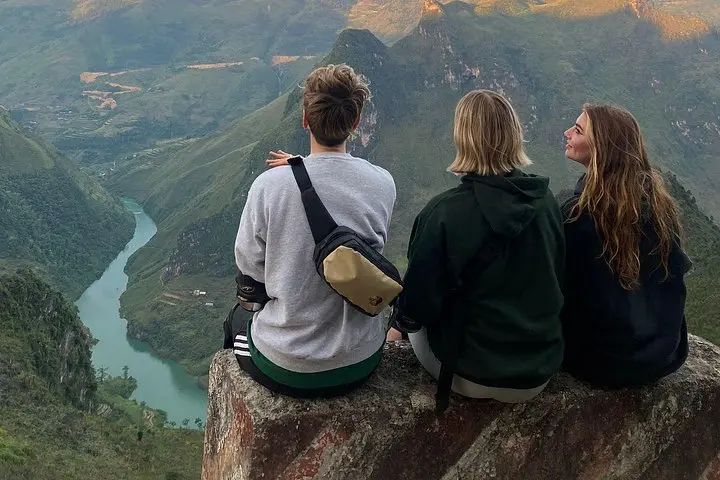
The road rises under your wheels and the limestone plateaus open like folded maps. On this 3-day Ha Giang motorbike loop you move from Ha Giang city through Quan Ba’s twin mountains, climb hairpins to Dong Van, and crest Ma Pi Leng Pass to peer down at the Nho Que River carving the deepest canyon in northern Vietnam.
The road rises under your wheels and the limestone plateaus open like folded maps. On this 3-day Ha Giang motorbike loop you move from Ha Giang city through Quan Ba’s twin mountains, climb hairpins to Dong Van, and crest Ma Pi Leng Pass to peer down at the Nho Que River carving the deepest canyon in northern Vietnam.
The landscape here is defined by the Dong Van Karst Plateau—ancient limestone folded and uplifted over millions of years—where ethnic H'Mong, Tay and Dao communities have farmed steep terraces for generations. Historic markers include the Vuong family mansion in Dong Van, a mix of H'Mong and French colonial architecture, and Lung Tam weaving village where traditional textiles are still made on backstrap looms.
Expect roughly 250–300 km of riding spread over mountain passes that can reach 1,500–1,800 m elevation, with paved but narrow roads, frequent switchbacks, and occasional unpaved sections near villages. The itinerary includes homestay nights, a boat option on the Nho Que River to view Tu San canyon, and cultural stops like Pao’s House and Tam Giac Mach fields in season.
Practical edge: start early to avoid mid-day heat and local traffic, keep fuel and cash in small towns, and pack a light rain shell—mountain weather shifts fast. If you’re self-riding, be comfortable with long days in the saddle and steep descents; otherwise choose an Easy Rider option with a trained local driver. Respect local customs at homestays, carry a reusable water bottle, and give the plateau time—its views are best slowly earned.