THE ADVENTURE COLLECTIVE® · Independent discovery and booking for outdoor travel

Four days of carving switchbacks across Vietnam’s northern karst plateau: the Ha Giang Loop pairs demanding riding with river gorges, ethnic markets and homestays. Read on for what to expect and how to prepare.
Four days of carving switchbacks across Vietnam’s northern karst plateau: the Ha Giang Loop pairs demanding riding with river gorges, ethnic markets and homestays. Read on for what to expect and how to prepare.
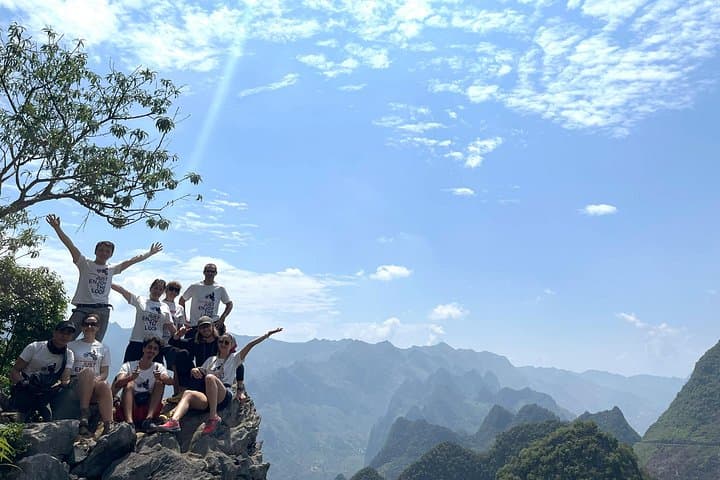
You wake before dawn in Hanoi, the city lights shrinking as a sleeper bus eats the miles north. By sunrise the road has given way to a jagged skyline of limestone spires and terraced fields; the motorbike’s steady thrum becomes your metronome as you climb toward Ma Pi Leng, where the pass narrows and the valley below seems to hold its breath.
Verified experiences and guided adventures in the surrounding area.
Operated by TripBestie Ha Giang · Ha Giang, Ha Giang Province
You wake before dawn in Hanoi, the city lights shrinking as a sleeper bus eats the miles north. By sunrise the road has given way to a jagged skyline of limestone spires and terraced fields; the motorbike’s steady thrum becomes your metronome as you climb toward Ma Pi Leng, where the pass narrows and the valley below seems to hold its breath.
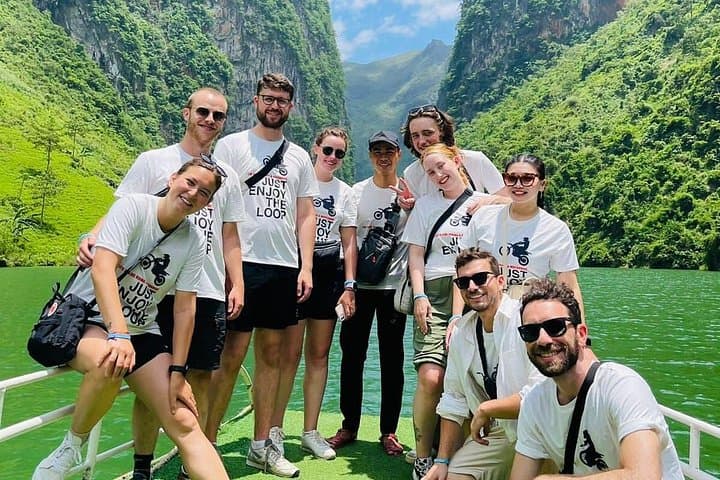
The Ha Giang Loop threads through the Dong Van Karst Plateau — a geological landscape of ancient limestone folded by tectonics into steep ridges and deep gorges. Centuries of human settlement here shaped resilient upland cultures: Hmong, Dao and Tay villages dot switchbacks and markets still trade in textiles and livestock as they have for generations. You’ll ride hairpin bends that reveal Tu San canyon and take a small boat on the Nho Que River to feel the gorge close in around you.
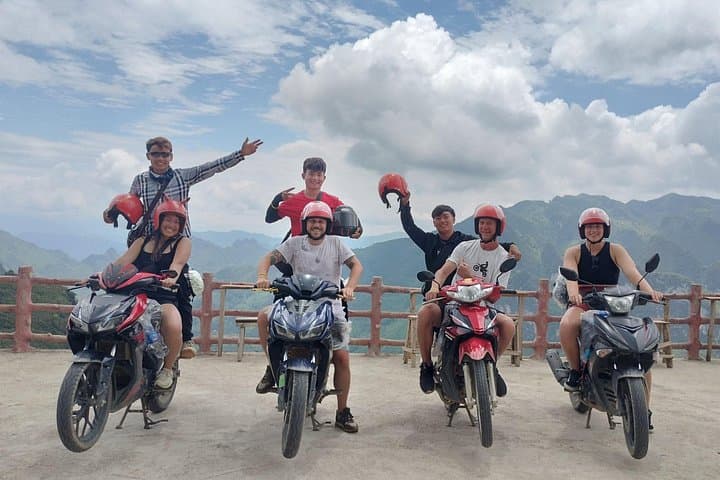
Expect about 350 km of riding spread over four active days, with passes that reach roughly 1,000–1,200 m and stretches of narrow, sometimes dusty single-lane road. Nights vary from hotel comfort in Dong Van to homestays in Du Gia and Nam Dam where hot meals, a simple bed, and local company reset you for the next day.
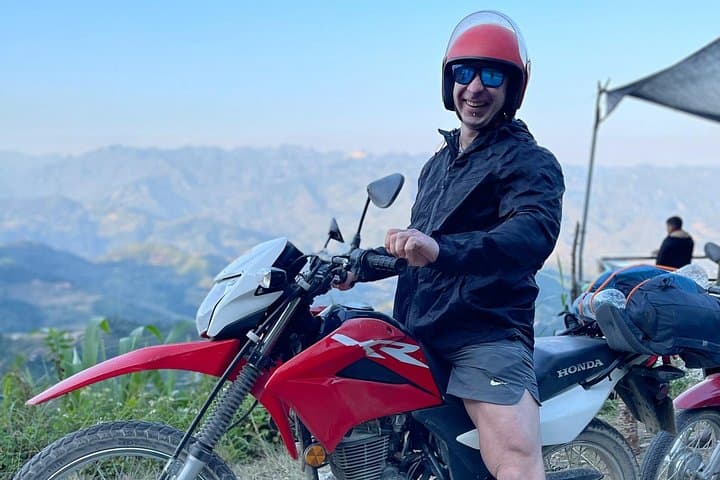
Practical tips: bring layered riding gear for alpine mornings, a reliable helmet and gloves, and carry hydration and basic repair tools. Be ready for slow sections, sudden weather, and plenty of photo stops — pace your riding, respect local roads, and leave space for the landscape to surprise you.
Yes — participants are expected to hold a valid international driving permit or equivalent motorcycle license accepted by Vietnamese authorities.
Roads vary from good asphalt to narrow, dusty mountain sections with tight hairpins; riders should be confident on uneven surfaces and in mixed weather.
The trip includes a mix of dorm-style hostel nights, a 3-star hotel in Dong Van, and traditional homestays in Du Gia and Nam Dam with basic amenities and home-cooked meals.
This specific offer is for guided self-ride participants; contact the operator to arrange pillion options or driver services if you prefer not to ride.
TripBestie Ha Giang operates guided outdoor trips and adventures with an emphasis on safety, stewardship, and memorable experiences.
You wake before dawn in Hanoi, the city lights shrinking as a sleeper bus eats the miles north. By sunrise the road has given way to a jagged skyline of limestone spires and terraced fields; the motorbike’s steady thrum becomes your metronome as you climb toward Ma Pi Leng, where the pass narrows and the valley below seems to hold its breath.
You wake before dawn in Hanoi, the city lights shrinking as a sleeper bus eats the miles north. By sunrise the road has given way to a jagged skyline of limestone spires and terraced fields; the motorbike’s steady thrum becomes your metronome as you climb toward Ma Pi Leng, where the pass narrows and the valley below seems to hold its breath.
The Ha Giang Loop threads through the Dong Van Karst Plateau — a geological landscape of ancient limestone folded by tectonics into steep ridges and deep gorges. Centuries of human settlement here shaped resilient upland cultures: Hmong, Dao and Tay villages dot switchbacks and markets still trade in textiles and livestock as they have for generations. You’ll ride hairpin bends that reveal Tu San canyon and take a small boat on the Nho Que River to feel the gorge close in around you.
Expect about 350 km of riding spread over four active days, with passes that reach roughly 1,000–1,200 m and stretches of narrow, sometimes dusty single-lane road. Nights vary from hotel comfort in Dong Van to homestays in Du Gia and Nam Dam where hot meals, a simple bed, and local company reset you for the next day.
Practical tips: bring layered riding gear for alpine mornings, a reliable helmet and gloves, and carry hydration and basic repair tools. Be ready for slow sections, sudden weather, and plenty of photo stops — pace your riding, respect local roads, and leave space for the landscape to surprise you.