THE ADVENTURE COLLECTIVE® · Independent discovery and booking for outdoor travel

Four days of hairpin turns, limestone ridges, and village markets—Ha Giang’s motorbike loop delivers highland panoramas and living culture. This easy-driver tour pairs local riders with travelers who want the scenery without the strain.
Four days of hairpin turns, limestone ridges, and village markets—Ha Giang’s motorbike loop delivers highland panoramas and living culture. This easy-driver tour pairs local riders with travelers who want the scenery without the strain.
You crest a pass and the valley opens like a folded map—limestone spines, terraced fields, and a river threading the gorge below. The engine hums steady beneath you while the air thins and local flags snap on bamboo poles. This is Ha Giang: remote highlands where roads climb and cultures cluster along switchbacks.
Verified experiences and guided adventures in the surrounding area.
You crest a pass and the valley opens like a folded map—limestone spines, terraced fields, and a river threading the gorge below. The engine hums steady beneath you while the air thins and local flags snap on bamboo poles. This is Ha Giang: remote highlands where roads climb and cultures cluster along switchbacks.
The route runs through the Dong Van Karst Plateau, a UNESCO-recognized landscape shaped by ancient marine limestone and sculpted into steep cliffs, towers, and narrow gorges. Towns along the loop are home to Hmong, Tay, and Dao communities whose houses, markets, and indigo textiles reflect centuries of mountain trade and seasonal migration. Ma Pi Leng Pass—one of the highest points on the loop—offers views that hint at the region’s geologic past and modern resilience.
Expect narrow, sometimes potholed asphalt, steep climbs up to roughly 1,200 m at the pass, and daily riding that can cover 80–160 km depending on stops. Your easy-driver format pairs you with a local rider if you prefer not to drive; either way, long hours in the saddle demand good posture, regular hydration, and sun protection. Mornings are best for clear light and cooler temperatures; afternoons can bring sudden rain.
Practical notes: bring layered clothing and a rain shell, carry local currency for remote homestays, and allow extra time for market stops and photo breaks. Respect homestay rules, give space at village ceremonies, and pack out waste. The payoff is large—mountain panoramas, living culture, and a road that keeps pulling you forward.
If you plan to ride yourself you should have the appropriate license; many travelers opt for the easy-driver option and are not required to show a license.
Paved but narrow with occasional potholes and steep switchbacks; watch for livestock, slow trucks, and sudden weather changes.
Most 3-night itineraries include basic homestays or guesthouses; confirm specifics and any dietary needs with the operator beforehand.
Spring and autumn offer the most stable weather and clear views; summer brings heavier rain, and winter can be cold at elevation.
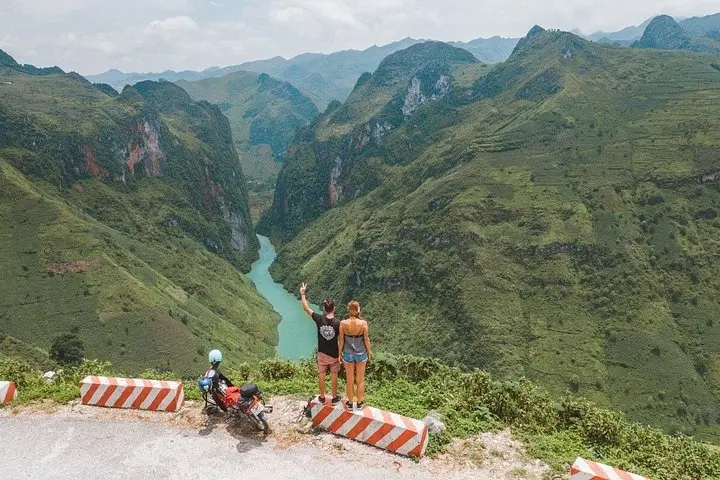
You crest a pass and the valley opens like a folded map—limestone spines, terraced fields, and a river threading the gorge below. The engine hums steady beneath you while the air thins and local flags snap on bamboo poles. This is Ha Giang: remote highlands where roads climb and cultures cluster along switchbacks.
You crest a pass and the valley opens like a folded map—limestone spines, terraced fields, and a river threading the gorge below. The engine hums steady beneath you while the air thins and local flags snap on bamboo poles. This is Ha Giang: remote highlands where roads climb and cultures cluster along switchbacks.
The route runs through the Dong Van Karst Plateau, a UNESCO-recognized landscape shaped by ancient marine limestone and sculpted into steep cliffs, towers, and narrow gorges. Towns along the loop are home to Hmong, Tay, and Dao communities whose houses, markets, and indigo textiles reflect centuries of mountain trade and seasonal migration. Ma Pi Leng Pass—one of the highest points on the loop—offers views that hint at the region’s geologic past and modern resilience.
Expect narrow, sometimes potholed asphalt, steep climbs up to roughly 1,200 m at the pass, and daily riding that can cover 80–160 km depending on stops. Your easy-driver format pairs you with a local rider if you prefer not to drive; either way, long hours in the saddle demand good posture, regular hydration, and sun protection. Mornings are best for clear light and cooler temperatures; afternoons can bring sudden rain.
Practical notes: bring layered clothing and a rain shell, carry local currency for remote homestays, and allow extra time for market stops and photo breaks. Respect homestay rules, give space at village ceremonies, and pack out waste. The payoff is large—mountain panoramas, living culture, and a road that keeps pulling you forward.