THE ADVENTURE COLLECTIVE® · Independent discovery and booking for outdoor travel

An eight-day loop from Ha Giang to Sapa that combines rugged mountain passes, terraced rice-field treks and homestays with H’mong and Dao communities. Expect daily hikes of 3–12 km, dramatic views at Ma Pi Leng and Lung Cu, and an optional Fansipan summit via cable car.
An eight-day loop from Ha Giang to Sapa that combines rugged mountain passes, terraced rice-field treks and homestays with H’mong and Dao communities. Expect daily hikes of 3–12 km, dramatic views at Ma Pi Leng and Lung Cu, and an optional Fansipan summit via cable car.
You step off the van and the air feels different—thinner, cooler, sharpened by limestone ridges and terrace-cut slopes. Rice paddies slice the valley into green steps, and a braided river below seems to dare you to follow it through remote villages.
Verified experiences and guided adventures in the surrounding area.
Operated by Old Quarter Travel · Ha Giang, Ha Giang Province
You step off the van and the air feels different—thinner, cooler, sharpened by limestone ridges and terrace-cut slopes. Rice paddies slice the valley into green steps, and a braided river below seems to dare you to follow it through remote villages.
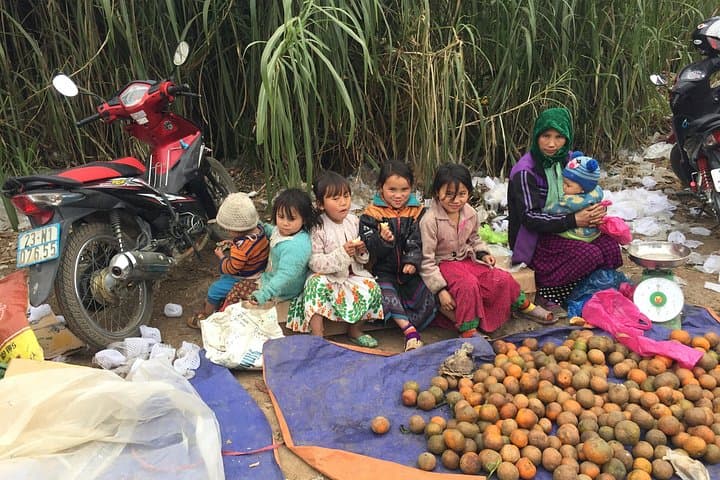
This eight-day route threads Ha Giang Province to Sapa, passing the bone-curved road of Ma Pi Leng, the flag tower at Lung Cu, and the terraced plateaus of Hoang Su Phi. Geologically, the region is karst and metamorphic highlands carved by uplift and river incision, producing dramatic passes and narrow canyons. Culturally, the area is a mosaic of H’mong, Dao, Tay and Red Dao communities—markets in Bac Ha and Dong Van reveal embroidered costumes, barter rhythms and foods shaped by altitude.
Expect daily drives punctuated by 3–12 km hikes (typical ascents 200–600 m) on uneven village tracks, stone steps and narrow ridgelines. Homestays and local guesthouses are the norm; nights bring wood smoke, communal meals and simple comforts. Optional add-ons include the Fansipan cable car (3,143 m summit) and market-day detours to Bac Ha.
Practical guidance: pack sturdy boots with grip for muddy trails, dress in layers for rapid temperature swings, and carry a hydration system and quick-dry clothing. Start early on market or pass days to avoid afternoon fog and monsoon showers. Fitness at a moderate level is required—several multi-hour treks and long transfers are part of the itinerary. Respect local customs, ask before photographing people, and use refillable bottles to reduce plastic waste. This trip is equal parts landscape and culture—bring curiosity and sensible kit.
The tour is rated moderate: expect several multi-hour treks (3–12 km) on uneven terrain and multiple full-day drives; a basic level of fitness is recommended.
Carry a passport during travel and check Vietnam's entry, vaccination and any health advisories before departure; some local clinics are available in towns but remote areas have limited services.
Many local markets follow traditional rotating schedules; your guide will aim to visit market days but arrangements depend on the regional calendar and timing.
Yes — the itinerary offers an optional Fansipan cable car and summit visit from Sapa; this is extra and weather-dependent, and requires extra time and a small fee.
Old Quarter Travel operates guided outdoor trips and adventures with an emphasis on safety, stewardship, and memorable experiences.


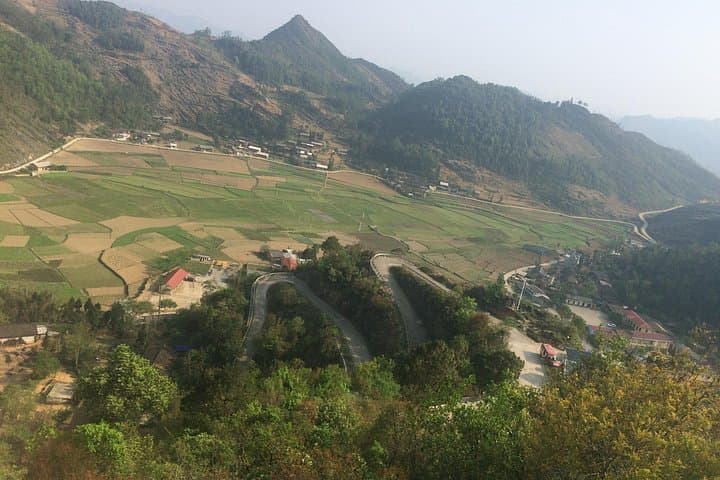
You step off the van and the air feels different—thinner, cooler, sharpened by limestone ridges and terrace-cut slopes. Rice paddies slice the valley into green steps, and a braided river below seems to dare you to follow it through remote villages.
You step off the van and the air feels different—thinner, cooler, sharpened by limestone ridges and terrace-cut slopes. Rice paddies slice the valley into green steps, and a braided river below seems to dare you to follow it through remote villages.
This eight-day route threads Ha Giang Province to Sapa, passing the bone-curved road of Ma Pi Leng, the flag tower at Lung Cu, and the terraced plateaus of Hoang Su Phi. Geologically, the region is karst and metamorphic highlands carved by uplift and river incision, producing dramatic passes and narrow canyons. Culturally, the area is a mosaic of H’mong, Dao, Tay and Red Dao communities—markets in Bac Ha and Dong Van reveal embroidered costumes, barter rhythms and foods shaped by altitude.
Expect daily drives punctuated by 3–12 km hikes (typical ascents 200–600 m) on uneven village tracks, stone steps and narrow ridgelines. Homestays and local guesthouses are the norm; nights bring wood smoke, communal meals and simple comforts. Optional add-ons include the Fansipan cable car (3,143 m summit) and market-day detours to Bac Ha.
Practical guidance: pack sturdy boots with grip for muddy trails, dress in layers for rapid temperature swings, and carry a hydration system and quick-dry clothing. Start early on market or pass days to avoid afternoon fog and monsoon showers. Fitness at a moderate level is required—several multi-hour treks and long transfers are part of the itinerary. Respect local customs, ask before photographing people, and use refillable bottles to reduce plastic waste. This trip is equal parts landscape and culture—bring curiosity and sensible kit.