THE ADVENTURE COLLECTIVE® · Independent discovery and booking for outdoor travel

A five-day circuit from Ha Giang to Ban Gioc that threads highland passes, ethnic villages and the UNESCO-recognized Cao Bang karst. Expect long drives, short hikes, homestays and a boat ride through Tu San canyon.
A five-day circuit from Ha Giang to Ban Gioc that threads highland passes, ethnic villages and the UNESCO-recognized Cao Bang karst. Expect long drives, short hikes, homestays and a boat ride through Tu San canyon.
Dawn breaks over hairpin roads and limestone teeth; the first bus drops you in Ha Giang city and the highland air pulls at your sleeves. You’ll climb Bac Sum and stand at Quan Ba Heaven Gate, where clouds push through valleys like an inquisitive visitor, then keep rising over the Dong Van Plateau toward the narrow ribbon of Ma Pi Leng. The Nho Que River dares you to lean closer from the canyon rim; downstream, Ban Gioc answers with curtains of water splitting the border.
Verified experiences and guided adventures in the surrounding area.
Operated by HagiangGO Motorbikes and Tours · Ha Giang City, Ha Giang Province
Dawn breaks over hairpin roads and limestone teeth; the first bus drops you in Ha Giang city and the highland air pulls at your sleeves. You’ll climb Bac Sum and stand at Quan Ba Heaven Gate, where clouds push through valleys like an inquisitive visitor, then keep rising over the Dong Van Plateau toward the narrow ribbon of Ma Pi Leng. The Nho Que River dares you to lean closer from the canyon rim; downstream, Ban Gioc answers with curtains of water splitting the border.
This route traces geological storylines — karst towers and canyons carved from ancient limestone within Cao Bang Global Geopark, now UNESCO-recognized for its dramatic karst morphology. Culturally the road threads through Tay, Nung, Dao and H'Mong villages where communal houses, brocade and terrace farming persist as daily practice. Pac Bo cave and Lenin Stream mark 20th-century history and local memory, while small-market towns retain a frontier, cross-border energy.
Expect long vehicle days punctuated by short hikes and viewpoint walks (passes reach roughly 1,200–1,500 m). Trails are uneven, sometimes steep; the Ma Pi Leng stretch includes cliffside viewpoints and a boat option on the Nho Que to see Tu San canyon. Plan for variable weather, limited ATMs in rural stretches, and simple homestays with private rooms. Bring layered clothing, sturdy footwear, and cash for markets. Aim for early starts to miss midday haze and allow time for village visits. Hydrate, move deliberately on narrow switchbacks, and leave no trace — these landscapes recover slowly but reward patient travelers with big skies and river songs.
The tour is rated moderate: most days involve long drives with short hikes or viewpoint walks; no technical climbing required but you should be able to walk on uneven ground and manage short uphill sections.
Accommodation alternates between private-room homestays and local hotels; expect basic amenities and culturally immersive meals.
Ban Gioc sits on the Vietnam–China border; tourists accessing the Vietnamese viewpoint do not need special permits but always carry your passport—border rules can change and local guides manage entry points.
Signal and ATMs are intermittent outside main towns; withdraw cash in Ha Giang or Cao Bang and download maps for offline use.
HagiangGO Motorbikes and Tours operates guided outdoor trips and adventures with an emphasis on safety, stewardship, and memorable experiences.
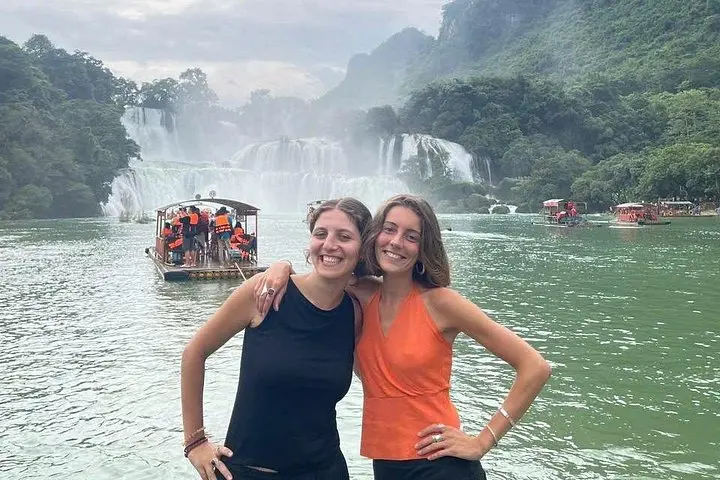

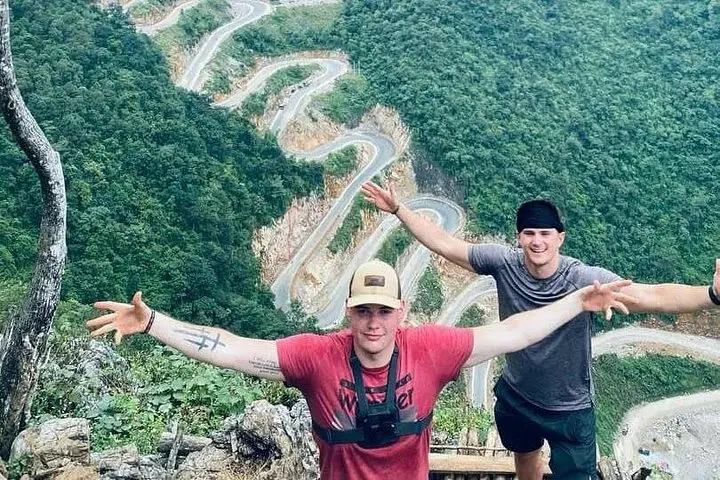
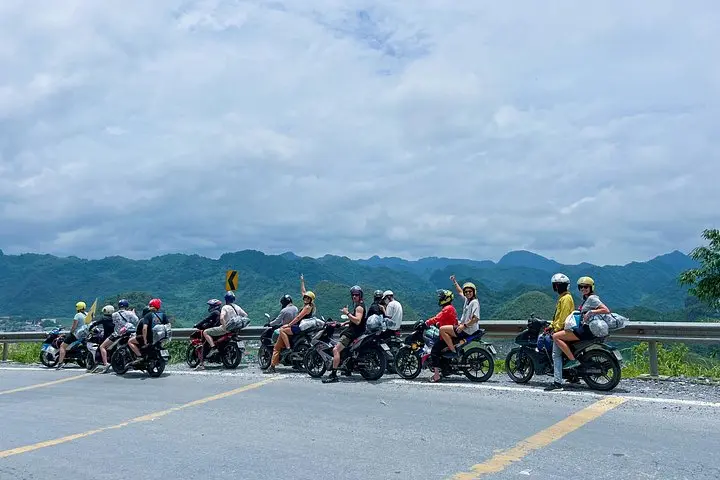
Dawn breaks over hairpin roads and limestone teeth; the first bus drops you in Ha Giang city and the highland air pulls at your sleeves. You’ll climb Bac Sum and stand at Quan Ba Heaven Gate, where clouds push through valleys like an inquisitive visitor, then keep rising over the Dong Van Plateau toward the narrow ribbon of Ma Pi Leng. The Nho Que River dares you to lean closer from the canyon rim; downstream, Ban Gioc answers with curtains of water splitting the border.
Dawn breaks over hairpin roads and limestone teeth; the first bus drops you in Ha Giang city and the highland air pulls at your sleeves. You’ll climb Bac Sum and stand at Quan Ba Heaven Gate, where clouds push through valleys like an inquisitive visitor, then keep rising over the Dong Van Plateau toward the narrow ribbon of Ma Pi Leng. The Nho Que River dares you to lean closer from the canyon rim; downstream, Ban Gioc answers with curtains of water splitting the border.
This route traces geological storylines — karst towers and canyons carved from ancient limestone within Cao Bang Global Geopark, now UNESCO-recognized for its dramatic karst morphology. Culturally the road threads through Tay, Nung, Dao and H'Mong villages where communal houses, brocade and terrace farming persist as daily practice. Pac Bo cave and Lenin Stream mark 20th-century history and local memory, while small-market towns retain a frontier, cross-border energy.
Expect long vehicle days punctuated by short hikes and viewpoint walks (passes reach roughly 1,200–1,500 m). Trails are uneven, sometimes steep; the Ma Pi Leng stretch includes cliffside viewpoints and a boat option on the Nho Que to see Tu San canyon. Plan for variable weather, limited ATMs in rural stretches, and simple homestays with private rooms. Bring layered clothing, sturdy footwear, and cash for markets. Aim for early starts to miss midday haze and allow time for village visits. Hydrate, move deliberately on narrow switchbacks, and leave no trace — these landscapes recover slowly but reward patient travelers with big skies and river songs.