THE ADVENTURE COLLECTIVE® · Independent discovery and booking for outdoor travel

A long day through the Shing Valley to the Haft-Kul (Seven Lakes), where mineral-rich basins shift from turquoise to emerald beneath dramatic Fann peaks. Expect short hikes, village visits, and high-mountain light on a 10-hour day trip from Samarkand.
A long day through the Shing Valley to the Haft-Kul (Seven Lakes), where mineral-rich basins shift from turquoise to emerald beneath dramatic Fann peaks. Expect short hikes, village visits, and high-mountain light on a 10-hour day trip from Samarkand.
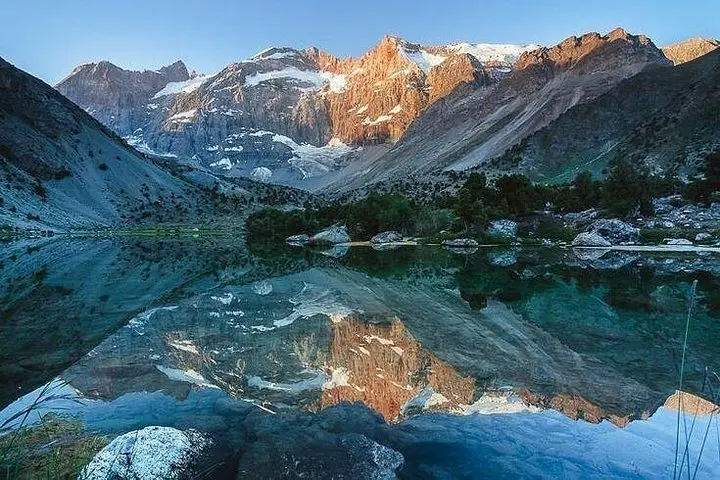
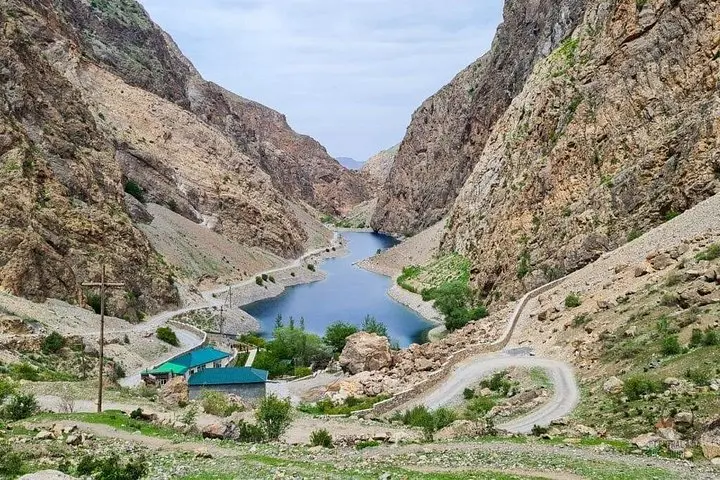
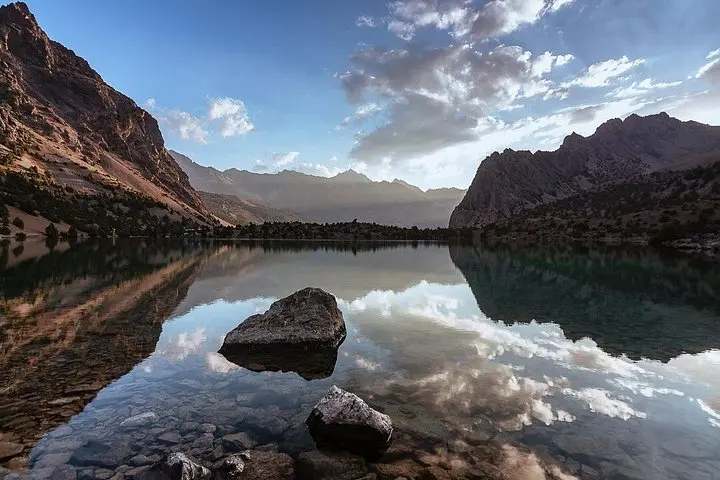
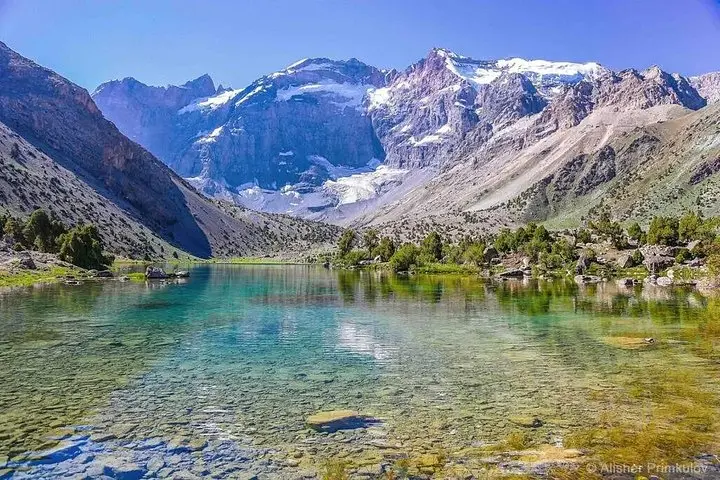
The road drops away from Samarkand and the Fann Mountains rise like a stacked set of ridges—gray limestone cliffs cutting into blue sky, meadows stepping up to scree and springs that insist on running downhill. By midmorning you cross into the Shing Valley and the first of the Haft-Kul (Seven Lakes) appears: a tight bowl of turquoise water cupped by cliffs.
Verified experiences and guided adventures in the surrounding area.
Operated by Jahongir Premium Tours · Panjakent, Sughd
The road drops away from Samarkand and the Fann Mountains rise like a stacked set of ridges—gray limestone cliffs cutting into blue sky, meadows stepping up to scree and springs that insist on running downhill. By midmorning you cross into the Shing Valley and the first of the Haft-Kul (Seven Lakes) appears: a tight bowl of turquoise water cupped by cliffs.
The lakes—Marguzor, Mižgon, Soya, Gushor, Nofin, Churdak and Hazorchashma—sit between 1,600–2,400 m and display striking color shifts driven by mineral run-off and sunlight. The Fann range was shaped by ancient tectonic collisions; you’ll notice folded strata and abrupt cliffs that recall a younger, jagged geology than the surrounding plains. Panjakent’s Sogdian past echoes in nearby villages where traditional Tajik homes and apricot orchards still feed travelers.
Practically: this is a long day trip (about 10 hours door-to-door) by air-conditioned vehicle with short hikes and lakeside strolls; lunch and bottled water are typically included. Trails range from flat lakeshore paths to short, rocky climbs—expect uneven footing and some exposure at higher basins. Start early for the best light and calmer winds, carry layered clothing for rapid temperature shifts between valley and lake, and plan for sun and altitude (up to 2,400 m).
Local guides can arrange village visits and explain the lakes’ seasonal moods—emerald at dawn, steel at dusk—and point out quieter spots like Hazorchashma’s high spring or the long sweep of Nofin. Respect fragile alpine meadows: stick to trails and pack out waste.
Visa rules vary by nationality—check current requirements well before travel. Confirm with the operator whether border-crossing logistics are handled as part of the tour.
Hikes are mostly short walks and promenades with some rocky and steep sections; no technical climbing is required, but expect uneven terrain and brief ascents.
Typical inclusions are round-trip transport in an air-conditioned vehicle, bottled water, and a provided lunch; specifics vary by operator—confirm at booking.
Late spring through early fall offers the most accessible trails and vivid colors; summer gives warmer weather, while spring shows dramatic runoff and fall brings clearer skies.
Jahongir Premium Tours operates guided outdoor trips and adventures with an emphasis on safety, stewardship, and memorable experiences.
The road drops away from Samarkand and the Fann Mountains rise like a stacked set of ridges—gray limestone cliffs cutting into blue sky, meadows stepping up to scree and springs that insist on running downhill. By midmorning you cross into the Shing Valley and the first of the Haft-Kul (Seven Lakes) appears: a tight bowl of turquoise water cupped by cliffs.
The road drops away from Samarkand and the Fann Mountains rise like a stacked set of ridges—gray limestone cliffs cutting into blue sky, meadows stepping up to scree and springs that insist on running downhill. By midmorning you cross into the Shing Valley and the first of the Haft-Kul (Seven Lakes) appears: a tight bowl of turquoise water cupped by cliffs.
The lakes—Marguzor, Mižgon, Soya, Gushor, Nofin, Churdak and Hazorchashma—sit between 1,600–2,400 m and display striking color shifts driven by mineral run-off and sunlight. The Fann range was shaped by ancient tectonic collisions; you’ll notice folded strata and abrupt cliffs that recall a younger, jagged geology than the surrounding plains. Panjakent’s Sogdian past echoes in nearby villages where traditional Tajik homes and apricot orchards still feed travelers.
Practically: this is a long day trip (about 10 hours door-to-door) by air-conditioned vehicle with short hikes and lakeside strolls; lunch and bottled water are typically included. Trails range from flat lakeshore paths to short, rocky climbs—expect uneven footing and some exposure at higher basins. Start early for the best light and calmer winds, carry layered clothing for rapid temperature shifts between valley and lake, and plan for sun and altitude (up to 2,400 m).
Local guides can arrange village visits and explain the lakes’ seasonal moods—emerald at dawn, steel at dusk—and point out quieter spots like Hazorchashma’s high spring or the long sweep of Nofin. Respect fragile alpine meadows: stick to trails and pack out waste.