THE ADVENTURE COLLECTIVE® · Independent discovery and booking for outdoor travel

Explore southern Malta in a single day: ancient megalithic temples, the luminous Blue Grotto, a colourful fishing harbour and Malta’s oldest prehistoric cave. This guided tour pairs geology and culture with practical logistics for a compact, revealing day.
Explore southern Malta in a single day: ancient megalithic temples, the luminous Blue Grotto, a colourful fishing harbour and Malta’s oldest prehistoric cave. This guided tour pairs geology and culture with practical logistics for a compact, revealing day.
You step off the bus on a sun-scrubbed hill with the sea breathing salt behind the stones; massive megaliths tower ahead, their weathered faces holding five millennia of human work. The guide folds open a map and the group drifts from shadowed forecourt to open terrace, the island wind nudging you toward the ocean view beyond.
Verified experiences and guided adventures in the surrounding area.
Operated by Robert Arrigo & Sons · Valletta, Malta
You step off the bus on a sun-scrubbed hill with the sea breathing salt behind the stones; massive megaliths tower ahead, their weathered faces holding five millennia of human work. The guide folds open a map and the group drifts from shadowed forecourt to open terrace, the island wind nudging you toward the ocean view beyond.
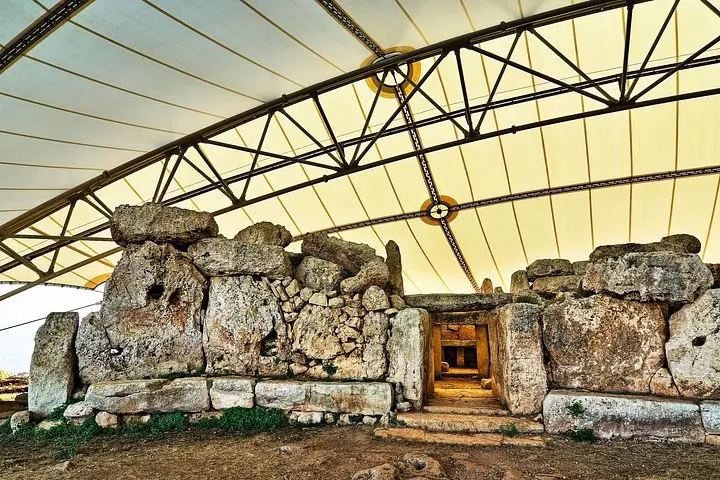
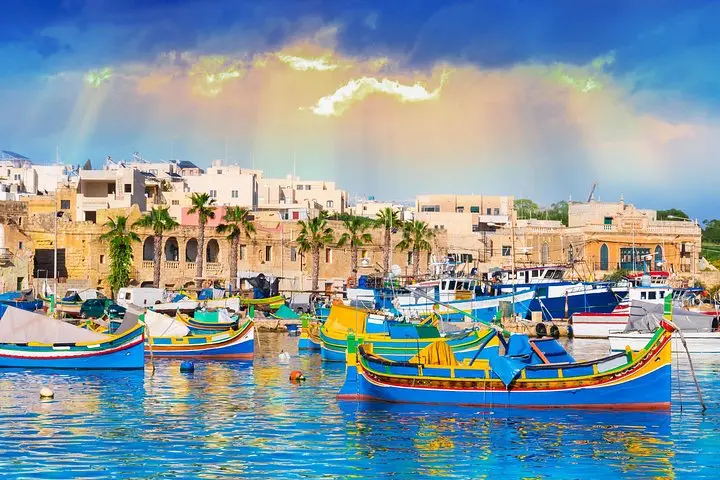
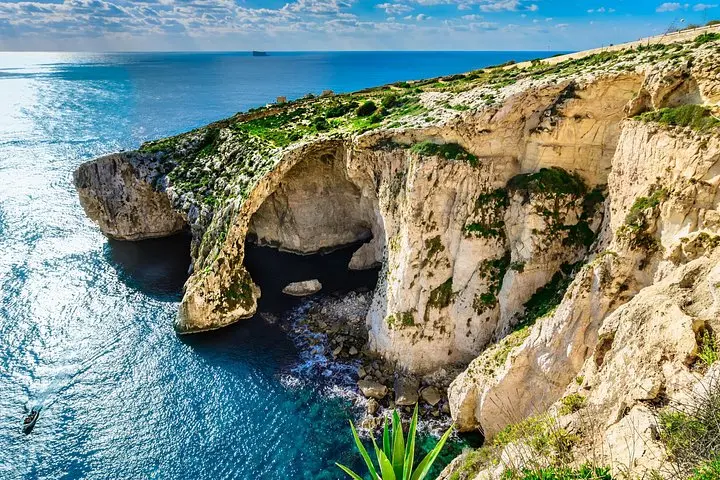
This full-day circuit traces Malta’s deep past and lively coastal culture. Start at the Limestone Heritage Park to learn how the island’s Miocene limestone shaped its buildings and economy, then cross to Ħaġar Qim—one of the world’s oldest free-standing religious complexes, carved from local globigerina limestone around 3600–3200 BC. Further along the southern coast, Żurrieq’s Blue Grotto throws light into caves and reflections that earned it screen time in international films; depending on weather you can take a short boat into the main arch. Marsaxlokk’s harbour is a different rhythm—luzzus bobbing, fish markets open and a promenade of restaurants where lunch slows the day. The final stop, Għar Dalam, exposes prehistoric faunal bones and the first human traces on Malta.
Plan practically: wear supportive walking shoes for uneven archaeological settings, bring sun protection and a refillable water bottle, and factor in 7–8 hours including transport and guided time. Boat trips are optional and weather-dependent; confirm pick-up details with the operator a few days beforehand. If you want smaller crowds, request earlier pickups and sit on the seaward side for better coastal views.
No—the boat is optional, paid locally (around €10 adults / €5 children) and operates only in favourable weather.
Email the operator ([email protected]) with your booking reference a few days before departure to receive the exact pick-up time and meeting point.
The tour involves stairs, uneven surfaces and some walking; it is not recommended for travellers with significant mobility impairments.
The tour is conducted in the language you book, though commentary may sometimes be bilingual or include a host for translations depending on operational circumstances.
Robert Arrigo & Sons operates guided outdoor trips and adventures with an emphasis on safety, stewardship, and memorable experiences.

You step off the bus on a sun-scrubbed hill with the sea breathing salt behind the stones; massive megaliths tower ahead, their weathered faces holding five millennia of human work. The guide folds open a map and the group drifts from shadowed forecourt to open terrace, the island wind nudging you toward the ocean view beyond.
You step off the bus on a sun-scrubbed hill with the sea breathing salt behind the stones; massive megaliths tower ahead, their weathered faces holding five millennia of human work. The guide folds open a map and the group drifts from shadowed forecourt to open terrace, the island wind nudging you toward the ocean view beyond.
This full-day circuit traces Malta’s deep past and lively coastal culture. Start at the Limestone Heritage Park to learn how the island’s Miocene limestone shaped its buildings and economy, then cross to Ħaġar Qim—one of the world’s oldest free-standing religious complexes, carved from local globigerina limestone around 3600–3200 BC. Further along the southern coast, Żurrieq’s Blue Grotto throws light into caves and reflections that earned it screen time in international films; depending on weather you can take a short boat into the main arch. Marsaxlokk’s harbour is a different rhythm—luzzus bobbing, fish markets open and a promenade of restaurants where lunch slows the day. The final stop, Għar Dalam, exposes prehistoric faunal bones and the first human traces on Malta.
Plan practically: wear supportive walking shoes for uneven archaeological settings, bring sun protection and a refillable water bottle, and factor in 7–8 hours including transport and guided time. Boat trips are optional and weather-dependent; confirm pick-up details with the operator a few days beforehand. If you want smaller crowds, request earlier pickups and sit on the seaward side for better coastal views.