THE ADVENTURE COLLECTIVE® · Independent discovery and booking for outdoor travel

Cross the Hai Van Pass and spend a full day exploring Hue’s Imperial Citadel, Khai Dinh’s ornate tomb, and Thien Mu Pagoda with a guide and Hue‑style lunch. Practical for travelers based in Hoi An or Da Nang, this tour pairs coastal scenery with royal history.
Cross the Hai Van Pass and spend a full day exploring Hue’s Imperial Citadel, Khai Dinh’s ornate tomb, and Thien Mu Pagoda with a guide and Hue‑style lunch. Practical for travelers based in Hoi An or Da Nang, this tour pairs coastal scenery with royal history.
The van snakes up the Hai Van Pass and the ocean suddenly throws itself into view, daring you to keep your camera in its case. A 30‑minute stop at the peak gives space to breathe salt‑slick wind and study the coastline before Lang Co’s spit of sand beckons for a quick photo. By late morning the Huong (Perfume) River pushes the convoy toward Hue, its slow current matching the city's measured past.
Verified experiences and guided adventures in the surrounding area.
Operated by longtravel-hoian · Hue, Thua Thien-Hue
The van snakes up the Hai Van Pass and the ocean suddenly throws itself into view, daring you to keep your camera in its case. A 30‑minute stop at the peak gives space to breathe salt‑slick wind and study the coastline before Lang Co’s spit of sand beckons for a quick photo. By late morning the Huong (Perfume) River pushes the convoy toward Hue, its slow current matching the city's measured past.
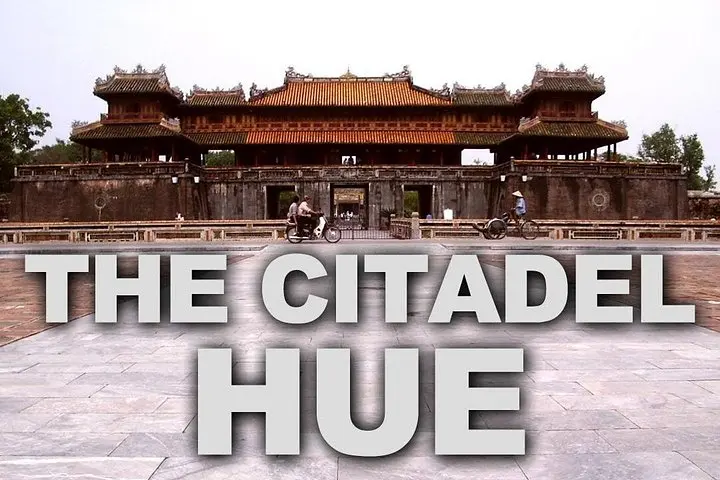
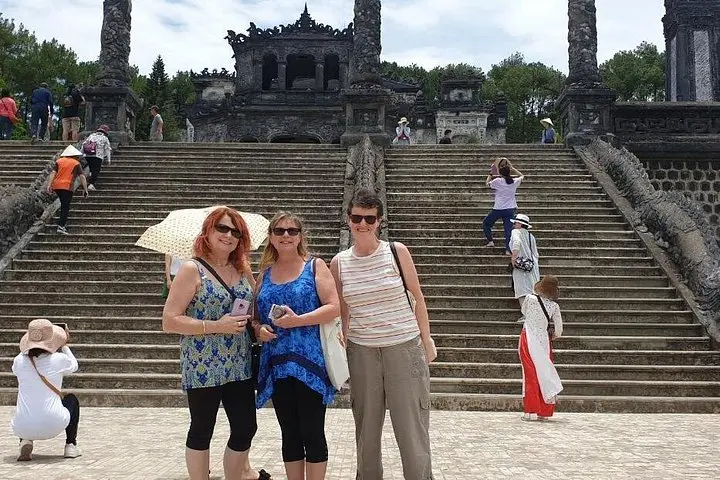
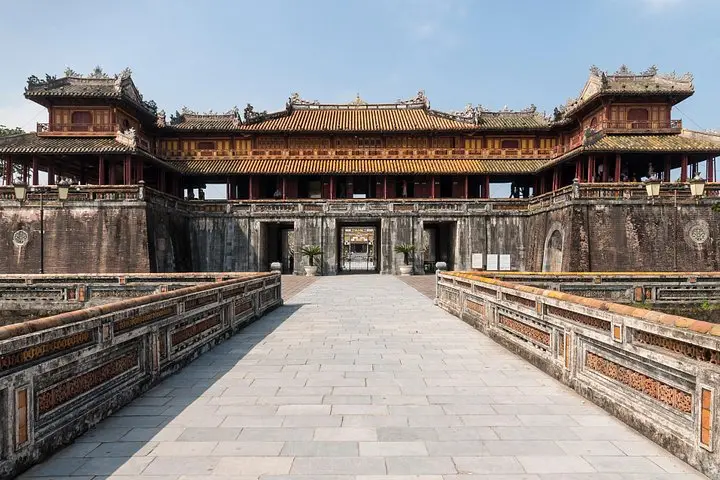
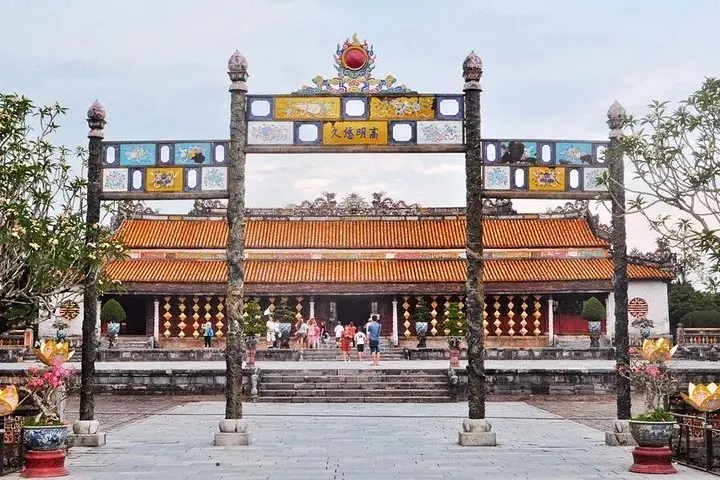
Hue was the seat of the Nguyen emperors and the Imperial Citadel still carries the geometry of royal power: moats, gates and the Forbidden Purple City. Khai Dinh’s tomb, built 1920–1931, reads like a conversation between East and West—mosaic tiles, concrete, and baroque silhouette—while Thien Mu Pagoda, founded in 1601, watches the river with a bell that marks the city’s heartbeat.
Geology matters here: the Annamite Range slopes toward the sea, funneling storms and shaping the coastal road that makes the drive famous. Culture comes through small things—Hue’s spiced beef broth, the careful bowls of Bún Bò Huế, and ceremonial lacquerware sold near the citadel.
Practical guidance: expect a full 10‑hour day with considerable walking on uneven stone and tiled courtyards; wear closed, grippy shoes and modest clothing for religious sites. Bring water, sun protection and some cash for market purchases. Plan photo stops on the pass (morning light is best) and allow time at the citadel to move between gates. The tour balances scenery, history and hands‑on local food into a single, well‑paced day.
Pick‑up is available from central Hoi An and Da Nang hotels; you’ll be given a pickup point when you book.
Yes—this tour includes all entrance fees and a local lunch featuring Hue specialties.
Transportation is wheelchair accessible, but some historic sites have steps and uneven surfaces; contact the operator to confirm assistance needs.
Full refunds are available if you cancel at least 24 hours before departure; cancellations within 24 hours are not refundable.
longtravel-hoian operates guided outdoor trips and adventures with an emphasis on safety, stewardship, and memorable experiences.
The van snakes up the Hai Van Pass and the ocean suddenly throws itself into view, daring you to keep your camera in its case. A 30‑minute stop at the peak gives space to breathe salt‑slick wind and study the coastline before Lang Co’s spit of sand beckons for a quick photo. By late morning the Huong (Perfume) River pushes the convoy toward Hue, its slow current matching the city's measured past.
The van snakes up the Hai Van Pass and the ocean suddenly throws itself into view, daring you to keep your camera in its case. A 30‑minute stop at the peak gives space to breathe salt‑slick wind and study the coastline before Lang Co’s spit of sand beckons for a quick photo. By late morning the Huong (Perfume) River pushes the convoy toward Hue, its slow current matching the city's measured past.
Hue was the seat of the Nguyen emperors and the Imperial Citadel still carries the geometry of royal power: moats, gates and the Forbidden Purple City. Khai Dinh’s tomb, built 1920–1931, reads like a conversation between East and West—mosaic tiles, concrete, and baroque silhouette—while Thien Mu Pagoda, founded in 1601, watches the river with a bell that marks the city’s heartbeat.
Geology matters here: the Annamite Range slopes toward the sea, funneling storms and shaping the coastal road that makes the drive famous. Culture comes through small things—Hue’s spiced beef broth, the careful bowls of Bún Bò Huế, and ceremonial lacquerware sold near the citadel.
Practical guidance: expect a full 10‑hour day with considerable walking on uneven stone and tiled courtyards; wear closed, grippy shoes and modest clothing for religious sites. Bring water, sun protection and some cash for market purchases. Plan photo stops on the pass (morning light is best) and allow time at the citadel to move between gates. The tour balances scenery, history and hands‑on local food into a single, well‑paced day.