THE ADVENTURE COLLECTIVE® · Independent discovery and booking for outdoor travel

Spend a private day in Hakone with a licensed guide who links volcanic landscapes, Edo-period history, and postcard views of Mount Fuji. From the ropeway’s steam-scoured ridges to the floating torii at Lake Ashi, this customizable tour pairs scenery with context.
Spend a private day in Hakone with a licensed guide who links volcanic landscapes, Edo-period history, and postcard views of Mount Fuji. From the ropeway’s steam-scoured ridges to the floating torii at Lake Ashi, this customizable tour pairs scenery with context.
Morning fog lifts off the train as Tokyo shrinks behind you and the air takes on something cooler — a mineral tang, a hint of cedar smoke. Your guide meets you at the station, a small board with your name, and the day unfolds like a well-marked route on an old map. In Hakone the landscape alternates between geological drama and human history: steaming vents that remind you the earth is still working, a calm crater lake that frames a vermilion torii, and a checkpoint that once controlled the flow of people and goods along the Tokaido Road.
Verified experiences and guided adventures in the surrounding area.
Operated by Japan Hidden Gems · Hakone, Kanagawa
Morning fog lifts off the train as Tokyo shrinks behind you and the air takes on something cooler — a mineral tang, a hint of cedar smoke. Your guide meets you at the station, a small board with your name, and the day unfolds like a well-marked route on an old map. In Hakone the landscape alternates between geological drama and human history: steaming vents that remind you the earth is still working, a calm crater lake that frames a vermilion torii, and a checkpoint that once controlled the flow of people and goods along the Tokaido Road.
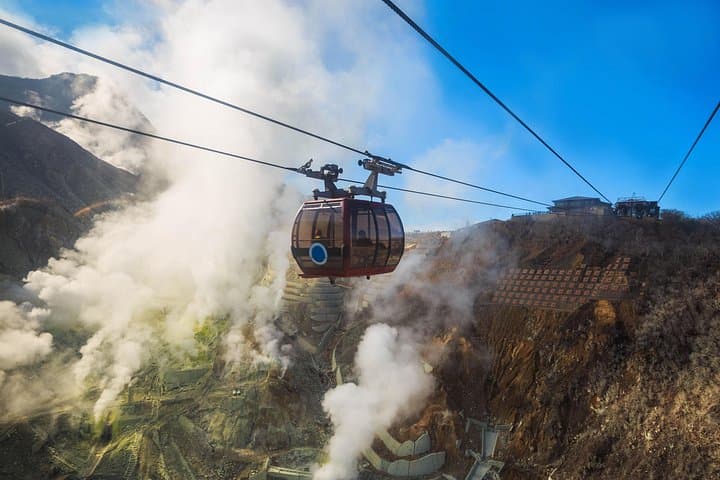
Start with the Ropeway climb where the cabin slides over steam vents and scoured pumice. Owakudani’s sulfur pools crackle with geothermal heat — a raw, visible reminder that Hakone is a young volcanic complex. From higher vantage points, Mount Fuji stages itself when weather allows: a clean cone above forested ridges and the mirror of Lake Ashi.
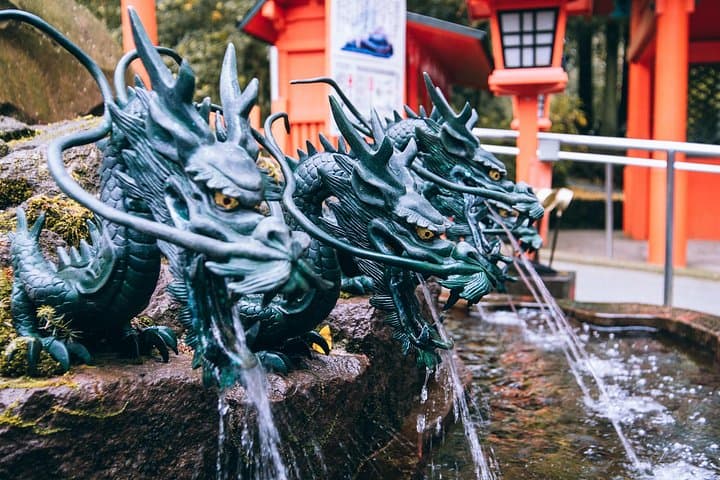
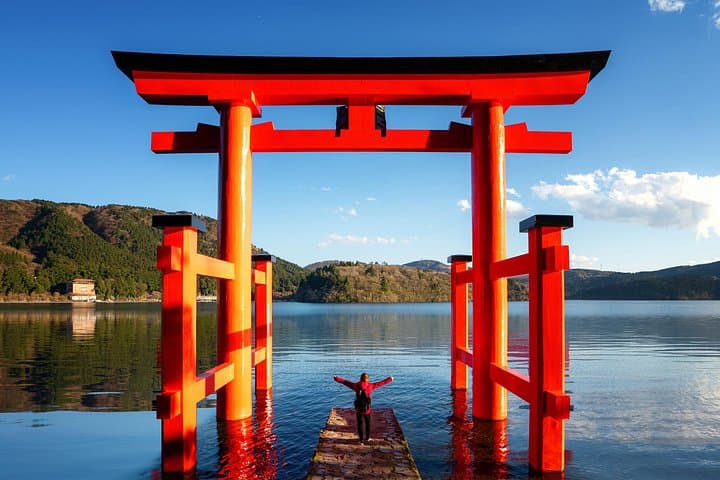
Lake Ashi (Ashi-no-ko) occupies a caldera lake basin formed after eruptions carved and refilled the valley; its shore is dotted with shrines and the iconic red torii that appears to float at the water’s edge. The pirate-ship cruise across the lake is practical transport and theatrical viewing platform, giving you a slow-moving frame for Fuji and the mountains.
Interwoven with geology is history. Hakone Sekisho was one of the Edo period’s policing stations — travelers were inspected, permits checked, and the movement of samurai and merchants regulated. Walk the restored timbers and imagine the Tokaido’s travelers adjusting their straw hats and exchanging news.
This private, full-day tour is customizable: your licensed English-speaking guide shapes the day to your interests. Expect short to moderate walks (most stops involve 10–30 minute walks), train and cable-cars between points, and multiple photo opportunities. Practical details: the Ropeway round-trip currently runs about ¥2,500, the Pirate Ship about ¥2,200, and a Hakone Sekisho entry fee is modest. Owakudani’s visibility and ropeway access can close with high sulfur emissions or poor weather; check local advisories. Pack layers — mornings near the lake can be crisp and the ropeway exposes you to wind.
For planning: aim for clear, cool mornings if Fuji views are a priority (late autumn through winter often offers the clearest skies), bring cash for small admissions and souvenirs, and wear grippy shoes for uneven shrine approaches and short trail sections. Above all, let the guide tune timing so you see the right light over the torii and the right windows in Owakudani when the steam parts to reveal Mount Fuji’s profile.
Yes — guides can meet you in Tokyo and travel to Hakone by train; confirm pickup point at booking since pickup outside Tokyo may require adjustments.
Yes — this private tour is modular; the guide will adjust stops and time at each site to fit interests and real-time conditions.
No — the ropeway can close for wind, maintenance, or high sulfur emissions in Owakudani; guides monitor status and offer alternatives if necessary.
Visibility depends on weather and season; winter mornings and late autumn typically provide the clearest views, though cloud cover can obscure the peak at any time.
Accessibility varies: some lakeside areas and the pirate ship boarding have ramps, but ropeway cabins and historical checkpoint buildings include stairs; notify the operator ahead for specific accommodations.
Guides on this tour speak English (licensed local guide); other languages may be available on request but should be confirmed when booking.
Japan Hidden Gems operates guided outdoor trips and adventures with an emphasis on safety, stewardship, and memorable experiences.
Morning fog lifts off the train as Tokyo shrinks behind you and the air takes on something cooler — a mineral tang, a hint of cedar smoke. Your guide meets you at the station, a small board with your name, and the day unfolds like a well-marked route on an old map. In Hakone the landscape alternates between geological drama and human history: steaming vents that remind you the earth is still working, a calm crater lake that frames a vermilion torii, and a checkpoint that once controlled the flow of people and goods along the Tokaido Road.
Morning fog lifts off the train as Tokyo shrinks behind you and the air takes on something cooler — a mineral tang, a hint of cedar smoke. Your guide meets you at the station, a small board with your name, and the day unfolds like a well-marked route on an old map. In Hakone the landscape alternates between geological drama and human history: steaming vents that remind you the earth is still working, a calm crater lake that frames a vermilion torii, and a checkpoint that once controlled the flow of people and goods along the Tokaido Road.
Start with the Ropeway climb where the cabin slides over steam vents and scoured pumice. Owakudani’s sulfur pools crackle with geothermal heat — a raw, visible reminder that Hakone is a young volcanic complex. From higher vantage points, Mount Fuji stages itself when weather allows: a clean cone above forested ridges and the mirror of Lake Ashi.
Lake Ashi (Ashi-no-ko) occupies a caldera lake basin formed after eruptions carved and refilled the valley; its shore is dotted with shrines and the iconic red torii that appears to float at the water’s edge. The pirate-ship cruise across the lake is practical transport and theatrical viewing platform, giving you a slow-moving frame for Fuji and the mountains.
Interwoven with geology is history. Hakone Sekisho was one of the Edo period’s policing stations — travelers were inspected, permits checked, and the movement of samurai and merchants regulated. Walk the restored timbers and imagine the Tokaido’s travelers adjusting their straw hats and exchanging news.
This private, full-day tour is customizable: your licensed English-speaking guide shapes the day to your interests. Expect short to moderate walks (most stops involve 10–30 minute walks), train and cable-cars between points, and multiple photo opportunities. Practical details: the Ropeway round-trip currently runs about ¥2,500, the Pirate Ship about ¥2,200, and a Hakone Sekisho entry fee is modest. Owakudani’s visibility and ropeway access can close with high sulfur emissions or poor weather; check local advisories. Pack layers — mornings near the lake can be crisp and the ropeway exposes you to wind.
For planning: aim for clear, cool mornings if Fuji views are a priority (late autumn through winter often offers the clearest skies), bring cash for small admissions and souvenirs, and wear grippy shoes for uneven shrine approaches and short trail sections. Above all, let the guide tune timing so you see the right light over the torii and the right windows in Owakudani when the steam parts to reveal Mount Fuji’s profile.