THE ADVENTURE COLLECTIVE® · Independent discovery and booking for outdoor travel

A customizable full-day private tour from Tokyo that pairs volcanic landscapes with lakeside shrines and top-tier museums. Ride the Hakone Ropeway, sail Lake Ashi, taste the black eggs of Owakudani, and shape the day around three to four curated stops.
A customizable full-day private tour from Tokyo that pairs volcanic landscapes with lakeside shrines and top-tier museums. Ride the Hakone Ropeway, sail Lake Ashi, taste the black eggs of Owakudani, and shape the day around three to four curated stops.
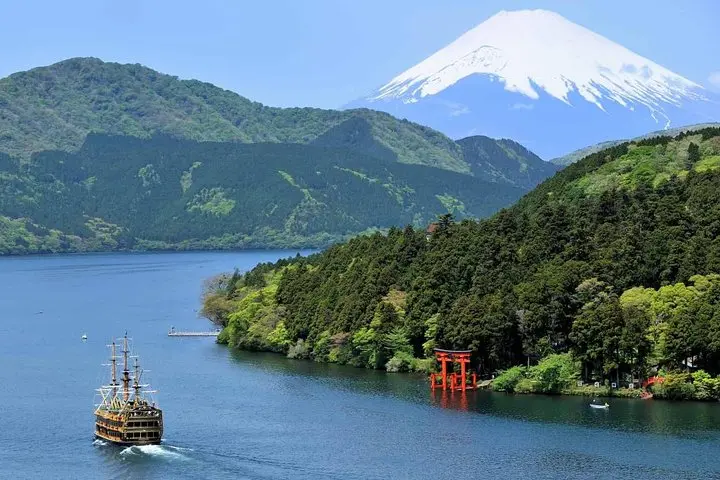
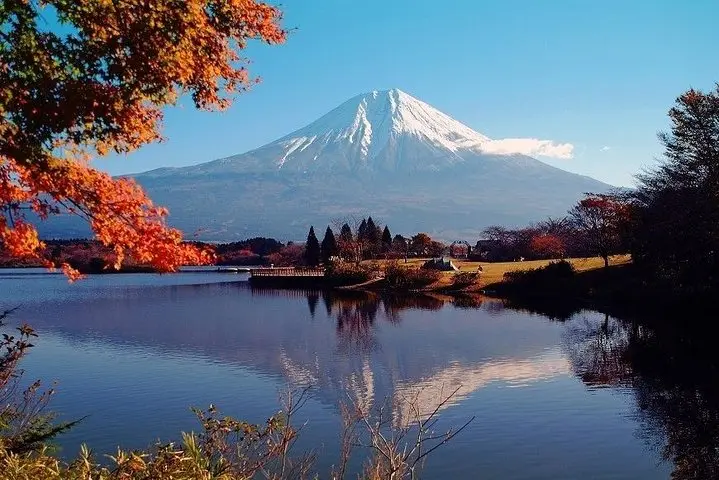
You step off the train in a different weather — Tokyo’s flat light traded for crisp mountain air and a low band of cloud that pins Mount Fuji to the horizon. Your guide waits with a map folded like a veteran’s hand, and the road unfurls: cedar groves, roadside ryokan, and the distant hiss of geothermal breath. This is Hakone in action — a pocket of volcanic energy and curated culture less than two hours from Tokyo.
Verified experiences and guided adventures in the surrounding area.
Operated by Japan Guide Agency · Hakone, Kanagawa
You step off the train in a different weather — Tokyo’s flat light traded for crisp mountain air and a low band of cloud that pins Mount Fuji to the horizon. Your guide waits with a map folded like a veteran’s hand, and the road unfurls: cedar groves, roadside ryokan, and the distant hiss of geothermal breath. This is Hakone in action — a pocket of volcanic energy and curated culture less than two hours from Tokyo.
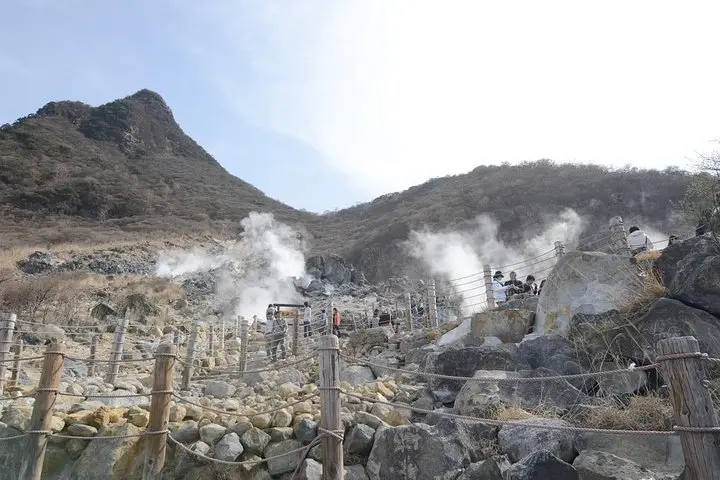
Geology shaped this place. Lake Ashinoko sits inside a caldera formed by Mount Hakone’s eruptions roughly 3,000 years ago, and Owakudani’s sulfurous vents still steam beneath a brittle crust. That heat has long fed the region’s onsen economy; locals boiled eggs in the vents so often they became an odd culinary legend — the black eggs you’ll see for sale are an example of the landscape doing practical work.
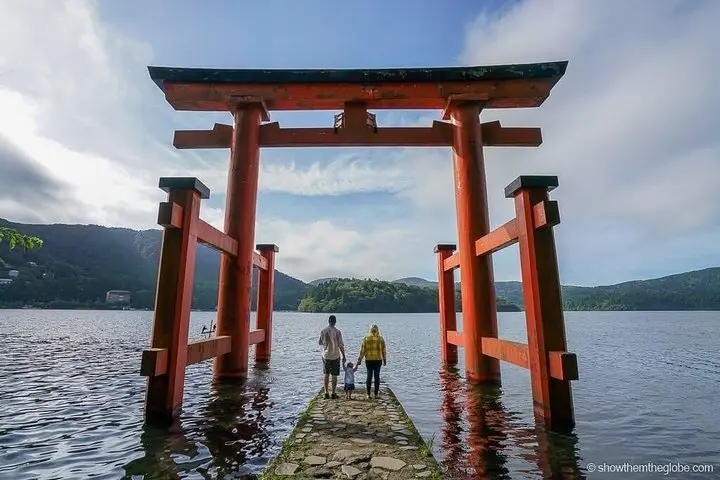
Hakone’s human stories run alongside the steam. As a key post on the Tokaido road in the Edo period, the valley hosted travelers, couriers and daimyō bound between Kyoto and Edo. Today the route is cultural: modern museums (Pola, Okada, and the old-school Hakone Open-Air) sit amid beech forests, their architecture designed to stand down to the setting rather than dominate it. Shrines like Hakone-jinja keep a quieter chronology — centuries of worship and a floating torii that frames the lake like an offered view.
A private, licensed guide lets you stitch highlights into a day that suits you — choose a ropeway ride over the caldera, a slow boat across the lake to the torii, and an hour for a museum where western impressionists and local nihonga sit in calm rotation. Expect walking: boardwalks, staircases, and short uneven trails near Owakudani’s vents.
Practical guidance: start early from Tokyo to beat the crowds and, if you want the ropeway, buy or confirm reservations; Owakudani can close when volcanic activity spikes, so plan your options with the guide. Bring cash — local buses, small food stalls and taxis still favor yen — and wear grippy walking shoes; many museum entries require phone lockers, so keep camera gear portable.
Hydration matters on a long walking day: refillable bottles are fine and there are vending machines and cafés around stations. Timing is everything for photos — late afternoon slices Fuji in clear weather; steam and overcast skies can make Owakudani feel cinematic. If mobility is limited, ask about arranging a private vehicle at booking — drivers must be reserved five days ahead. Ultimately, Hakone is an active landscape that asks you to balance curiosity with patience; it rewards the trade with unexpected panoramas, hot-spring rituals, and quiet plazas of art.
This private tour runs approximately 10 hours and meets in Tokyo; the guide will confirm the exact Tokyo meeting point after booking.
Yes — you pick 3–4 sites from the 'what to expect' list and your licensed guide will build the day around your interests.
No — the standard option uses public transport and taxis; private vehicles are available but must be requested at least five days before the tour and may incur extra costs.
The tour is primarily on foot; if walking is difficult, arrange a private vehicle when booking to reduce walking and transfers.
Owakudani sometimes closes due to volcanic activity; your guide will propose alternatives such as extra museum time, Gora Park, or the Hakone Open-Air Museum.
The guide meets you in Tokyo; admission fees and local transport fares are not included by default — have Japanese yen on hand and confirm any inclusions with your guide.
Japan Guide Agency operates guided outdoor trips and adventures with an emphasis on safety, stewardship, and memorable experiences.
You step off the train in a different weather — Tokyo’s flat light traded for crisp mountain air and a low band of cloud that pins Mount Fuji to the horizon. Your guide waits with a map folded like a veteran’s hand, and the road unfurls: cedar groves, roadside ryokan, and the distant hiss of geothermal breath. This is Hakone in action — a pocket of volcanic energy and curated culture less than two hours from Tokyo.
You step off the train in a different weather — Tokyo’s flat light traded for crisp mountain air and a low band of cloud that pins Mount Fuji to the horizon. Your guide waits with a map folded like a veteran’s hand, and the road unfurls: cedar groves, roadside ryokan, and the distant hiss of geothermal breath. This is Hakone in action — a pocket of volcanic energy and curated culture less than two hours from Tokyo.
Geology shaped this place. Lake Ashinoko sits inside a caldera formed by Mount Hakone’s eruptions roughly 3,000 years ago, and Owakudani’s sulfurous vents still steam beneath a brittle crust. That heat has long fed the region’s onsen economy; locals boiled eggs in the vents so often they became an odd culinary legend — the black eggs you’ll see for sale are an example of the landscape doing practical work.
Hakone’s human stories run alongside the steam. As a key post on the Tokaido road in the Edo period, the valley hosted travelers, couriers and daimyō bound between Kyoto and Edo. Today the route is cultural: modern museums (Pola, Okada, and the old-school Hakone Open-Air) sit amid beech forests, their architecture designed to stand down to the setting rather than dominate it. Shrines like Hakone-jinja keep a quieter chronology — centuries of worship and a floating torii that frames the lake like an offered view.
A private, licensed guide lets you stitch highlights into a day that suits you — choose a ropeway ride over the caldera, a slow boat across the lake to the torii, and an hour for a museum where western impressionists and local nihonga sit in calm rotation. Expect walking: boardwalks, staircases, and short uneven trails near Owakudani’s vents.
Practical guidance: start early from Tokyo to beat the crowds and, if you want the ropeway, buy or confirm reservations; Owakudani can close when volcanic activity spikes, so plan your options with the guide. Bring cash — local buses, small food stalls and taxis still favor yen — and wear grippy walking shoes; many museum entries require phone lockers, so keep camera gear portable.
Hydration matters on a long walking day: refillable bottles are fine and there are vending machines and cafés around stations. Timing is everything for photos — late afternoon slices Fuji in clear weather; steam and overcast skies can make Owakudani feel cinematic. If mobility is limited, ask about arranging a private vehicle at booking — drivers must be reserved five days ahead. Ultimately, Hakone is an active landscape that asks you to balance curiosity with patience; it rewards the trade with unexpected panoramas, hot-spring rituals, and quiet plazas of art.