THE ADVENTURE COLLECTIVE® · Independent discovery and booking for outdoor travel

Spend a curated day in Hakone with a licensed guide and private vehicle: steam vents at Owakudani, a ropeway with Fuji views, and a boat across Lake Ashinoko to the floating Torii. This full-day itinerary balances geology, culture and art with practical tips for timing, tickets and what to pack.
Spend a curated day in Hakone with a licensed guide and private vehicle: steam vents at Owakudani, a ropeway with Fuji views, and a boat across Lake Ashinoko to the floating Torii. This full-day itinerary balances geology, culture and art with practical tips for timing, tickets and what to pack.
The road out of Tokyo opens like a held breath: expressway, rice paddies giving way to low mountains, then pines and the first hints of steam from the ground. By the time the van curves into Hakone, the air tastes different — cooler, mineral-sweet — as if the landscape itself is pulling travelers toward the hot springs.
Verified experiences and guided adventures in the surrounding area.
Operated by Japan Guide Agency · Hakone, Kanagawa
The road out of Tokyo opens like a held breath: expressway, rice paddies giving way to low mountains, then pines and the first hints of steam from the ground. By the time the van curves into Hakone, the air tastes different — cooler, mineral-sweet — as if the landscape itself is pulling travelers toward the hot springs.
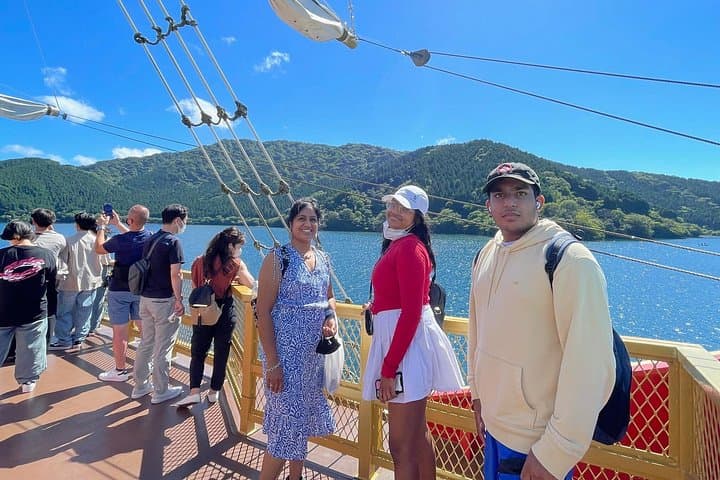
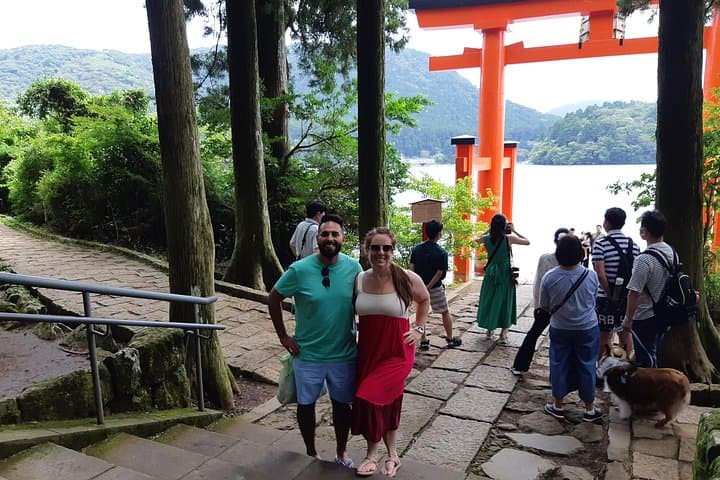
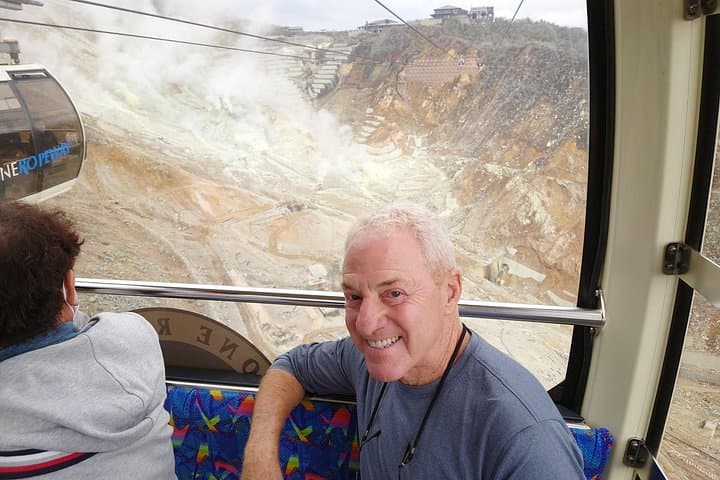
This private, full-day loop stitches together the region’s best scenes: the sulfurous steam vents of Owakudani, the cable-ropeway drop that frames Mount Fuji, and a quiet glide across Lake Ashinoko to the red Torii of Hakone-jinja. Each stop reads like a different chapter of Hakone’s story. Geologically, the lake sits inside a caldera created by Mount Hakone’s eruptions roughly 3,000 years ago; pockets of geothermal activity still breathe through vents and hot springs, shaping everything from the black eggs sold at Owakudani to the spa culture that made Hakone a resort since the Edo period.
Culturally, Hakone has been both gateway and refuge. It was a station on the Tōkaidō road, supplying travelers between Edo (now Tokyo) and Kyoto, and today hosts museums that answer another pull — the one toward art. The POLA Museum and the Hakone Open-Air Museum place modern and classic art against forested slopes, while smaller sites like Choanji Temple reveal local devotional practices and quirky details — two hundred rakan statues that seem to watch the path with varying expressions.
Practical rhythm matters: the full tour runs about nine hours with roughly an hour each way by private vehicle from central Tokyo, giving you three to four core stops chosen to your taste — ropeway and Owakudani for geology and drama; Lake Ashi and Hakone Shrine for clean, photographic views; or a museum crawl if you prefer quiet galleries to vents.
Expect easy pacing — the day is suitable for most fitness levels — but bring sensible footwear and layers. Owakudani sits roughly at 1,000 m elevation; winds and sulfur can bite the skin on a clear morning. The ropeway charges separately (about ¥1,480 one way; covered if you hold a Hakone Free Pass) and some smaller paths, like the Owakudani Nature Study Path, require advance reservations and a small entry fee.
Timing is tactical: early departures beat tourist buses and offer clearer views of Mount Fuji. Carry cash for small vendors, and leave time in the afternoon for Gotemba Outlets if shopping or a hot-spring soak appeals. The private guide and vehicle make the day efficient and flexible — a compact, layered introduction to Hakone’s wild heat, historical routes, and unexpectedly refined art scene.
Expect about one hour each way by private vehicle from central Tokyo (roughly two hours roundtrip), plus sightseeing time; the full itinerary is approximately 9 hours.
The ropeway fare is listed separately (about ¥1,480 one way) but may be covered if you use a Hakone Free Pass; check with your guide before boarding.
Yes — vendors sell the famous black eggs cooked in the sulfuric springs; they’re safe to eat for most travelers but avoid if you have strong sulfur sensitivity.
Museum admissions are usually not included by default; the guide can recommend which to add and confirm admission fees in advance.
Transportation is wheelchair accessible and many sites have level access, but some shrines, ropeway transfers and older garden paths have steps — inform the operator about specific needs when booking.
The operator will adjust the itinerary if sections are closed for safety — alternatives include extra museum time, Gora Park, or the Gotemba Outlets depending on your interests.
Japan Guide Agency operates guided outdoor trips and adventures with an emphasis on safety, stewardship, and memorable experiences.
The road out of Tokyo opens like a held breath: expressway, rice paddies giving way to low mountains, then pines and the first hints of steam from the ground. By the time the van curves into Hakone, the air tastes different — cooler, mineral-sweet — as if the landscape itself is pulling travelers toward the hot springs.
The road out of Tokyo opens like a held breath: expressway, rice paddies giving way to low mountains, then pines and the first hints of steam from the ground. By the time the van curves into Hakone, the air tastes different — cooler, mineral-sweet — as if the landscape itself is pulling travelers toward the hot springs.
This private, full-day loop stitches together the region’s best scenes: the sulfurous steam vents of Owakudani, the cable-ropeway drop that frames Mount Fuji, and a quiet glide across Lake Ashinoko to the red Torii of Hakone-jinja. Each stop reads like a different chapter of Hakone’s story. Geologically, the lake sits inside a caldera created by Mount Hakone’s eruptions roughly 3,000 years ago; pockets of geothermal activity still breathe through vents and hot springs, shaping everything from the black eggs sold at Owakudani to the spa culture that made Hakone a resort since the Edo period.
Culturally, Hakone has been both gateway and refuge. It was a station on the Tōkaidō road, supplying travelers between Edo (now Tokyo) and Kyoto, and today hosts museums that answer another pull — the one toward art. The POLA Museum and the Hakone Open-Air Museum place modern and classic art against forested slopes, while smaller sites like Choanji Temple reveal local devotional practices and quirky details — two hundred rakan statues that seem to watch the path with varying expressions.
Practical rhythm matters: the full tour runs about nine hours with roughly an hour each way by private vehicle from central Tokyo, giving you three to four core stops chosen to your taste — ropeway and Owakudani for geology and drama; Lake Ashi and Hakone Shrine for clean, photographic views; or a museum crawl if you prefer quiet galleries to vents.
Expect easy pacing — the day is suitable for most fitness levels — but bring sensible footwear and layers. Owakudani sits roughly at 1,000 m elevation; winds and sulfur can bite the skin on a clear morning. The ropeway charges separately (about ¥1,480 one way; covered if you hold a Hakone Free Pass) and some smaller paths, like the Owakudani Nature Study Path, require advance reservations and a small entry fee.
Timing is tactical: early departures beat tourist buses and offer clearer views of Mount Fuji. Carry cash for small vendors, and leave time in the afternoon for Gotemba Outlets if shopping or a hot-spring soak appeals. The private guide and vehicle make the day efficient and flexible — a compact, layered introduction to Hakone’s wild heat, historical routes, and unexpectedly refined art scene.