THE ADVENTURE COLLECTIVE® · Independent discovery and booking for outdoor travel

Spend six hours riding ropeways over steaming volcanic vents, sailing across a caldera lake with Mount Fuji on the horizon, and visiting world-class museums — all in a private vehicle with a licensed English guide. Perfect for travelers who want Hakone’s highlights in one efficient, customizable day.
Spend six hours riding ropeways over steaming volcanic vents, sailing across a caldera lake with Mount Fuji on the horizon, and visiting world-class museums — all in a private vehicle with a licensed English guide. Perfect for travelers who want Hakone’s highlights in one efficient, customizable day.
The road climbs out of Hakone-Yumoto and the pines tighten around the windshield; steam hisses from the mountainside like a restless animal. In a single day this private tour threads together the volcanic theatrics of Owakudani, a ropeway glide with Mount Fuji flashing between cloud seams, a short boat crossing of Lake Ashinoko and curated stops at museums and shrines — all with a licensed English-speaking guide and a private vehicle to move at your pace.
Verified experiences and guided adventures in the surrounding area.
Operated by Japan Guide Agency · Hakone, Kanagawa
The road climbs out of Hakone-Yumoto and the pines tighten around the windshield; steam hisses from the mountainside like a restless animal. In a single day this private tour threads together the volcanic theatrics of Owakudani, a ropeway glide with Mount Fuji flashing between cloud seams, a short boat crossing of Lake Ashinoko and curated stops at museums and shrines — all with a licensed English-speaking guide and a private vehicle to move at your pace.
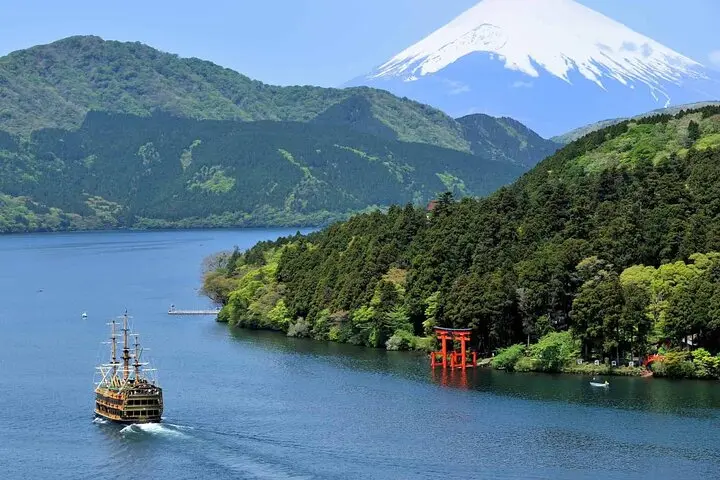
Hakone’s geography reads like a folded page of Japan’s fire-and-water story. The lake itself sits in a caldera created by Hakone’s last major eruption some 3,000 years ago; Owakudani is the volcanic throat still breathing sulfurous steam. Human history here blends pilgrimage and leisure — Hakone-jinja’s torii rises from the lakeshore where travelers have left offerings for centuries, while 20th-century art patrons carved caves for light and collection in the forested hills.
Culture and craft are as much a draw as geology. Pola, Okada and the Open-Air Museum place European and East Asian collections into the landscape, while small sites like the Glass no Mori and Choanji Temple reward slower attention: a Venetian goblet, a pair of rakan statues, a moment when steam parts and Fuji reappears.
Practically, this is a 6-hour customizable circuit: expect 3–4 stops chosen from ropeway/Owakudani, Lake Ashinoko and its shrine, one or two museums, and a garden or park. Visibility governs the Fuji shots — morning is likeliest for clear skies — and Owakudani can close to visitors when volcanic gases spike. Your guide times the ropeway and boat to avoid peak crowds where possible and handles admissions, but admission fees are typically separate unless noted.
Wear grippy shoes for short uneven boardwalks at volcanic sites and bring layered clothing; temperature drops quickly with elevation. Cash remains useful at shrine stalls and smaller museums. If you want the black eggs at Owakudani (a local novelty boiled in sulfuric waters), the guide will point you to the official stalls — they’re safe and long-prized for novelty and lore.
Accessibility is straightforward: the tour offers hotel pickups in Hakone and Odawara and the vehicle is wheelchair-friendly. For photographers, aim for the ropeway and Moto-Hakone for classic Fuji-and-torii frames; museums provide controlled light and architectural detail when skies are flat.
By the end of the day, the mountains don’t feel distant any longer — they’ve nudged you through steam vents, lakeshore shrines and quiet museum rooms, and the private guide’s local context turns each stop from postcard to story. This tour is for travelers who want Hakone’s essentials delivered efficiently with room to linger where they choose.
Not required — the tour uses a private vehicle and covers transfers; the Hakone Free Pass is useful if you plan independent travel before or after the tour.
Yes, but visibility depends on weather and season; clear mornings in winter and late fall offer the best chances.
Yes — the eggs sold at official stalls are prepared in monitored pools; they’re a novelty rather than a health concern.
Transportation options are wheelchair accessible and many major sites provide accessible routes, but some temple grounds and older museum areas have steps — discuss needs when booking.
Guides will adjust the itinerary to alternate viewpoints, museums or parks; closures are common protocol and refunds follow supplier policy if necessary.
Some fees may not be included — check the tour inclusions; guides typically advise which entrances are covered and handle tickets when included.
Japan Guide Agency operates guided outdoor trips and adventures with an emphasis on safety, stewardship, and memorable experiences.
The road climbs out of Hakone-Yumoto and the pines tighten around the windshield; steam hisses from the mountainside like a restless animal. In a single day this private tour threads together the volcanic theatrics of Owakudani, a ropeway glide with Mount Fuji flashing between cloud seams, a short boat crossing of Lake Ashinoko and curated stops at museums and shrines — all with a licensed English-speaking guide and a private vehicle to move at your pace.
The road climbs out of Hakone-Yumoto and the pines tighten around the windshield; steam hisses from the mountainside like a restless animal. In a single day this private tour threads together the volcanic theatrics of Owakudani, a ropeway glide with Mount Fuji flashing between cloud seams, a short boat crossing of Lake Ashinoko and curated stops at museums and shrines — all with a licensed English-speaking guide and a private vehicle to move at your pace.
Hakone’s geography reads like a folded page of Japan’s fire-and-water story. The lake itself sits in a caldera created by Hakone’s last major eruption some 3,000 years ago; Owakudani is the volcanic throat still breathing sulfurous steam. Human history here blends pilgrimage and leisure — Hakone-jinja’s torii rises from the lakeshore where travelers have left offerings for centuries, while 20th-century art patrons carved caves for light and collection in the forested hills.
Culture and craft are as much a draw as geology. Pola, Okada and the Open-Air Museum place European and East Asian collections into the landscape, while small sites like the Glass no Mori and Choanji Temple reward slower attention: a Venetian goblet, a pair of rakan statues, a moment when steam parts and Fuji reappears.
Practically, this is a 6-hour customizable circuit: expect 3–4 stops chosen from ropeway/Owakudani, Lake Ashinoko and its shrine, one or two museums, and a garden or park. Visibility governs the Fuji shots — morning is likeliest for clear skies — and Owakudani can close to visitors when volcanic gases spike. Your guide times the ropeway and boat to avoid peak crowds where possible and handles admissions, but admission fees are typically separate unless noted.
Wear grippy shoes for short uneven boardwalks at volcanic sites and bring layered clothing; temperature drops quickly with elevation. Cash remains useful at shrine stalls and smaller museums. If you want the black eggs at Owakudani (a local novelty boiled in sulfuric waters), the guide will point you to the official stalls — they’re safe and long-prized for novelty and lore.
Accessibility is straightforward: the tour offers hotel pickups in Hakone and Odawara and the vehicle is wheelchair-friendly. For photographers, aim for the ropeway and Moto-Hakone for classic Fuji-and-torii frames; museums provide controlled light and architectural detail when skies are flat.
By the end of the day, the mountains don’t feel distant any longer — they’ve nudged you through steam vents, lakeshore shrines and quiet museum rooms, and the private guide’s local context turns each stop from postcard to story. This tour is for travelers who want Hakone’s essentials delivered efficiently with room to linger where they choose.