THE ADVENTURE COLLECTIVE® · Independent discovery and booking for outdoor travel

Ride ropeways above steaming valleys, stand beneath an 800-year cedar approach to a mountain shrine, and cross Lake Ashi on a pirate-ship cruise — all in a private, public-transport day tour from Hakone Yumoto. This full-day itinerary pairs volcanic drama with cultural calm and practical local insight.
Ride ropeways above steaming valleys, stand beneath an 800-year cedar approach to a mountain shrine, and cross Lake Ashi on a pirate-ship cruise — all in a private, public-transport day tour from Hakone Yumoto. This full-day itinerary pairs volcanic drama with cultural calm and practical local insight.
The day begins at the second-floor ticket gate of Odakyu Line’s Hakone Yumoto Station, where steam and cedar scent the air and a local guide waits with a map folded like a promise. You step onto public transport with the rest of your small party and the valley opens in stages: hot sulfur vents hissing near Owakudani, a cedar-lined approach to a Shinto shrine, wide water under a pirate-ship bow, and sculptures that lean into the landscape at the Open-Air Museum.
Verified experiences and guided adventures in the surrounding area.
Operated by Fulfilling Inc. · Hakone, Kanagawa
The day begins at the second-floor ticket gate of Odakyu Line’s Hakone Yumoto Station, where steam and cedar scent the air and a local guide waits with a map folded like a promise. You step onto public transport with the rest of your small party and the valley opens in stages: hot sulfur vents hissing near Owakudani, a cedar-lined approach to a Shinto shrine, wide water under a pirate-ship bow, and sculptures that lean into the landscape at the Open-Air Museum.
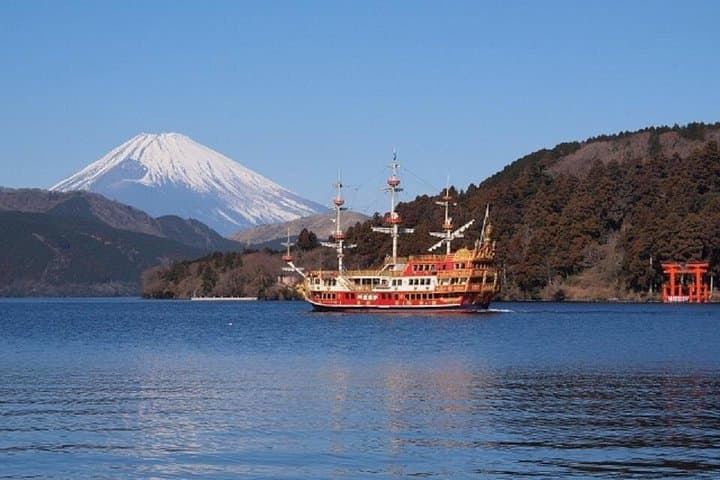
Hakone’s story is geological as much as cultural. Lake Ashi — born from a 3,000-year-old volcanic debris avalanche — holds the reflection of Mount Fuji on clear mornings. Owakudani is the active heart, where volcanic gases still scent the air and black “Kuro Tamago” eggs are sold near vents warmed by the furnace of the earth. Hakone Shrine, founded in 757, anchors a long mountain-faith tradition; its ancient cedar approach and lakeside torii are quiet reminders that this has been a pilgrimage route for centuries.
The itinerary reads like a compact primer to the area: ropeway rides that pull you above sulfur-steamed valleys, a stroll at Owakudani (conditions permitting), a quiet moment at Hakone Shrine, the Open-Air Museum’s playful pairing of art and pines (and a public footbath to soak tired feet), and a cabin cruise across Lake Ashi on the pirate-ship replica where, if the sky is kind, Mount Fuji colors the horizon.
Practicalities shape the day. The tour runs roughly seven hours and uses the Hakone Free Pass (provided), which simplifies travel across ropeways, buses, and boats — though museum admissions and certain specialty experiences aren’t covered. Owakudani can be closed when volcanic gas spikes; your guide will adapt the route. Wear sturdy shoes: rock, boardwalk, and shrine steps appear in a single afternoon. Carry yen in small bills for shrine offerings, snacks, and the occasional souvenir. Layer for rapidly changing conditions — mornings can be clear and cold, afternoons mild and humid.
For photographers and planners: aim for early departures to maximize Fuji visibility, and leave room for the museum’s terraces and the lakeside torii at Moto-Hakone for sunset framing. If you want a private rhythm, this tour delivers—transportation logistics handled, local knowledge threaded through the route, and the freedom to move between cultural touchstones and volcanic theatre without ferry schedules tripping you up.
By day’s end you return to Hakone Yumoto with footprints, inked receipts for small purchases, and a clearer sense of a landscape that keeps pushing — steam, lake, and cedar — and asks you to move through it respectfully.
Yes — the tour uses public transport and the Hakone Free Pass (provided) to cover ropeways, buses, and the Lake Ashi cruise; some attractions’ admissions are extra.
Visibility depends on weather and air clarity; clear mornings in cooler months give the best odds, but Fuji is never guaranteed.
No — Owakudani closes when sulfur gas concentrations rise; guides will reroute to other viewpoints or extend stops elsewhere when it’s closed.
Admissions to the Hakone Open-Air Museum and other attractions are typically not included unless specified; budget for entry fees separately.
Yes — the itinerary notes stroller access and suits a range of ages, though some sites have steps and uneven paths.
Yes — the day is guided just for your party, allowing a flexible pace and private commentary from an English-speaking guide.
Fulfilling Inc. operates guided outdoor trips and adventures with an emphasis on safety, stewardship, and memorable experiences.
The day begins at the second-floor ticket gate of Odakyu Line’s Hakone Yumoto Station, where steam and cedar scent the air and a local guide waits with a map folded like a promise. You step onto public transport with the rest of your small party and the valley opens in stages: hot sulfur vents hissing near Owakudani, a cedar-lined approach to a Shinto shrine, wide water under a pirate-ship bow, and sculptures that lean into the landscape at the Open-Air Museum.
The day begins at the second-floor ticket gate of Odakyu Line’s Hakone Yumoto Station, where steam and cedar scent the air and a local guide waits with a map folded like a promise. You step onto public transport with the rest of your small party and the valley opens in stages: hot sulfur vents hissing near Owakudani, a cedar-lined approach to a Shinto shrine, wide water under a pirate-ship bow, and sculptures that lean into the landscape at the Open-Air Museum.
Hakone’s story is geological as much as cultural. Lake Ashi — born from a 3,000-year-old volcanic debris avalanche — holds the reflection of Mount Fuji on clear mornings. Owakudani is the active heart, where volcanic gases still scent the air and black “Kuro Tamago” eggs are sold near vents warmed by the furnace of the earth. Hakone Shrine, founded in 757, anchors a long mountain-faith tradition; its ancient cedar approach and lakeside torii are quiet reminders that this has been a pilgrimage route for centuries.
The itinerary reads like a compact primer to the area: ropeway rides that pull you above sulfur-steamed valleys, a stroll at Owakudani (conditions permitting), a quiet moment at Hakone Shrine, the Open-Air Museum’s playful pairing of art and pines (and a public footbath to soak tired feet), and a cabin cruise across Lake Ashi on the pirate-ship replica where, if the sky is kind, Mount Fuji colors the horizon.
Practicalities shape the day. The tour runs roughly seven hours and uses the Hakone Free Pass (provided), which simplifies travel across ropeways, buses, and boats — though museum admissions and certain specialty experiences aren’t covered. Owakudani can be closed when volcanic gas spikes; your guide will adapt the route. Wear sturdy shoes: rock, boardwalk, and shrine steps appear in a single afternoon. Carry yen in small bills for shrine offerings, snacks, and the occasional souvenir. Layer for rapidly changing conditions — mornings can be clear and cold, afternoons mild and humid.
For photographers and planners: aim for early departures to maximize Fuji visibility, and leave room for the museum’s terraces and the lakeside torii at Moto-Hakone for sunset framing. If you want a private rhythm, this tour delivers—transportation logistics handled, local knowledge threaded through the route, and the freedom to move between cultural touchstones and volcanic theatre without ferry schedules tripping you up.
By day’s end you return to Hakone Yumoto with footprints, inked receipts for small purchases, and a clearer sense of a landscape that keeps pushing — steam, lake, and cedar — and asks you to move through it respectfully.