
Hakone in a Day: 8-Hour Private Guided Tour to Owakudani, Lake Ashi and Art Museums
Spend eight curated hours in Hakone with a government-licensed guide: steam vents at Owakudani, a ropeway over sulfur fields, a boat across Lake Ashinoko to a torii gate, and art museums tucked into the forests. Pick 4–5 sites and let local knowledge shape the route.
An Adventure In Hakone.
Spend eight curated hours in Hakone with a government-licensed guide: steam vents at Owakudani, a ropeway over sulfur fields, a boat across Lake Ashinoko to a torii gate, and art museums tucked into the forests. Pick 4–5 sites and let local knowledge shape the route.
Read the full experience
The morning fog lifts off the valley and the first gondolas of the Hakone Ropeway slide like small white beetles over steaming vents. You meet your licensed English-speaking guide in a compact square of Hakone on foot, map and plan in hand — four to five places to choose from, eight hours to shape the day. The route can thread sulfur-scented volcanic ridges, lakeside pine paths with a low, framing view of Mount Fuji, and quiet museum courtyards where modern sculpture meets the mountain air.
The morning fog lifts off the valley and the first gondolas of the Hakone Ropeway slide like small white beetles over steaming vents. You meet your licensed English-speaking guide in a compact square of Hakone on foot, map and plan in hand — four to five places to choose from, eight hours to shape the day. The route can thread sulfur-scented volcanic ridges, lakeside pine paths with a low, framing view of Mount Fuji, and quiet museum courtyards where modern sculpture meets the mountain air.
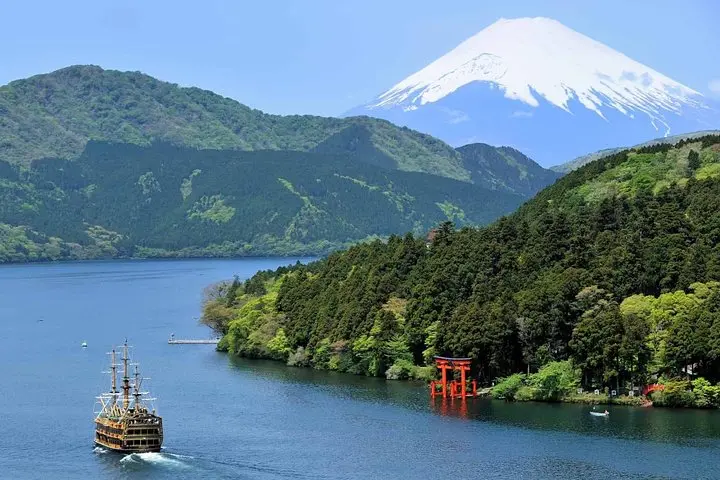
Hakone sits on the rim of an ancient caldera; its landscape is volcanic in the way a coastline is marine. Owakudani still exhales: boiling pools and yellow sulfur deposits are the geological engine behind the hot-spring culture that made Hakone a resort destination in the Edo period. Lake Ashinoko occupies the caldera floor and offers the classic picture of a floating torii gate with Fuji beyond — an image that became a popular subject for woodblock artists centuries ago and a touchstone of travel today.
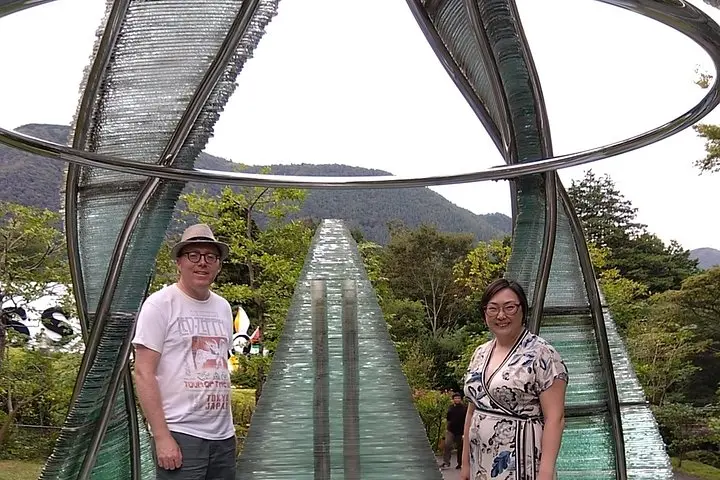
Culturally, Hakone balances two impulses: outward-facing tourism and inward-facing contemplation. You can hop from the open-air museum — sculptures threaded through forest and meadow — to a tiny, centuries-old Shinto shrine whose torii pierces the lake. Local culinary quirks appear en route: the black boiled eggs of Owakudani, darkened and mineral-rich, are sold with a folklore-minded promise of longevity.
Practical planning decides how the story reads. The tour operates on foot and via public transit (or local taxis) unless you arrange a private vehicle five days in advance. Your guide will advise on buying a Hakone Free Pass for unlimited local transport or when to pay per ride; have Japanese yen on hand for transfers not included in the price. Expect a full day: the listed duration is eight hours with moderate amounts of walking and short uphill sections around ropeway stations and shrines.
Timing and weather shape your experience. Mount Fuji appears best on cold, clear mornings; Owakudani can close when sulfur levels rise. Mobility needs are accommodated with pickup options and wheelchair-accessible transportation if arranged ahead. Bring layered clothes for rapid elevation changes, a waterproof shell, and comfortable walking shoes with good tread for volcanic paths and lakeside steps.
Whether you prefer geology, shrine architecture, or modern art, the private guide peels the layers for you, optimizes the route, and leaves space for small discoveries: a quiet teahouse, an overlooked viewpoint, or a late-afternoon cup of onsen-sweetened coffee by the lake.
Frequently asked questions
You can discuss priorities with your guide after booking, but come with a short wish list—guides tailor the route to weather and mobility.
The base tour meets on foot; public transport and taxis are used for site transfers and are paid for separately unless a private vehicle is pre-booked.
Yes—the operator can arrange wheelchair-accessible transportation if requested in advance and within vehicle capacity limits.
Admissions are generally not included; your guide will advise current prices and whether the Hakone Free Pass covers any sites.
Guides will substitute other nearby attractions—more lakeside time, a different museum, or forest walks—to keep the day balanced.
Tipping is not customary in Japan, but many visitors offer a small thank-you gift or card; follow local norms and your comfort level.
About This Experience
Japan Guide Agency operates guided outdoor trips and adventures with an emphasis on safety, stewardship, and memorable experiences.
Adventure tips
Recommended gear
- Comfortable walking shoes: Good traction and support handle volcanic trails, stairs, and paved museum grounds.
- Light waterproof jacket: Protects against mountain drizzle and sudden wind near the ropeway.
- Japanese yen (cash): Useful for local taxis, small museum fees, snacks, and souvenir shops.
- Compact daypack: Holds water, layers, camera, and purchases while keeping hands free for steps and railings.
Photos of the experience
Related adventures & guides
Read the full experience
The morning fog lifts off the valley and the first gondolas of the Hakone Ropeway slide like small white beetles over steaming vents. You meet your licensed English-speaking guide in a compact square of Hakone on foot, map and plan in hand — four to five places to choose from, eight hours to shape the day. The route can thread sulfur-scented volcanic ridges, lakeside pine paths with a low, framing view of Mount Fuji, and quiet museum courtyards where modern sculpture meets the mountain air.
The morning fog lifts off the valley and the first gondolas of the Hakone Ropeway slide like small white beetles over steaming vents. You meet your licensed English-speaking guide in a compact square of Hakone on foot, map and plan in hand — four to five places to choose from, eight hours to shape the day. The route can thread sulfur-scented volcanic ridges, lakeside pine paths with a low, framing view of Mount Fuji, and quiet museum courtyards where modern sculpture meets the mountain air.
Hakone sits on the rim of an ancient caldera; its landscape is volcanic in the way a coastline is marine. Owakudani still exhales: boiling pools and yellow sulfur deposits are the geological engine behind the hot-spring culture that made Hakone a resort destination in the Edo period. Lake Ashinoko occupies the caldera floor and offers the classic picture of a floating torii gate with Fuji beyond — an image that became a popular subject for woodblock artists centuries ago and a touchstone of travel today.
Culturally, Hakone balances two impulses: outward-facing tourism and inward-facing contemplation. You can hop from the open-air museum — sculptures threaded through forest and meadow — to a tiny, centuries-old Shinto shrine whose torii pierces the lake. Local culinary quirks appear en route: the black boiled eggs of Owakudani, darkened and mineral-rich, are sold with a folklore-minded promise of longevity.
Practical planning decides how the story reads. The tour operates on foot and via public transit (or local taxis) unless you arrange a private vehicle five days in advance. Your guide will advise on buying a Hakone Free Pass for unlimited local transport or when to pay per ride; have Japanese yen on hand for transfers not included in the price. Expect a full day: the listed duration is eight hours with moderate amounts of walking and short uphill sections around ropeway stations and shrines.
Timing and weather shape your experience. Mount Fuji appears best on cold, clear mornings; Owakudani can close when sulfur levels rise. Mobility needs are accommodated with pickup options and wheelchair-accessible transportation if arranged ahead. Bring layered clothes for rapid elevation changes, a waterproof shell, and comfortable walking shoes with good tread for volcanic paths and lakeside steps.
Whether you prefer geology, shrine architecture, or modern art, the private guide peels the layers for you, optimizes the route, and leaves space for small discoveries: a quiet teahouse, an overlooked viewpoint, or a late-afternoon cup of onsen-sweetened coffee by the lake.
Make a day of it nearby.
Verified experiences and guided adventures in the surrounding area.