THE ADVENTURE COLLECTIVE® · Independent discovery and booking for outdoor travel

A private, driver-led day that stitches together Hakone’s volcanic drama and lakeside calm with clear Mount Fuji sightlines. Expect an efficient 8–9 hour route that includes Lake Ashi, Owakudani steam fields, the Mishima Skywalk and cultural shrines.
A private, driver-led day that stitches together Hakone’s volcanic drama and lakeside calm with clear Mount Fuji sightlines. Expect an efficient 8–9 hour route that includes Lake Ashi, Owakudani steam fields, the Mishima Skywalk and cultural shrines.
You step into a compact van in the Tokyo morning and the city slips away while the air sharpens. By the time you crest the last ridge before Hakone the landscape has changed: cedar and sugi trees crowd the road, clouds hang low over a bowl of mountains, and Mount Fuji, patient and symmetrical, looms larger with every mile. The private driver parks near Lake Ashi; the water, cool and dark, seems to breathe as tour boats — including the whimsical pirate ships — cut their wakes toward a torii gate that floats like a painted promise.
Verified experiences and guided adventures in the surrounding area.
Operated by Welcome Japan Tours · Hakone, Kanagawa
You step into a compact van in the Tokyo morning and the city slips away while the air sharpens. By the time you crest the last ridge before Hakone the landscape has changed: cedar and sugi trees crowd the road, clouds hang low over a bowl of mountains, and Mount Fuji, patient and symmetrical, looms larger with every mile. The private driver parks near Lake Ashi; the water, cool and dark, seems to breathe as tour boats — including the whimsical pirate ships — cut their wakes toward a torii gate that floats like a painted promise.
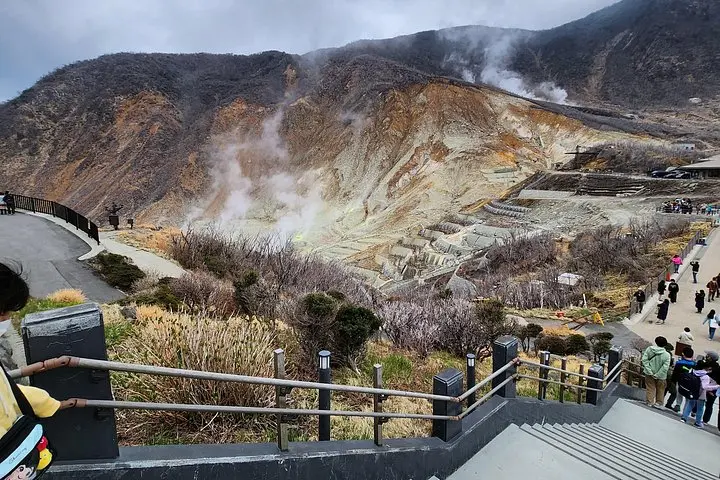
This is a day arranged as choreography: a ropeway up to Owakudani’s steaming vents, a stroll past Hakone Shrine’s lakeside torii, a stop at the Hakone Open-Air Museum, and the airborne thrill of the Mishima Skywalk. Geology explains the theatrics — Hakone sits in a volcanic caldera formed by eruptions and collapse; fumaroles at Owakudani still hiss and color the rocks with sulfur. Culturally, Hakone was a strategic station on the old Tokaido route connecting Edo and Kyoto, and the shrines and checkpoints here preserve that travel history alongside modern onsen culture.
The guide-driven format keeps the day efficient: expect 8–9 hours including hotel pickup in the Tokyo 23 wards or local Hakone hotels. Several stops are optional — the pirate-ship cruise and ropeway usually cost extra — so plan priorities if you want to chase the clearest Fuji views. On clear mornings Fuji will dominate photos; on hazy days the steam and sulfur of Owakudani make striking, moody images.
Practical notes: wear sturdy walking shoes for uneven paths around shrines and Owakudani; pack layers — mountain air can drop 10°C from Tokyo — and bring a small daypack with water and a lightweight rain shell. The operator contacts guests by WhatsApp a day before travel; traffic and weather can shift the schedule, and the private format lets the driver adapt timing for better visibility of Mt. Fuji.
For families, infant seats are available and walking demands are low, but the day is long: factor in travel time and motion comfort. Respect local onsen etiquette if you visit hot springs, and take care not to feed wildlife or stray from marked areas — Hakone’s ecosystems and volcanic features are fragile. End the day watching the land go quiet as you’re driven back toward the bright pulse of Tokyo, Fuji receding into the silhouette of the evening — a hard-won image that tends to stay with you.
Some stops like the Hakone Open-Air Museum and private cruises usually require separate admission; ropeway and pirate-ship fees are optional extras.
Pickup is offered within Tokyo 23 wards and from hotels in the Hakone area; confirm your pickup point when booking.
Visibility depends on weather—early mornings and winter days offer the best chance; the operator can adjust timing when possible to improve views.
Yes—infant seats are available and the tour is suitable for families, but it is a long day, so plan accordingly.
This is a private tour with an English-speaking driver; a dedicated tour guide is not included unless requested in advance.
Owakudani is an active volcanic area with sulfur fumes and hot vents; vulnerable visitors should take care, and access can close when volcanic activity rises.
Welcome Japan Tours operates guided outdoor trips and adventures with an emphasis on safety, stewardship, and memorable experiences.
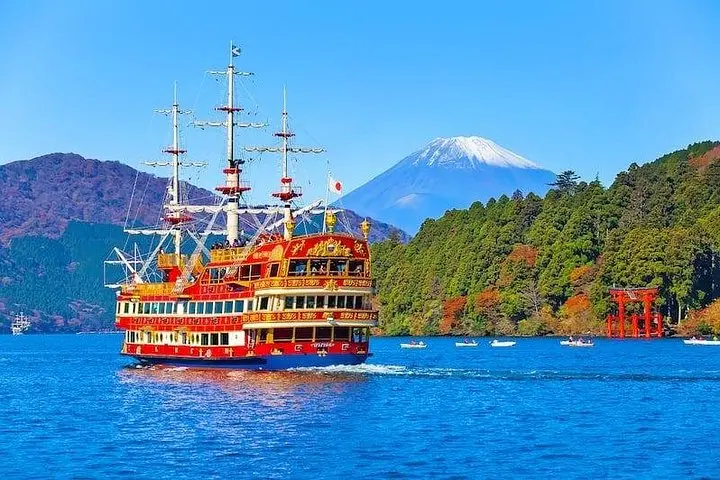
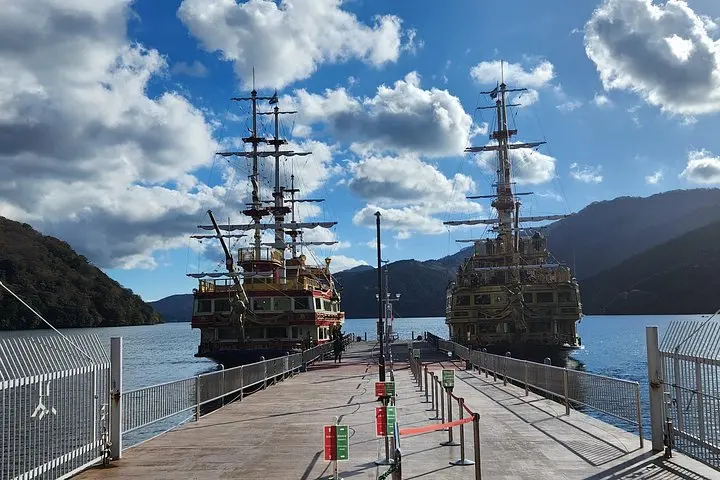
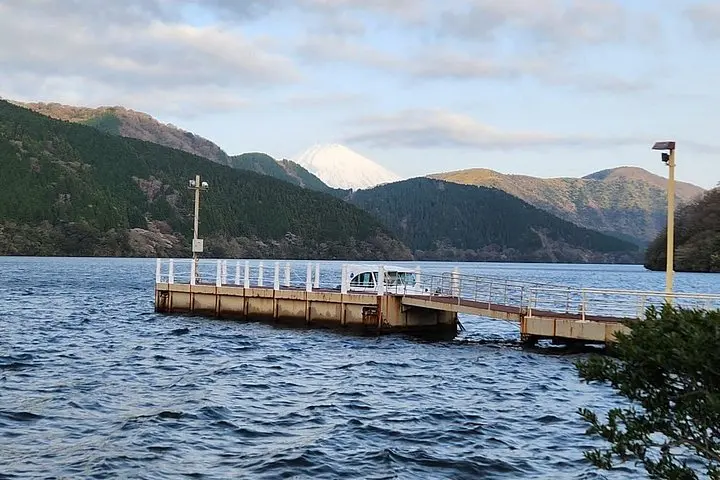
You step into a compact van in the Tokyo morning and the city slips away while the air sharpens. By the time you crest the last ridge before Hakone the landscape has changed: cedar and sugi trees crowd the road, clouds hang low over a bowl of mountains, and Mount Fuji, patient and symmetrical, looms larger with every mile. The private driver parks near Lake Ashi; the water, cool and dark, seems to breathe as tour boats — including the whimsical pirate ships — cut their wakes toward a torii gate that floats like a painted promise.
You step into a compact van in the Tokyo morning and the city slips away while the air sharpens. By the time you crest the last ridge before Hakone the landscape has changed: cedar and sugi trees crowd the road, clouds hang low over a bowl of mountains, and Mount Fuji, patient and symmetrical, looms larger with every mile. The private driver parks near Lake Ashi; the water, cool and dark, seems to breathe as tour boats — including the whimsical pirate ships — cut their wakes toward a torii gate that floats like a painted promise.
This is a day arranged as choreography: a ropeway up to Owakudani’s steaming vents, a stroll past Hakone Shrine’s lakeside torii, a stop at the Hakone Open-Air Museum, and the airborne thrill of the Mishima Skywalk. Geology explains the theatrics — Hakone sits in a volcanic caldera formed by eruptions and collapse; fumaroles at Owakudani still hiss and color the rocks with sulfur. Culturally, Hakone was a strategic station on the old Tokaido route connecting Edo and Kyoto, and the shrines and checkpoints here preserve that travel history alongside modern onsen culture.
The guide-driven format keeps the day efficient: expect 8–9 hours including hotel pickup in the Tokyo 23 wards or local Hakone hotels. Several stops are optional — the pirate-ship cruise and ropeway usually cost extra — so plan priorities if you want to chase the clearest Fuji views. On clear mornings Fuji will dominate photos; on hazy days the steam and sulfur of Owakudani make striking, moody images.
Practical notes: wear sturdy walking shoes for uneven paths around shrines and Owakudani; pack layers — mountain air can drop 10°C from Tokyo — and bring a small daypack with water and a lightweight rain shell. The operator contacts guests by WhatsApp a day before travel; traffic and weather can shift the schedule, and the private format lets the driver adapt timing for better visibility of Mt. Fuji.
For families, infant seats are available and walking demands are low, but the day is long: factor in travel time and motion comfort. Respect local onsen etiquette if you visit hot springs, and take care not to feed wildlife or stray from marked areas — Hakone’s ecosystems and volcanic features are fragile. End the day watching the land go quiet as you’re driven back toward the bright pulse of Tokyo, Fuji receding into the silhouette of the evening — a hard-won image that tends to stay with you.