THE ADVENTURE COLLECTIVE® · Independent discovery and booking for outdoor travel

A private, full-day circuit through Hakone that pairs Shinto shrines, volcanic landscapes and a Lake Ashi cruise with the convenience of bullet-train transfers and a choice of museum or onsen. Ideal for travelers seeking Mt. Fuji views, hands-on culture and efficient logistics.
A private, full-day circuit through Hakone that pairs Shinto shrines, volcanic landscapes and a Lake Ashi cruise with the convenience of bullet-train transfers and a choice of museum or onsen. Ideal for travelers seeking Mt. Fuji views, hands-on culture and efficient logistics.
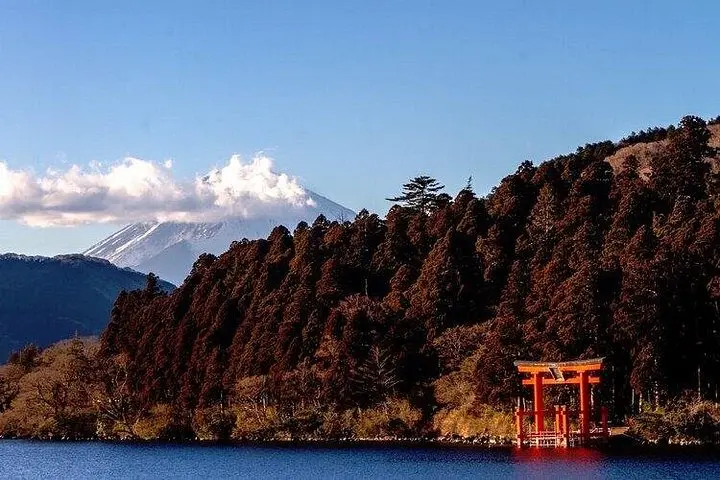
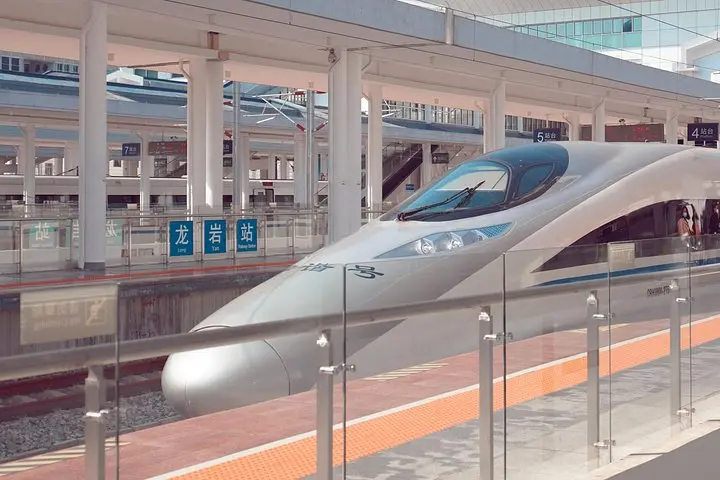
The morning begins in a Tokyo hotel lobby with the soft click of suitcase wheels and a guide scanning a list. Within an hour you’re on a Shinkansen hurtling toward Odawara; the city recedes and the mountains lean closer as if converging toward a secret. By late morning a torii gate rises from the dark surface of Lake Ashi — seemingly planted by the water itself — and Mt. Fuji holds court on the horizon when the sky agrees.
Verified experiences and guided adventures in the surrounding area.
Operated by Hello! Tokyo Tours · Hakone, Kanagawa
The morning begins in a Tokyo hotel lobby with the soft click of suitcase wheels and a guide scanning a list. Within an hour you’re on a Shinkansen hurtling toward Odawara; the city recedes and the mountains lean closer as if converging toward a secret. By late morning a torii gate rises from the dark surface of Lake Ashi — seemingly planted by the water itself — and Mt. Fuji holds court on the horizon when the sky agrees.
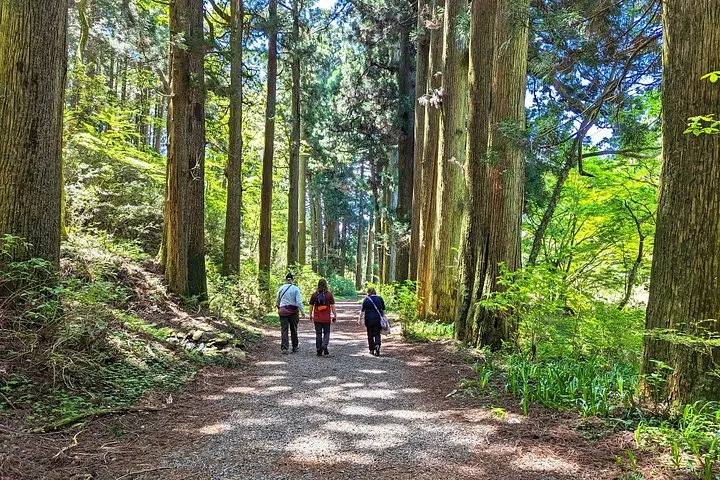
Hakone sits inside Fuji-Hakone-Izu National Park, a zone of volcanic peaks, crater lakes and centuries of human passage. The Old Tokaido road, whose cedar-lined sections you walk, carried daimyo and pilgrims during the Edo period; the route still remembers every footstep. Geologically, Hakone is the fluted rim of a caldera system; fumaroles at Owakudani are the volcano’s breath, hissing and coloring the earth sulfur-yellow. Culturally, the area is equal parts Shinto ritual (Hakone Shrine’s waterside gate) and restorative ritual (the onsen that made Hakone a leisure destination since the Edo era).
This private full-day tour compresses those elements into a single, finely-timed circuit: bullet train to Odawara, local train to Hakone-Yumoto, Hakone Shrine and the cedar avenue, a sightseeing cruise across Lake Ashi, the Hakone Ropeway for a volcanic vantage, Owakudani’s black eggs steamed in sulfur-rich springs, then the Hakonetozan Cable Car down to Gora and a choice between the Hakone Open-Air Museum or a traditional onsen soak. Expect a day of walking roughly 9–12 km, some stairs and uneven surfaces — the tour moves steadily but leaves time to look up and take photos.
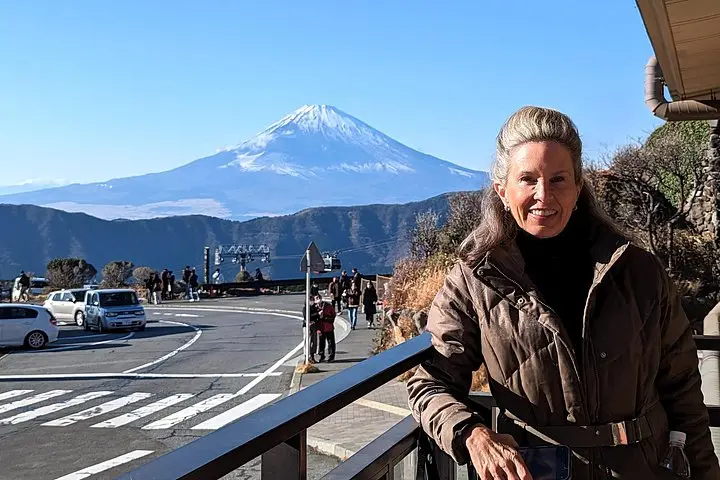
Practical notes matter here. Mt. Fuji appears and disappears with the weather; clear, cool mornings in late autumn and winter offer the sharpest views. Owakudani’s sulfur fumes are safe at controlled viewing areas but can be pungent; those with respiratory sensitivities should plan accordingly. Onsen etiquette is strict: bathing suits are not permitted, and many baths restrict visible tattoos unless otherwise arranged.
For travelers, the tour’s value is the choreography — no transfers to figure out, trained guides who time each stop to avoid crowds, and a private pace that lets you linger at a shrine or push for a ropeway peak. Bring layered clothing, good walking shoes, a refillable water bottle and a cash or IC card for small purchases. If you want Mt. Fuji framed perfectly behind the torii, ask to adjust timing or photo stops; the guide can often nudge the itinerary when weather cooperates.
By evening you’re back on the bullet train, mountains shrinking into suburbia. The day feels full in a practical, agreeable way: history, geology, food and hot water, all arranged so the landscape does the heavy lifting and you get to notice it.
The tour is approximately 11 hours long, typically meeting in your hotel lobby between 7:30 AM and 8:30 AM depending on location.
Mt. Fuji is visible on clear days; visibility is weather-dependent and the guide times photo stops to maximize chances but cannot guarantee viewability.
Yes — you choose one. Entrance to the museum or access to the onsen is included; note onsen rules regarding nudity and tattoos.
Yes — the eggs are cooked in hot springs and are safe; they’re a local specialty with a sulfurized shell and are sold at designated kiosks.
This tour requires walking 9–12 km, stairs and bus transfers; travelers must be able to walk unaided and climb steps — it is not wheelchair-accessible for the full itinerary.
A wide-angle lens for landscapes and a zoom for distant Fuji shots are ideal; bring spare batteries and a small tripod for low-light scenes.
Hello! Tokyo Tours operates guided outdoor trips and adventures with an emphasis on safety, stewardship, and memorable experiences.
The morning begins in a Tokyo hotel lobby with the soft click of suitcase wheels and a guide scanning a list. Within an hour you’re on a Shinkansen hurtling toward Odawara; the city recedes and the mountains lean closer as if converging toward a secret. By late morning a torii gate rises from the dark surface of Lake Ashi — seemingly planted by the water itself — and Mt. Fuji holds court on the horizon when the sky agrees.
The morning begins in a Tokyo hotel lobby with the soft click of suitcase wheels and a guide scanning a list. Within an hour you’re on a Shinkansen hurtling toward Odawara; the city recedes and the mountains lean closer as if converging toward a secret. By late morning a torii gate rises from the dark surface of Lake Ashi — seemingly planted by the water itself — and Mt. Fuji holds court on the horizon when the sky agrees.
Hakone sits inside Fuji-Hakone-Izu National Park, a zone of volcanic peaks, crater lakes and centuries of human passage. The Old Tokaido road, whose cedar-lined sections you walk, carried daimyo and pilgrims during the Edo period; the route still remembers every footstep. Geologically, Hakone is the fluted rim of a caldera system; fumaroles at Owakudani are the volcano’s breath, hissing and coloring the earth sulfur-yellow. Culturally, the area is equal parts Shinto ritual (Hakone Shrine’s waterside gate) and restorative ritual (the onsen that made Hakone a leisure destination since the Edo era).
This private full-day tour compresses those elements into a single, finely-timed circuit: bullet train to Odawara, local train to Hakone-Yumoto, Hakone Shrine and the cedar avenue, a sightseeing cruise across Lake Ashi, the Hakone Ropeway for a volcanic vantage, Owakudani’s black eggs steamed in sulfur-rich springs, then the Hakonetozan Cable Car down to Gora and a choice between the Hakone Open-Air Museum or a traditional onsen soak. Expect a day of walking roughly 9–12 km, some stairs and uneven surfaces — the tour moves steadily but leaves time to look up and take photos.
Practical notes matter here. Mt. Fuji appears and disappears with the weather; clear, cool mornings in late autumn and winter offer the sharpest views. Owakudani’s sulfur fumes are safe at controlled viewing areas but can be pungent; those with respiratory sensitivities should plan accordingly. Onsen etiquette is strict: bathing suits are not permitted, and many baths restrict visible tattoos unless otherwise arranged.
For travelers, the tour’s value is the choreography — no transfers to figure out, trained guides who time each stop to avoid crowds, and a private pace that lets you linger at a shrine or push for a ropeway peak. Bring layered clothing, good walking shoes, a refillable water bottle and a cash or IC card for small purchases. If you want Mt. Fuji framed perfectly behind the torii, ask to adjust timing or photo stops; the guide can often nudge the itinerary when weather cooperates.
By evening you’re back on the bullet train, mountains shrinking into suburbia. The day feels full in a practical, agreeable way: history, geology, food and hot water, all arranged so the landscape does the heavy lifting and you get to notice it.