THE ADVENTURE COLLECTIVE® · Independent discovery and booking for outdoor travel

Drive over towering dunes and meet desert communities on a half-day 4x4 tour of Erg Chebbi. Learn about dune geology, Gnawa music in Khamlia, and practical tips for photographing and enjoying the desert safely.
Drive over towering dunes and meet desert communities on a half-day 4x4 tour of Erg Chebbi. Learn about dune geology, Gnawa music in Khamlia, and practical tips for photographing and enjoying the desert safely.
The sun sits low over an ocean of sand as the 4x4 climbs a wind-sculpted ridge and the world opens into the orange slopes of Erg Chebbi. Fine sand slips past the tires, a quiet that only the desert knows, and the vehicle pauses on a crest to give a clear, wide view of dunes that reach up to 150 meters.
Verified experiences and guided adventures in the surrounding area.
Operated by MARRUECOS RUTAS 4X4 · Merzouga, Drâa-Tafilalet (Errachidia Province)
The sun sits low over an ocean of sand as the 4x4 climbs a wind-sculpted ridge and the world opens into the orange slopes of Erg Chebbi. Fine sand slips past the tires, a quiet that only the desert knows, and the vehicle pauses on a crest to give a clear, wide view of dunes that reach up to 150 meters.
Erg Chebbi is the largest dune field in southeast Morocco, stretching roughly 22 km north–south and narrowing to a few kilometers east–west. The geology is recent in geological terms: wind-driven sand deposited over millennia, shaped into crescentic and linear dunes by shifting seasonal winds. Culture threads through the desert—Merzouga and nearby villages like Hassi Labiad and Khamlia are gateways to Amazigh (Berber) life and the Gnawa musical tradition preserved by Khamlia’s performers, whose songs carry histories of West African migration.
On a half-day 4x4 tour you’ll pass small adobe villages, stop for photos on high dunes, and learn local stories from native guides who read wind and track. Expect short walks on sand, quick stops for tea, and easy access—vehicles are air-conditioned and groups stay small, but the ride can be bumpy.
Practical tips: go early or late to avoid peak heat, carry at least 1–2 liters of water, wear closed shoes and sun protection, and bring a scarf for blowing sand. Respect private camps at dune bases, leave no trace, and be ready for sudden light shifts—sunrise and sunset turn the dunes into a changing panorama.
The tour runs roughly 3–6 hours depending on pickup location and chosen itinerary, covering village stops and dune viewpoints.
Yes; the tour is described as suitable for all physical fitness levels, though the ride can be bumpy and short dune walks may be tiring for some.
Yes; the itinerary includes stops on dune crests and at Khamlia for photos and short walks—bring a camera with a secure strap.
Local guides typically speak French, Arabic, and often English; booking confirmation is instant followed by manual processing per the tour provider.
MARRUECOS RUTAS 4X4 operates guided outdoor trips and adventures with an emphasis on safety, stewardship, and memorable experiences.
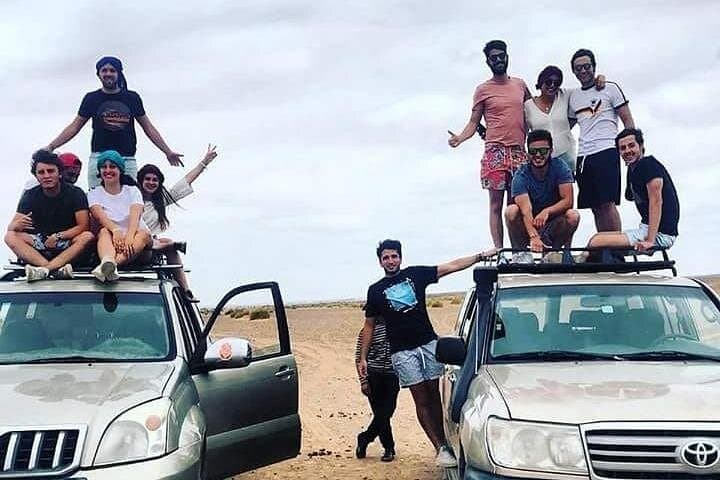


The sun sits low over an ocean of sand as the 4x4 climbs a wind-sculpted ridge and the world opens into the orange slopes of Erg Chebbi. Fine sand slips past the tires, a quiet that only the desert knows, and the vehicle pauses on a crest to give a clear, wide view of dunes that reach up to 150 meters.
The sun sits low over an ocean of sand as the 4x4 climbs a wind-sculpted ridge and the world opens into the orange slopes of Erg Chebbi. Fine sand slips past the tires, a quiet that only the desert knows, and the vehicle pauses on a crest to give a clear, wide view of dunes that reach up to 150 meters.
Erg Chebbi is the largest dune field in southeast Morocco, stretching roughly 22 km north–south and narrowing to a few kilometers east–west. The geology is recent in geological terms: wind-driven sand deposited over millennia, shaped into crescentic and linear dunes by shifting seasonal winds. Culture threads through the desert—Merzouga and nearby villages like Hassi Labiad and Khamlia are gateways to Amazigh (Berber) life and the Gnawa musical tradition preserved by Khamlia’s performers, whose songs carry histories of West African migration.
On a half-day 4x4 tour you’ll pass small adobe villages, stop for photos on high dunes, and learn local stories from native guides who read wind and track. Expect short walks on sand, quick stops for tea, and easy access—vehicles are air-conditioned and groups stay small, but the ride can be bumpy.
Practical tips: go early or late to avoid peak heat, carry at least 1–2 liters of water, wear closed shoes and sun protection, and bring a scarf for blowing sand. Respect private camps at dune bases, leave no trace, and be ready for sudden light shifts—sunrise and sunset turn the dunes into a changing panorama.