THE ADVENTURE COLLECTIVE® · Independent discovery and booking for outdoor travel

Walk between the smiling faces of Bayon and the root-choked galleries of Ta Prohm on a private half-day tour from Siem Reap. Expect guided history, short rural ox-cart glimpses, and practical tips for visiting the Angkor complex.
Walk between the smiling faces of Bayon and the root-choked galleries of Ta Prohm on a private half-day tour from Siem Reap. Expect guided history, short rural ox-cart glimpses, and practical tips for visiting the Angkor complex.
Morning light strips the jungle canopy back to reveal carved faces and root-wrapped walls—Bayon’s smiling towers keep watch while Ta Prohm’s strangler figs dare you to step closer. On a half-day private tour from Siem Reap you move between imperial stone and living forest, experiencing the contrast that defines Angkor: sculpted control and slow, green reclamation.
Verified experiences and guided adventures in the surrounding area.
Operated by Tour East Cambodia · Siem Reap, Siem Reap Province
Morning light strips the jungle canopy back to reveal carved faces and root-wrapped walls—Bayon’s smiling towers keep watch while Ta Prohm’s strangler figs dare you to step closer. On a half-day private tour from Siem Reap you move between imperial stone and living forest, experiencing the contrast that defines Angkor: sculpted control and slow, green reclamation.
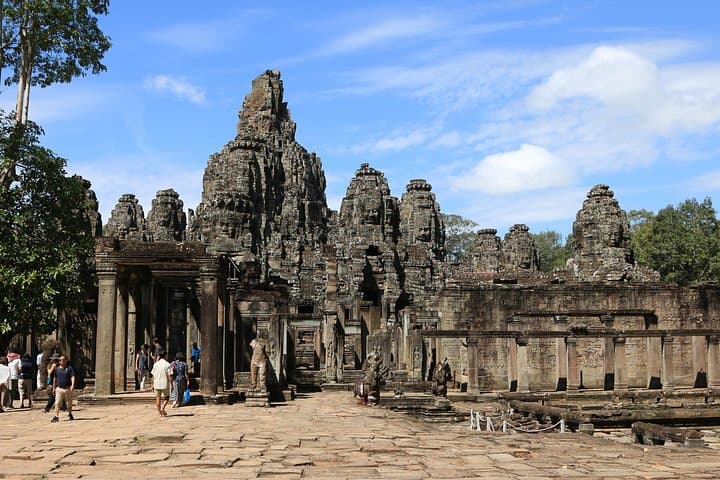
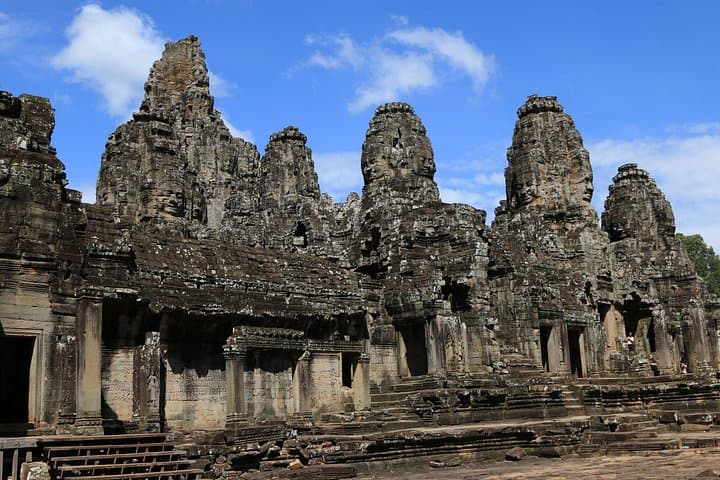
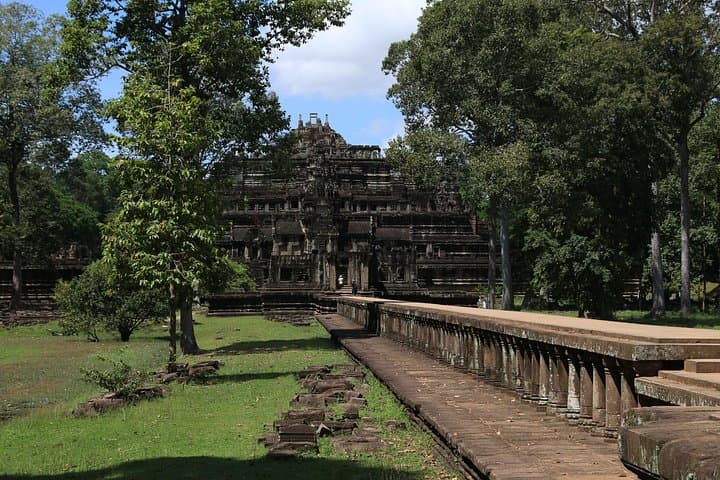
Angkor Thom rose as Jayavarman VII’s planned city in the late 12th century; Bayon sits at its heart with more than 200 carved faces of Avalokitesvara. Nearby, the Baphuon and Royal Enclosure record royal ceremony and procession, while Ta Prohm preserves the cinematic scene of trees threading through galleries—famously photographed in Tomb Raider but rooted in centuries of abandonment and restoration.
Culturally, this circuit touches both Khmer imperial power and modern craft: many tours include a stop at Artisans Angkor and a short ox-cart ride through rural lanes, offering glimpses of rice storage, thatch stacks and daily life beyond the temples. Geologically the sandstone temples are fragile—soft to weathering and patched through recent conservation efforts—so paths are uneven and stones can be slick with moss.
Practical side: expect 3–4 hours of guided walking with short vehicle transfers in an A/C car; a bottled water is provided. Buy your Angkor pass separately at the ticket center, wear modest, breathable clothing, and bring stable shoes for rubble and steps. Start early to catch cooler air and best light; move deliberately and leave room for quiet—these ruins reward attention.
No. The Angkor Archaeological Park pass is purchased separately at the official ticket center and is required for temple access.
Expect several short walks between sites and inside ruins—total walking is moderate but on uneven ground and steps, so comfortable shoes are advised.
Yes, the itinerary indicates a private tour with A/C vehicle transfers and hotel pickup included.
Yes. Ta Prohm retains trees growing through galleries and is known for massive roots entwined with temple masonry—bring a camera and watch your footing.
Tour East Cambodia operates guided outdoor trips and adventures with an emphasis on safety, stewardship, and memorable experiences.

Morning light strips the jungle canopy back to reveal carved faces and root-wrapped walls—Bayon’s smiling towers keep watch while Ta Prohm’s strangler figs dare you to step closer. On a half-day private tour from Siem Reap you move between imperial stone and living forest, experiencing the contrast that defines Angkor: sculpted control and slow, green reclamation.
Morning light strips the jungle canopy back to reveal carved faces and root-wrapped walls—Bayon’s smiling towers keep watch while Ta Prohm’s strangler figs dare you to step closer. On a half-day private tour from Siem Reap you move between imperial stone and living forest, experiencing the contrast that defines Angkor: sculpted control and slow, green reclamation.
Angkor Thom rose as Jayavarman VII’s planned city in the late 12th century; Bayon sits at its heart with more than 200 carved faces of Avalokitesvara. Nearby, the Baphuon and Royal Enclosure record royal ceremony and procession, while Ta Prohm preserves the cinematic scene of trees threading through galleries—famously photographed in Tomb Raider but rooted in centuries of abandonment and restoration.
Culturally, this circuit touches both Khmer imperial power and modern craft: many tours include a stop at Artisans Angkor and a short ox-cart ride through rural lanes, offering glimpses of rice storage, thatch stacks and daily life beyond the temples. Geologically the sandstone temples are fragile—soft to weathering and patched through recent conservation efforts—so paths are uneven and stones can be slick with moss.
Practical side: expect 3–4 hours of guided walking with short vehicle transfers in an A/C car; a bottled water is provided. Buy your Angkor pass separately at the ticket center, wear modest, breathable clothing, and bring stable shoes for rubble and steps. Start early to catch cooler air and best light; move deliberately and leave room for quiet—these ruins reward attention.