THE ADVENTURE COLLECTIVE® · Independent discovery and booking for outdoor travel

Walk the terraces of Borobudur with a local guide on a private half-day tour from Yogyakarta. Learn the temple’s stories, see volcanic ridgelines on the horizon, and plan practical details for a calm, informed visit.
Walk the terraces of Borobudur with a local guide on a private half-day tour from Yogyakarta. Learn the temple’s stories, see volcanic ridgelines on the horizon, and plan practical details for a calm, informed visit.
You arrive before the crowds, the plateau air cool against your skin and the first terraces of Borobudur unfolding like carved steps into the sky. Stone bells and reliefs rise around you; beyond them the volcanic ridges of Central Java broil and settle, watching like patient giants.
Verified experiences and guided adventures in the surrounding area.
Operated by Asia Advisor by Asni · Magelang, Central Java
You arrive before the crowds, the plateau air cool against your skin and the first terraces of Borobudur unfolding like carved steps into the sky. Stone bells and reliefs rise around you; beyond them the volcanic ridges of Central Java broil and settle, watching like patient giants.
Built in the 8th–9th centuries, Borobudur is the world's largest Buddhist monument—nine stacked platforms crowned by a central dome. Its walls narrate centuries of Javanese life through thousands of carved panels: pilgrimage pathways that guide both eye and foot. Geologically the site sits on volcanic soil formed by nearby eruptions; the surrounding hills are young by geological standards and give the area its dramatic horizon.
Local guides frame the temple’s symbolism and the socio-religious history of Central Java, where Hindu-Buddhist kingdoms once shared power and later gave way to Islamic sultanates. Today the complex is managed for conservation and tourism, and courtyard access rules can vary—recent health measures have at times limited movement to outer rings and courtyards.
Practical guidance: this half-day private tour typically runs 5–6 hours with hotel transfers from Yogyakarta, light walking across flat and stepped stone surfaces, and frequent photo stops. Wear sturdy, closed shoes for traction on worn reliefs, carry water and sun protection, and allow time for slow exploration—touching is sometimes allowed only in specific zones, so follow your guide. Visit early for cooler temperatures and clearer views of the volcanic skyline.
The tour runs about 5–6 hours door-to-door from Yogyakarta, including hotel transfers and time at the temple.
Touching policies vary; guides will advise on current conservation rules—some areas allow limited tactile access while others are restricted.
Yes—walking is moderate with mostly flat terraces and stepped areas; guests with mobility issues should notify the operator for assistance options.
Admission fees are included with this tour to simplify entry; confirm current inclusions when booking as policies can change.
Asia Advisor by Asni operates guided outdoor trips and adventures with an emphasis on safety, stewardship, and memorable experiences.
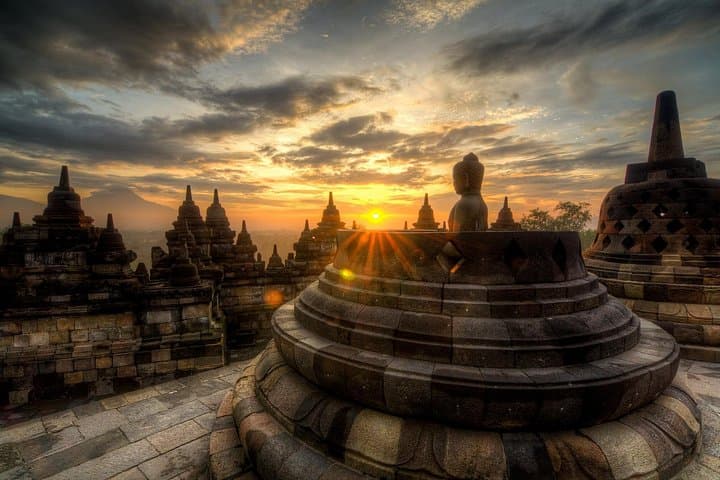
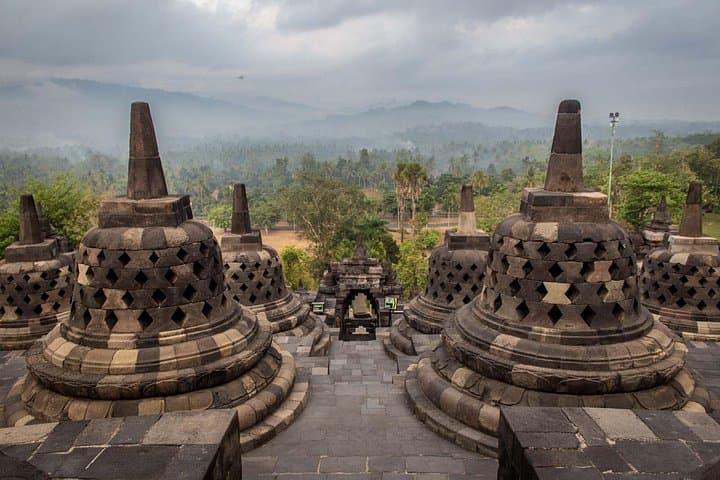
You arrive before the crowds, the plateau air cool against your skin and the first terraces of Borobudur unfolding like carved steps into the sky. Stone bells and reliefs rise around you; beyond them the volcanic ridges of Central Java broil and settle, watching like patient giants.
You arrive before the crowds, the plateau air cool against your skin and the first terraces of Borobudur unfolding like carved steps into the sky. Stone bells and reliefs rise around you; beyond them the volcanic ridges of Central Java broil and settle, watching like patient giants.
Built in the 8th–9th centuries, Borobudur is the world's largest Buddhist monument—nine stacked platforms crowned by a central dome. Its walls narrate centuries of Javanese life through thousands of carved panels: pilgrimage pathways that guide both eye and foot. Geologically the site sits on volcanic soil formed by nearby eruptions; the surrounding hills are young by geological standards and give the area its dramatic horizon.
Local guides frame the temple’s symbolism and the socio-religious history of Central Java, where Hindu-Buddhist kingdoms once shared power and later gave way to Islamic sultanates. Today the complex is managed for conservation and tourism, and courtyard access rules can vary—recent health measures have at times limited movement to outer rings and courtyards.
Practical guidance: this half-day private tour typically runs 5–6 hours with hotel transfers from Yogyakarta, light walking across flat and stepped stone surfaces, and frequent photo stops. Wear sturdy, closed shoes for traction on worn reliefs, carry water and sun protection, and allow time for slow exploration—touching is sometimes allowed only in specific zones, so follow your guide. Visit early for cooler temperatures and clearer views of the volcanic skyline.