THE ADVENTURE COLLECTIVE® · Independent discovery and booking for outdoor travel

A compact cultural hike to Budanilkantha pairs a short, easy ridge walk with a visit to a nearly 1,000-year-old reclining Vishnu carved from non-local stone. Perfect for travelers who want a calm escape from Kathmandu with cultural context and easy terrain.
A compact cultural hike to Budanilkantha pairs a short, easy ridge walk with a visit to a nearly 1,000-year-old reclining Vishnu carved from non-local stone. Perfect for travelers who want a calm escape from Kathmandu with cultural context and easy terrain.
You leave the traffic hum of central Kathmandu and climb a brief ridge of quiet residential lanes; prayer flags twitch like small flags of sea-borne wind, and the trees lean toward the valley as if to peer at the temple below. Budanilkantha opens before you: the massive reclining Vishnu carved from a single stone, face calm amid the low chatter of pilgrims and the occasional clack of a monk’s bead.
Verified experiences and guided adventures in the surrounding area.
Operated by Peak to Peak Tours and Treks Pvt Ltd · Kathmandu, Bagmati Province
You leave the traffic hum of central Kathmandu and climb a brief ridge of quiet residential lanes; prayer flags twitch like small flags of sea-borne wind, and the trees lean toward the valley as if to peer at the temple below. Budanilkantha opens before you: the massive reclining Vishnu carved from a single stone, face calm amid the low chatter of pilgrims and the occasional clack of a monk’s bead.
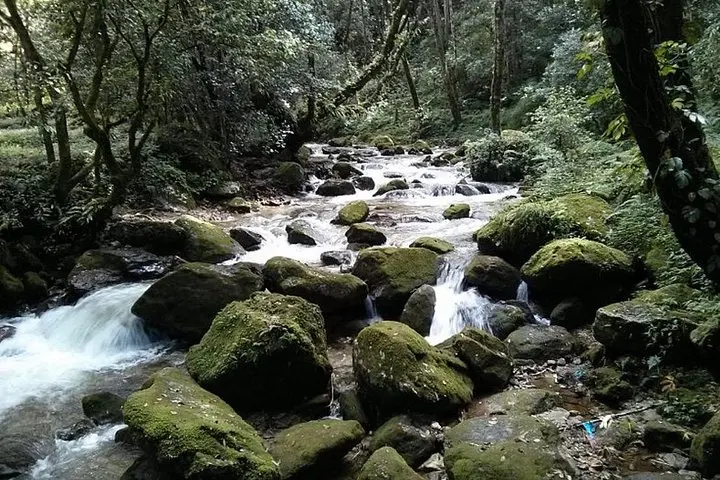
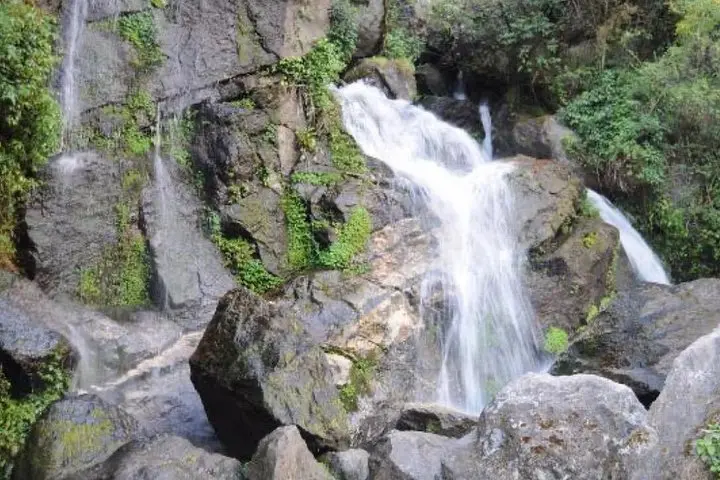
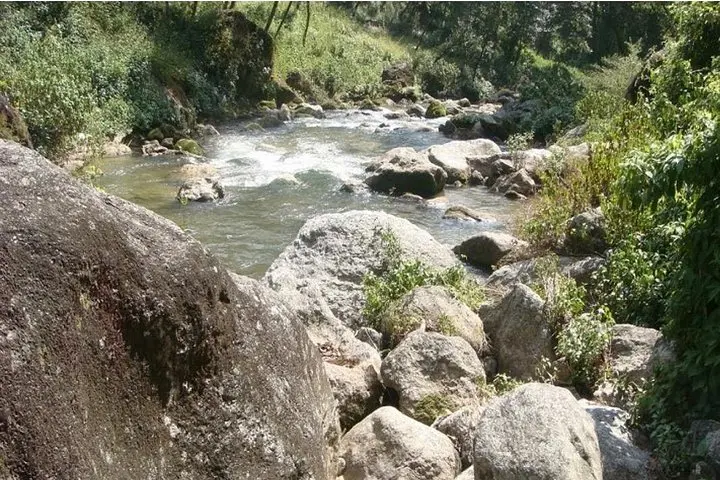
The site dates to the Lichhavi era — roughly a millennium of continuous devotion — and the statue’s stone is notable for coming from outside the local geology, a fact that has long fed local stories about its arrival. Geologically the area sits at the northern rim of the Kathmandu Valley, where river terraces and the foothills of Shivapuri meet, producing short, walkable slopes and views back toward the city. Culturally, the temple is both a living shrine and a neighborhood gathering place: expect to see families making offerings, small vendors selling incense, and local boys skipping stones on the temple pond.
On this half-day outing you’ll pair a gentle, 2–3 hour hike with a focused cultural stop; trails are mostly packed earth with short stone steps. Bring modest clothing for temple etiquette, a water bottle, and sturdy shoes for uneven paths. The best light is morning or late afternoon when the statue’s contours are most pronounced and the air is cooler. Guides can arrange private pickup, explain the temple’s rituals, and point out nearby village trails if you want to extend the walk.
The tour is four hours total; expect roughly 2–3 hours of walking including time at viewpoints and the temple.
Yes—the temple area and most of the short trail are accessible to older adults and children, though there are some steps and uneven ground.
Yes—shoes are removed in parts of the temple precinct; dress modestly and follow your guide’s directions for photography and offerings.
Most operators include private pickup and drop-off in Kathmandu; check your booking for exact pickup point and time.
Peak to Peak Tours and Treks Pvt Ltd operates guided outdoor trips and adventures with an emphasis on safety, stewardship, and memorable experiences.
You leave the traffic hum of central Kathmandu and climb a brief ridge of quiet residential lanes; prayer flags twitch like small flags of sea-borne wind, and the trees lean toward the valley as if to peer at the temple below. Budanilkantha opens before you: the massive reclining Vishnu carved from a single stone, face calm amid the low chatter of pilgrims and the occasional clack of a monk’s bead.
You leave the traffic hum of central Kathmandu and climb a brief ridge of quiet residential lanes; prayer flags twitch like small flags of sea-borne wind, and the trees lean toward the valley as if to peer at the temple below. Budanilkantha opens before you: the massive reclining Vishnu carved from a single stone, face calm amid the low chatter of pilgrims and the occasional clack of a monk’s bead.
The site dates to the Lichhavi era — roughly a millennium of continuous devotion — and the statue’s stone is notable for coming from outside the local geology, a fact that has long fed local stories about its arrival. Geologically the area sits at the northern rim of the Kathmandu Valley, where river terraces and the foothills of Shivapuri meet, producing short, walkable slopes and views back toward the city. Culturally, the temple is both a living shrine and a neighborhood gathering place: expect to see families making offerings, small vendors selling incense, and local boys skipping stones on the temple pond.
On this half-day outing you’ll pair a gentle, 2–3 hour hike with a focused cultural stop; trails are mostly packed earth with short stone steps. Bring modest clothing for temple etiquette, a water bottle, and sturdy shoes for uneven paths. The best light is morning or late afternoon when the statue’s contours are most pronounced and the air is cooler. Guides can arrange private pickup, explain the temple’s rituals, and point out nearby village trails if you want to extend the walk.