THE ADVENTURE COLLECTIVE® · Independent discovery and booking for outdoor travel

Spend a brisk half-day from Cuenca exploring Cajas National Park’s high-Andean lakes, wildlife, and páramo. Choose a higher 3,900m circuit around Toreadora or a gentler Llaviucu walk and see condors, giant hummingbirds, and coatis while learning about local geology and culture.
Spend a brisk half-day from Cuenca exploring Cajas National Park’s high-Andean lakes, wildlife, and páramo. Choose a higher 3,900m circuit around Toreadora or a gentler Llaviucu walk and see condors, giant hummingbirds, and coatis while learning about local geology and culture.
A wind-washed plateau opens as the van drops travelers at Caballo Shayana; high grass hunches under a low sky and small, bright lagoons mirror circling clouds. The air is thin and sharp, and the landscape moves in plain, open gestures—peaty ground, stunted cushion plants, and ribbon-like trails leading between ponds where waterlilies bob.
Verified experiences and guided adventures in the surrounding area.
Operated by BM TOURS SA · Cuenca, Azuay
A wind-washed plateau opens as the van drops travelers at Caballo Shayana; high grass hunches under a low sky and small, bright lagoons mirror circling clouds. The air is thin and sharp, and the landscape moves in plain, open gestures—peaty ground, stunted cushion plants, and ribbon-like trails leading between ponds where waterlilies bob.
Cajas National Park is geologically recent high-Andean country carved by glaciers into a grid of moraine basins that hold hundreds of lakes. The name likely stems from the Quechua caxas—"cold"—or from the boxed basins that collect water. The park sits on ancestral lands with ongoing local devotion: near the park, an open-air sanctuary commemorates reported Marian apparitions and remains a pilgrimage spot.
Wildlife here is direct: Andean condors wheel on thermal drafts, giant hummingbirds probe puna flowers, and coatis thread the scrub near water. The park's páramo ecosystem—mainly grass and peat—stores water for Cuenca below and supports unique plants adapted to frost and wind.
Practical guidance: tours run as 4–5 hour shared trips from Cuenca with a choice of a high-altitude route (~3,900 m) around Toreadora lagoon and the Interpretation Center or an easier low-sector walk (~3,100 m) through Llaviucu. Expect muddy patches and uneven ground; dress in windproof layers, wear good boots, and move deliberately to manage altitude.
Timing: morning departures bring clearer skies and stronger light for photography. Bring water, sun protection, and a light pack; the operator provides transport and a local guide. This half-day format delivers concentrated high-Andean scenery without an overnight commitment.
The shared half-day tour lasts about 4–5 hours with pickup at 8:00 am and return around noon; you can choose the high sector (~3,900 m) near Toreadora or the lower Llaviucu sector (~3,100 m).
Yes — a valid passport is required on the day of travel for booking and identification purposes.
Children must be accompanied by an adult; the operator advises against travel for those with serious cardiovascular, spinal, or pregnancy-related concerns due to altitude and terrain.
Condors and giant hummingbirds are regularly sighted but wildlife sightings cannot be guaranteed; early calm mornings improve chances of seeing birds.
BM TOURS SA operates guided outdoor trips and adventures with an emphasis on safety, stewardship, and memorable experiences.
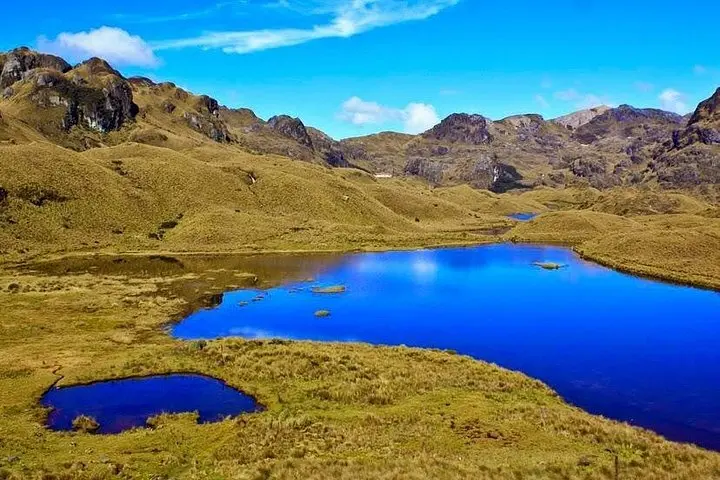
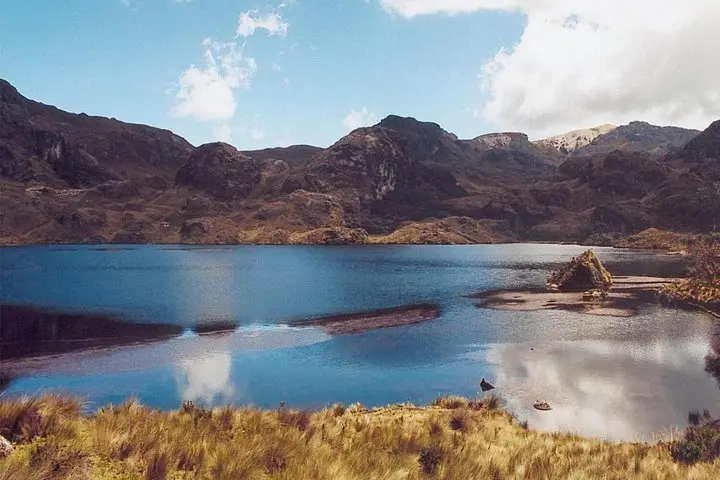
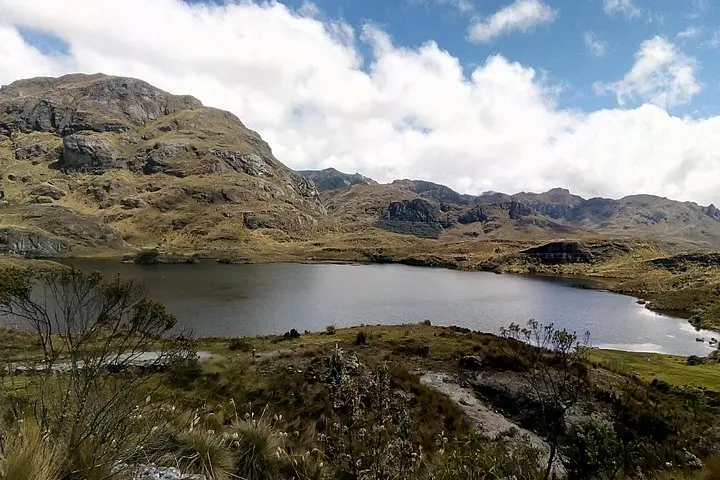
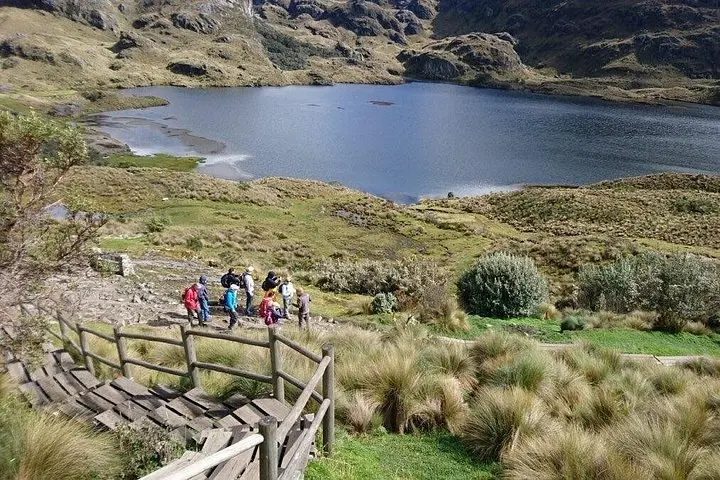
A wind-washed plateau opens as the van drops travelers at Caballo Shayana; high grass hunches under a low sky and small, bright lagoons mirror circling clouds. The air is thin and sharp, and the landscape moves in plain, open gestures—peaty ground, stunted cushion plants, and ribbon-like trails leading between ponds where waterlilies bob.
A wind-washed plateau opens as the van drops travelers at Caballo Shayana; high grass hunches under a low sky and small, bright lagoons mirror circling clouds. The air is thin and sharp, and the landscape moves in plain, open gestures—peaty ground, stunted cushion plants, and ribbon-like trails leading between ponds where waterlilies bob.
Cajas National Park is geologically recent high-Andean country carved by glaciers into a grid of moraine basins that hold hundreds of lakes. The name likely stems from the Quechua caxas—"cold"—or from the boxed basins that collect water. The park sits on ancestral lands with ongoing local devotion: near the park, an open-air sanctuary commemorates reported Marian apparitions and remains a pilgrimage spot.
Wildlife here is direct: Andean condors wheel on thermal drafts, giant hummingbirds probe puna flowers, and coatis thread the scrub near water. The park's páramo ecosystem—mainly grass and peat—stores water for Cuenca below and supports unique plants adapted to frost and wind.
Practical guidance: tours run as 4–5 hour shared trips from Cuenca with a choice of a high-altitude route (~3,900 m) around Toreadora lagoon and the Interpretation Center or an easier low-sector walk (~3,100 m) through Llaviucu. Expect muddy patches and uneven ground; dress in windproof layers, wear good boots, and move deliberately to manage altitude.
Timing: morning departures bring clearer skies and stronger light for photography. Bring water, sun protection, and a light pack; the operator provides transport and a local guide. This half-day format delivers concentrated high-Andean scenery without an overnight commitment.