THE ADVENTURE COLLECTIVE® · Independent discovery and booking for outdoor travel

Move at the deliberate pace of a caravan through Marrakech’s Palmeraie on a private half-day camel ride. Experience palm groves, Saharan-inspired guides, and a low-elevation sandy route with practical tips for a safe, comfortable outing.
Move at the deliberate pace of a caravan through Marrakech’s Palmeraie on a private half-day camel ride. Experience palm groves, Saharan-inspired guides, and a low-elevation sandy route with practical tips for a safe, comfortable outing.
You climb onto a sway-backed camel as the palms lean in and the city’s bustle recedes—sand crunches under hooves, the animal’s deliberate rhythm setting the pace. In the Palmeraie, sunlight filters through tall date palms while low dunes and dry irrigation channels shape the route; the group moves at the steady tempo of caravan travel rather than a race.
Verified experiences and guided adventures in the surrounding area.
Operated by Marrakeh City Breaks · Marrakech, Marrakech-Safi
You climb onto a sway-backed camel as the palms lean in and the city’s bustle recedes—sand crunches under hooves, the animal’s deliberate rhythm setting the pace. In the Palmeraie, sunlight filters through tall date palms while low dunes and dry irrigation channels shape the route; the group moves at the steady tempo of caravan travel rather than a race.
The Palmeraie has long been a cultivated refuge on Marrakech’s northern edge, shaped by historic irrigation systems and later tourism. Camels and their handlers recall trans-Saharan connections and Berber riding traditions; the guides often wear cheches and gandouras that echo Saharan dress. Geologically, you’ll cross shallow aeolian deposits and sandy tracks rather than steep terrain—this is a low-elevation landscape where wind has molded the topsoil into small ridges and dunes.
Expect a sensory, cultural exchange: camel handlers demonstrate basic commands, offer mint tea in a shaded stop, and may point out local argan and olive trees. The pace is gentle but sustained—three hours of mounting, short walks, and photo stops—so bring sun protection and hydration. The activity is private and suitable for most travelers with moderate fitness; it’s not recommended for people with back problems or pregnant travelers.
Practical tips: wear closed-toe shoes and avoid heavy backpacks, secure sunglasses with a strap, and arrive early to beat mid-day heat. Respect the animals—follow handlers’ instructions, avoid sudden movements, and tip if service felt attentive. The camel ride is an accessible way to step out of Marrakech’s medina and feel the desert’s patience underfoot.
The tour is a private half-day experience lasting about three hours, typically including transport and short breaks.
Infants must sit on an adult’s lap; operators often provide specialized infant seats—check booking details in advance.
Reputable local operators work with experienced handlers; follow their instructions and avoid sudden movements—ask the provider about animal-care practices if concerned.
Light, breathable layers, closed-toe shoes, sun protection, and a scarf for sand are recommended; avoid heavy backpacks.
Marrakeh City Breaks operates guided outdoor trips and adventures with an emphasis on safety, stewardship, and memorable experiences.

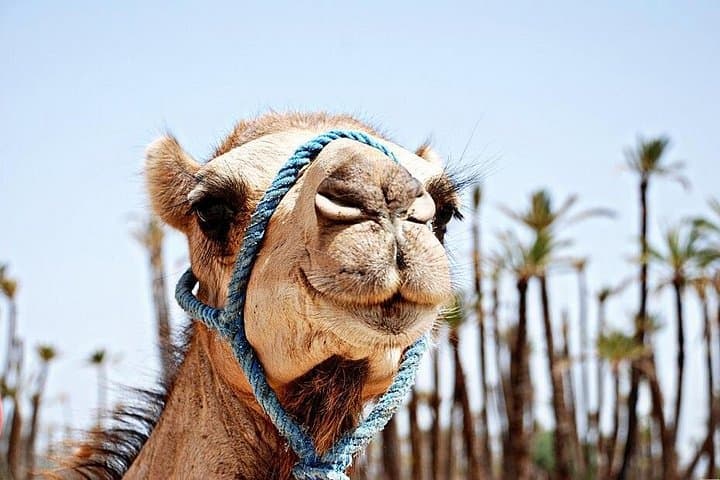
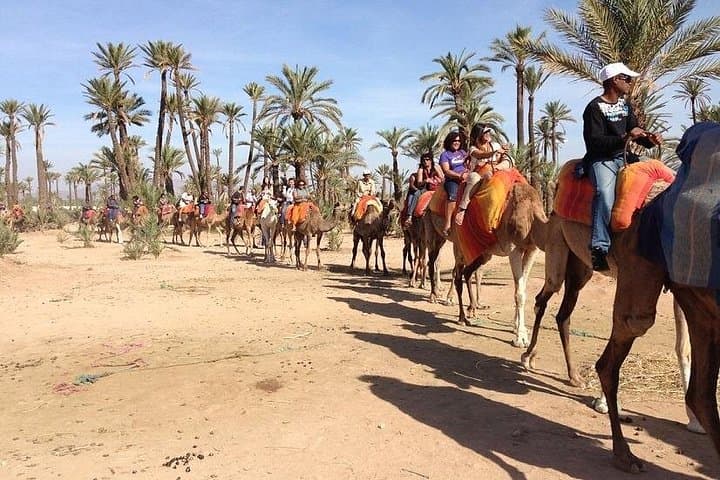
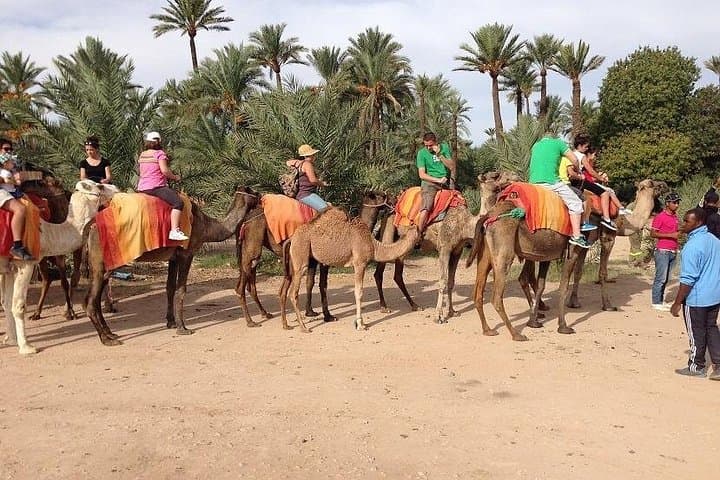
You climb onto a sway-backed camel as the palms lean in and the city’s bustle recedes—sand crunches under hooves, the animal’s deliberate rhythm setting the pace. In the Palmeraie, sunlight filters through tall date palms while low dunes and dry irrigation channels shape the route; the group moves at the steady tempo of caravan travel rather than a race.
You climb onto a sway-backed camel as the palms lean in and the city’s bustle recedes—sand crunches under hooves, the animal’s deliberate rhythm setting the pace. In the Palmeraie, sunlight filters through tall date palms while low dunes and dry irrigation channels shape the route; the group moves at the steady tempo of caravan travel rather than a race.
The Palmeraie has long been a cultivated refuge on Marrakech’s northern edge, shaped by historic irrigation systems and later tourism. Camels and their handlers recall trans-Saharan connections and Berber riding traditions; the guides often wear cheches and gandouras that echo Saharan dress. Geologically, you’ll cross shallow aeolian deposits and sandy tracks rather than steep terrain—this is a low-elevation landscape where wind has molded the topsoil into small ridges and dunes.
Expect a sensory, cultural exchange: camel handlers demonstrate basic commands, offer mint tea in a shaded stop, and may point out local argan and olive trees. The pace is gentle but sustained—three hours of mounting, short walks, and photo stops—so bring sun protection and hydration. The activity is private and suitable for most travelers with moderate fitness; it’s not recommended for people with back problems or pregnant travelers.
Practical tips: wear closed-toe shoes and avoid heavy backpacks, secure sunglasses with a strap, and arrive early to beat mid-day heat. Respect the animals—follow handlers’ instructions, avoid sudden movements, and tip if service felt attentive. The camel ride is an accessible way to step out of Marrakech’s medina and feel the desert’s patience underfoot.