THE ADVENTURE COLLECTIVE® · Independent discovery and booking for outdoor travel

Mount a camel and cross the Giza Plateau for intimate views of Khufu, Khafre and Menkaure, ending at the Great Sphinx. This half-day private tour pairs slow desert travel with concentrated history and panoramic photo points.
Mount a camel and cross the Giza Plateau for intimate views of Khufu, Khafre and Menkaure, ending at the Great Sphinx. This half-day private tour pairs slow desert travel with concentrated history and panoramic photo points.
The sun cuts a hard line across the limestone plateau as the camel train begins its measured sway—each step rising and falling like history being exhaled. Visitors leave the paved roads behind and enter a patchwork of sand, dust and distant city noise to meet the three great pyramids and the stern profile of the Sphinx.
Verified experiences and guided adventures in the surrounding area.
Operated by EMO TOURS EGYPT · Giza, Giza Governorate
The sun cuts a hard line across the limestone plateau as the camel train begins its measured sway—each step rising and falling like history being exhaled. Visitors leave the paved roads behind and enter a patchwork of sand, dust and distant city noise to meet the three great pyramids and the stern profile of the Sphinx.
The Giza Plateau dates to Egypt’s Fourth Dynasty; Khufu, Khafre and Menkaure erected monuments that outlasted empires. Geologically the plateau is a raised band of Eocene limestone sitting above the Nile floodplain, which created the hard bedrock used to quarry the huge blocks. Culture here is immediate: Bedouin camel handlers, souvenir stalls and the Solar Boat Museum beside Khufu’s pyramid. Expect close-up views of casing-stone scars, causeways, and the Sphinx’s weathered face—visual lessons in construction, erosion and conservation.
Practically, this is a low-impact, accessible half-day: the advertised duration is 4–5 hours with roughly 30 minutes of camel riding; most movement is short walks between viewpoints. Wear sun-protective clothing, sturdy closed-toe shoes for sand and rubble, and keep water handy—the desert heat is the dominant factor. Photography windows are generous; ask guides for panoramic viewpoints to avoid crowds. Note that some entrances or interior tomb access may be optional or extra.
For first-time visitors, the camel offers a slow, contemplative way to absorb scale and context. Respect signage, avoid climbing monuments, and tip camel handlers and guides for attentive service—small gestures that preserve both experience and site.
Yes—this tour includes approximately a 30-minute camel ride on the Giza Plateau as described, typically within the private tour timeframe.
Interior access to pyramids or the Solar Boat Museum is often optional and may require an additional fee; confirm when booking and have cash or card available.
The tour is family-friendly, but camel rides and uneven terrain are not recommended for pregnant travelers or those with serious back or heart conditions.
The tour runs about 4–5 hours and includes hotel pickup and drop-off in Cairo or Giza by private air-conditioned vehicle as stated in the inclusions.
EMO TOURS EGYPT operates guided outdoor trips and adventures with an emphasis on safety, stewardship, and memorable experiences.
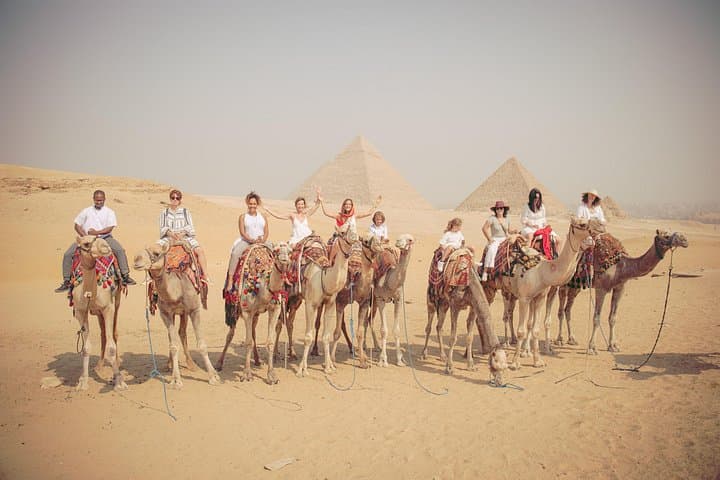
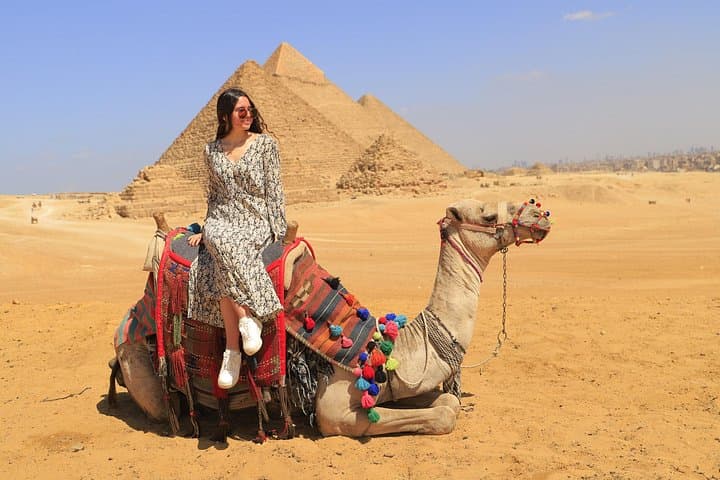
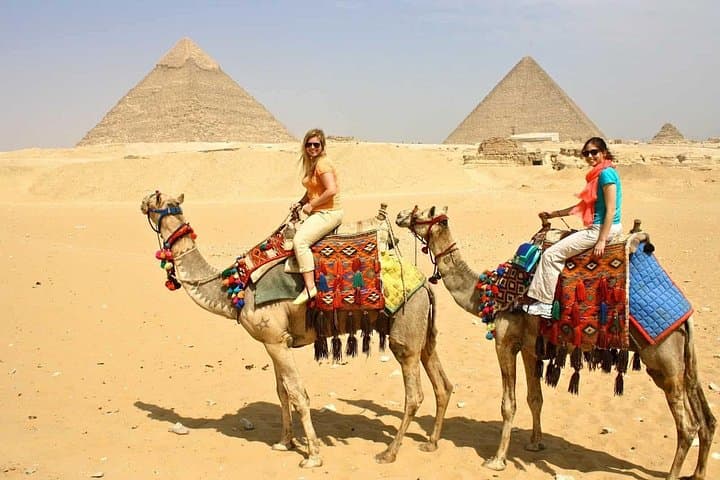
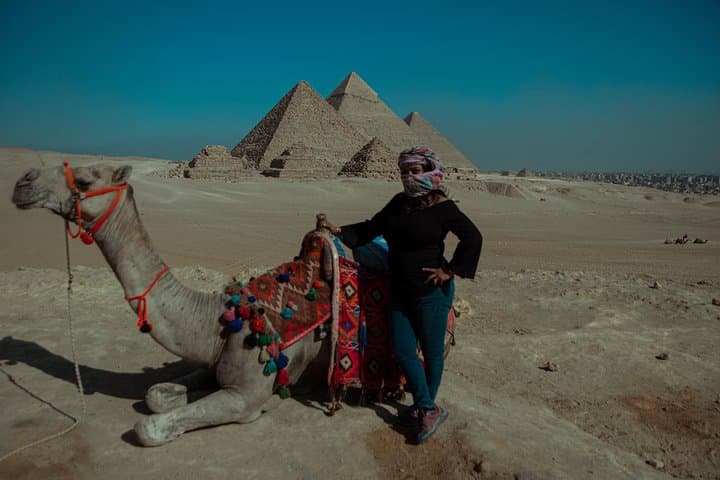
The sun cuts a hard line across the limestone plateau as the camel train begins its measured sway—each step rising and falling like history being exhaled. Visitors leave the paved roads behind and enter a patchwork of sand, dust and distant city noise to meet the three great pyramids and the stern profile of the Sphinx.
The sun cuts a hard line across the limestone plateau as the camel train begins its measured sway—each step rising and falling like history being exhaled. Visitors leave the paved roads behind and enter a patchwork of sand, dust and distant city noise to meet the three great pyramids and the stern profile of the Sphinx.
The Giza Plateau dates to Egypt’s Fourth Dynasty; Khufu, Khafre and Menkaure erected monuments that outlasted empires. Geologically the plateau is a raised band of Eocene limestone sitting above the Nile floodplain, which created the hard bedrock used to quarry the huge blocks. Culture here is immediate: Bedouin camel handlers, souvenir stalls and the Solar Boat Museum beside Khufu’s pyramid. Expect close-up views of casing-stone scars, causeways, and the Sphinx’s weathered face—visual lessons in construction, erosion and conservation.
Practically, this is a low-impact, accessible half-day: the advertised duration is 4–5 hours with roughly 30 minutes of camel riding; most movement is short walks between viewpoints. Wear sun-protective clothing, sturdy closed-toe shoes for sand and rubble, and keep water handy—the desert heat is the dominant factor. Photography windows are generous; ask guides for panoramic viewpoints to avoid crowds. Note that some entrances or interior tomb access may be optional or extra.
For first-time visitors, the camel offers a slow, contemplative way to absorb scale and context. Respect signage, avoid climbing monuments, and tip camel handlers and guides for attentive service—small gestures that preserve both experience and site.