THE ADVENTURE COLLECTIVE® · Independent discovery and booking for outdoor travel

Explore Casablanca’s key sights in about 4–5 hours: the Hassan II Mosque, Habous Quarter, Corniche and central plazas. This compact half-day tour mixes monumental architecture, markets and seaside promenades with practical walking and local color.
Explore Casablanca’s key sights in about 4–5 hours: the Hassan II Mosque, Habous Quarter, Corniche and central plazas. This compact half-day tour mixes monumental architecture, markets and seaside promenades with practical walking and local color.
A salt wind from the Atlantic pushes across the esplanade as the Hassan II Mosque rises at the water’s edge — stone, tile and a minaret that marks Casablanca’s skyline. In half a day the city moves from this monumental shorefront to the compact lanes of the Habous Quarter, across the formal plazas of the French-era center and along the lively Corniche where cafes watch the sea.
Verified experiences and guided adventures in the surrounding area.
Operated by Rayan Discovery S.A.R.L · Casablanca, Casablanca-Settat
A salt wind from the Atlantic pushes across the esplanade as the Hassan II Mosque rises at the water’s edge — stone, tile and a minaret that marks Casablanca’s skyline. In half a day the city moves from this monumental shorefront to the compact lanes of the Habous Quarter, across the formal plazas of the French-era center and along the lively Corniche where cafes watch the sea.
Casablanca grew rapidly under French protectorate planning in the early 20th century; the Habous was created in the 1930s as a controlled, traditional-style medina and the modernist public buildings around United Nations Square reflect the same era’s civic ambitions. Geologically, the coastline here is exposed Atlantic bedrock and sand; the sea shapes the city’s wind and light, and seagulls are constant companions.
Expect structured, mostly flat walking on paved streets, cobbled alleys and coastal promenades. Cultural touchpoints include the mosque’s ornate craftsmanship (non-Muslim guided entry is available on specific schedules), lively Central Market stalls and the quieter garden paths of the Arab League Garden.
Practical edge: plan for roughly 4–5 hours, wear comfortable walking shoes with grip for cobbles, and bring a reusable water bottle and sun protection. Midday heat and ocean breeze switch quickly — layer lightweight clothing. Aim for morning or late afternoon to avoid peak sun and give mosque interiors and market stall browsing the best light. The tour moves steadily; allow a loose hour at the mosque if you want the interior visit.
This tour’s itinerary notes mosque viewing but does not include paid interior admission; guided entry for non-Muslims is available at set times and may require a separate ticket.
Pickup options are often available at booking; you will be asked to select a pickup point or transfer details during reservation.
Yes — the tour is rated physically easy and lists infant seats and stroller accessibility, though some streets in the Habous Quarter are narrow and cobbled.
The tour includes a bilingual driver; check your booking confirmation for the specific languages provided on your scheduled date.
Rayan Discovery S.A.R.L operates guided outdoor trips and adventures with an emphasis on safety, stewardship, and memorable experiences.
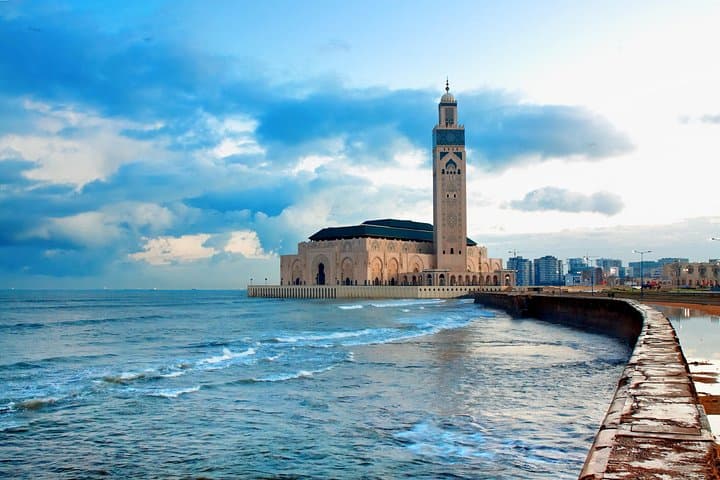


A salt wind from the Atlantic pushes across the esplanade as the Hassan II Mosque rises at the water’s edge — stone, tile and a minaret that marks Casablanca’s skyline. In half a day the city moves from this monumental shorefront to the compact lanes of the Habous Quarter, across the formal plazas of the French-era center and along the lively Corniche where cafes watch the sea.
A salt wind from the Atlantic pushes across the esplanade as the Hassan II Mosque rises at the water’s edge — stone, tile and a minaret that marks Casablanca’s skyline. In half a day the city moves from this monumental shorefront to the compact lanes of the Habous Quarter, across the formal plazas of the French-era center and along the lively Corniche where cafes watch the sea.
Casablanca grew rapidly under French protectorate planning in the early 20th century; the Habous was created in the 1930s as a controlled, traditional-style medina and the modernist public buildings around United Nations Square reflect the same era’s civic ambitions. Geologically, the coastline here is exposed Atlantic bedrock and sand; the sea shapes the city’s wind and light, and seagulls are constant companions.
Expect structured, mostly flat walking on paved streets, cobbled alleys and coastal promenades. Cultural touchpoints include the mosque’s ornate craftsmanship (non-Muslim guided entry is available on specific schedules), lively Central Market stalls and the quieter garden paths of the Arab League Garden.
Practical edge: plan for roughly 4–5 hours, wear comfortable walking shoes with grip for cobbles, and bring a reusable water bottle and sun protection. Midday heat and ocean breeze switch quickly — layer lightweight clothing. Aim for morning or late afternoon to avoid peak sun and give mosque interiors and market stall browsing the best light. The tour moves steadily; allow a loose hour at the mosque if you want the interior visit.