THE ADVENTURE COLLECTIVE® · Independent discovery and booking for outdoor travel

Descend into Ardèche karst on a half‑day caving trip that combines a short abseil with narrow passages and vast concreted chambers. Expect taught rope techniques, stable cave temperatures, and close encounters with calcite formations.
Descend into Ardèche karst on a half‑day caving trip that combines a short abseil with narrow passages and vast concreted chambers. Expect taught rope techniques, stable cave temperatures, and close encounters with calcite formations.
You stand on the lip of a vertical throat as cool, damp air exhales from the earth — the cave calls and the rope is the only way in. A plunging abseil drops you into a dim world where head-torches carve arcs through blackness and stone formations loom like frozen curtains.
Verified experiences and guided adventures in the surrounding area.
Operated by GEO Ardèche Canyon · Vallon-Pont-d'Arc, Ardèche
You stand on the lip of a vertical throat as cool, damp air exhales from the earth — the cave calls and the rope is the only way in. A plunging abseil drops you into a dim world where head-torches carve arcs through blackness and stone formations loom like frozen curtains.
The Ardèche is classic karst country: limestone folded and dissolved over millions of years into shafts, chambers and sinuous passageways. This half-day trip moves between tight crawls and vast rooms lined with stalactites, stalagmites and draperies; some passages require short rope work and one controlled abseil. Locals have long used these grottos for shelter and water collection, and the region’s most famous sites preserve Paleolithic art nearby, a reminder of human ties to underground landscapes.
Expect a mix of vertical and horizontal progression—rock that demands balance, scrambling and occasional squeezes. The cave breathes steadily at cellar temperatures, so dampness and mud are constant companions. Wildlife is subtle: bats may wheel overhead and blind cave fauna cling to walls.
Practical guidance: wear layers you don’t mind ruining, grippy shoes (own boots are better than loaned footwear), and bring a small daypack with water and a snack. Instructors supply CE-certified kit, helmet and head-torch, and will teach any needed rope technique. Groups are small; ability to crouch, climb short ledges and lower yourself on a rope is required.
Plan for cool comfort, steady footing, and an experience that rewards curiosity with geological drama rather than speed.
No—guides provide instruction and kit for the short abseil and rope moves; basic comfort with heights helps.
Quick-dry layers, long trousers, and sturdy shoes; avoid cotton and bring a small waterproof if you get cold easily.
Yes—temperatures are typically 10–14°C (50–57°F) year-round and cave floors are often muddy; expect damp conditions.
Possibly—bats sometimes roost in chambers; guides enforce no-touch rules to protect delicate calcite formations.
GEO Ardèche Canyon operates guided outdoor trips and adventures with an emphasis on safety, stewardship, and memorable experiences.
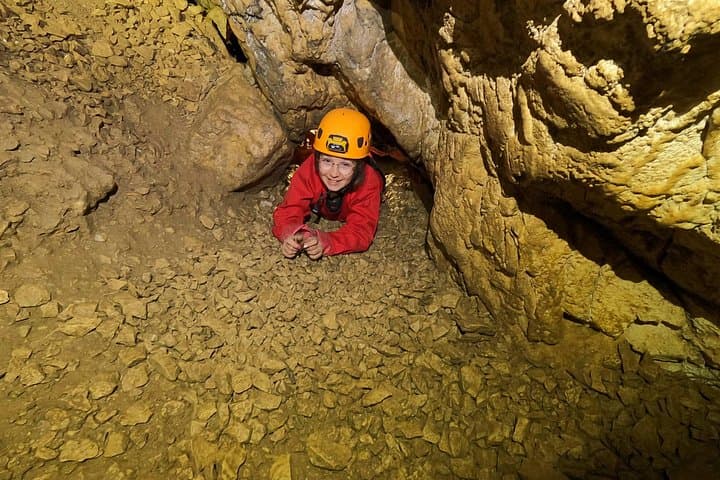


You stand on the lip of a vertical throat as cool, damp air exhales from the earth — the cave calls and the rope is the only way in. A plunging abseil drops you into a dim world where head-torches carve arcs through blackness and stone formations loom like frozen curtains.
You stand on the lip of a vertical throat as cool, damp air exhales from the earth — the cave calls and the rope is the only way in. A plunging abseil drops you into a dim world where head-torches carve arcs through blackness and stone formations loom like frozen curtains.
The Ardèche is classic karst country: limestone folded and dissolved over millions of years into shafts, chambers and sinuous passageways. This half-day trip moves between tight crawls and vast rooms lined with stalactites, stalagmites and draperies; some passages require short rope work and one controlled abseil. Locals have long used these grottos for shelter and water collection, and the region’s most famous sites preserve Paleolithic art nearby, a reminder of human ties to underground landscapes.
Expect a mix of vertical and horizontal progression—rock that demands balance, scrambling and occasional squeezes. The cave breathes steadily at cellar temperatures, so dampness and mud are constant companions. Wildlife is subtle: bats may wheel overhead and blind cave fauna cling to walls.
Practical guidance: wear layers you don’t mind ruining, grippy shoes (own boots are better than loaned footwear), and bring a small daypack with water and a snack. Instructors supply CE-certified kit, helmet and head-torch, and will teach any needed rope technique. Groups are small; ability to crouch, climb short ledges and lower yourself on a rope is required.
Plan for cool comfort, steady footing, and an experience that rewards curiosity with geological drama rather than speed.