THE ADVENTURE COLLECTIVE® · Independent discovery and booking for outdoor travel

Spend a focused half-day at the Chengdu Research Base to watch giant pandas across life stages and learn about breeding and conservation. Early morning visits reward travelers with the most active, photogenic animals and expert interpretation from a private guide.
Spend a focused half-day at the Chengdu Research Base to watch giant pandas across life stages and learn about breeding and conservation. Early morning visits reward travelers with the most active, photogenic animals and expert interpretation from a private guide.
Sunlight filters through stands of bamboo as the Chengdu Research Base of Giant Panda Breeding comes alive: soft rustles, the occasional low chuff of a panda, and the measured footsteps of visitors who’ve come to watch an animal at once iconic and surprisingly ordinary in its rhythms. Arriving early—when pandas are most active—you meet individuals at every life stage: newborns barely bigger than a human hand, rambunctious juveniles, and placid elders content to sit and strip shoots.
Verified experiences and guided adventures in the surrounding area.
Operated by China Travel Service · Chengdu, Sichuan
Sunlight filters through stands of bamboo as the Chengdu Research Base of Giant Panda Breeding comes alive: soft rustles, the occasional low chuff of a panda, and the measured footsteps of visitors who’ve come to watch an animal at once iconic and surprisingly ordinary in its rhythms. Arriving early—when pandas are most active—you meet individuals at every life stage: newborns barely bigger than a human hand, rambunctious juveniles, and placid elders content to sit and strip shoots.
The site began in the late 1980s as a conservation and breeding response to a collapsing wild range. Located on the Chengdu Plain where the Sichuan Basin meets low hills, the base sits in a landscape defined by alluvial soils and the bamboo that feeds its stars. Local culture in Chengdu celebrates the animal; pandas appear in folk art, restaurants, and city park sculptures, and nearby communities have woven conservation into education and tourism.
Practically, the half-day private tour blends guided context with guaranteed access: a guide explains breeding efforts, the panda kitchen, and museum displays while private transfers shorten travel time from the city. Expect paved paths, viewing windows, and strict barriers—you’ll see animals at close range but not touch them. Bring water, wear grippy shoes for wet mornings, and plan for photography without flash. Mornings are best for activity and photography; afternoons can be quieter as pandas nap. Follow guide instructions to support conservation: stay on paths, dispose of trash, and respect staff directions. A short, focused visit delivers both spectacle and a clear view into one of the world’s most sustained species-recovery efforts.
Mornings after opening are best—pandas are most likely to feed and move around before afternoon naps.
Yes; paved paths and accessible facilities are available, but check with the operator about vehicle transfer details.
No; direct contact or feeding is prohibited to protect animal health and the breeding program.
This private tour includes air-conditioned private transfers and an English-speaking guide as listed in the inclusions.
China Travel Service operates guided outdoor trips and adventures with an emphasis on safety, stewardship, and memorable experiences.


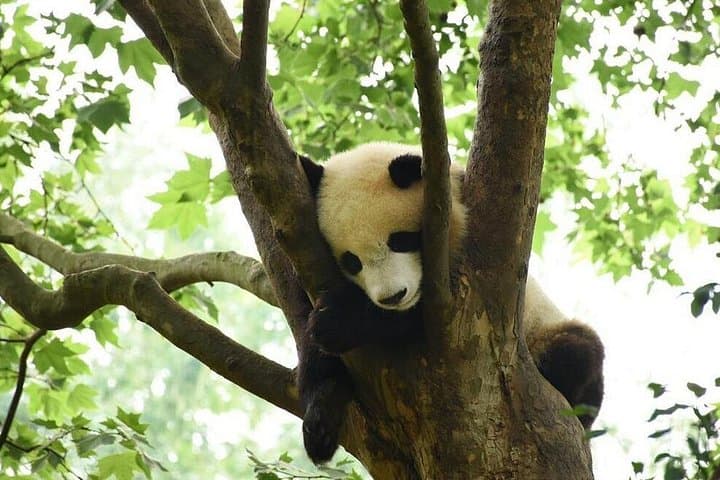

Sunlight filters through stands of bamboo as the Chengdu Research Base of Giant Panda Breeding comes alive: soft rustles, the occasional low chuff of a panda, and the measured footsteps of visitors who’ve come to watch an animal at once iconic and surprisingly ordinary in its rhythms. Arriving early—when pandas are most active—you meet individuals at every life stage: newborns barely bigger than a human hand, rambunctious juveniles, and placid elders content to sit and strip shoots.
Sunlight filters through stands of bamboo as the Chengdu Research Base of Giant Panda Breeding comes alive: soft rustles, the occasional low chuff of a panda, and the measured footsteps of visitors who’ve come to watch an animal at once iconic and surprisingly ordinary in its rhythms. Arriving early—when pandas are most active—you meet individuals at every life stage: newborns barely bigger than a human hand, rambunctious juveniles, and placid elders content to sit and strip shoots.
The site began in the late 1980s as a conservation and breeding response to a collapsing wild range. Located on the Chengdu Plain where the Sichuan Basin meets low hills, the base sits in a landscape defined by alluvial soils and the bamboo that feeds its stars. Local culture in Chengdu celebrates the animal; pandas appear in folk art, restaurants, and city park sculptures, and nearby communities have woven conservation into education and tourism.
Practically, the half-day private tour blends guided context with guaranteed access: a guide explains breeding efforts, the panda kitchen, and museum displays while private transfers shorten travel time from the city. Expect paved paths, viewing windows, and strict barriers—you’ll see animals at close range but not touch them. Bring water, wear grippy shoes for wet mornings, and plan for photography without flash. Mornings are best for activity and photography; afternoons can be quieter as pandas nap. Follow guide instructions to support conservation: stay on paths, dispose of trash, and respect staff directions. A short, focused visit delivers both spectacle and a clear view into one of the world’s most sustained species-recovery efforts.