THE ADVENTURE COLLECTIVE® · Independent discovery and booking for outdoor travel

Explore Chiang Mai’s core in four hours: ornate Lanna temples, the city’s oldest shrine, and a compact museum that traces a millennium of northern Thai history. This half-day tour pairs accessible walking with informed local interpretation.
Explore Chiang Mai’s core in four hours: ornate Lanna temples, the city’s oldest shrine, and a compact museum that traces a millennium of northern Thai history. This half-day tour pairs accessible walking with informed local interpretation.
You step off the shaded minivan into Chiang Mai’s old city: the air warmed by teak and spice markets, temple roofs flashing gold under a bright sky. The tour moves at a human pace, the guide’s voice threading local stories through courtyards of carved wood and lacquered Buddha images. Prayer flags twitch; monks in saffron robes cross stone courtyards with quiet purpose.
Verified experiences and guided adventures in the surrounding area.
Operated by Touring Center · Chiang Mai, Chiang Mai Province
You step off the shaded minivan into Chiang Mai’s old city: the air warmed by teak and spice markets, temple roofs flashing gold under a bright sky. The tour moves at a human pace, the guide’s voice threading local stories through courtyards of carved wood and lacquered Buddha images. Prayer flags twitch; monks in saffron robes cross stone courtyards with quiet purpose.
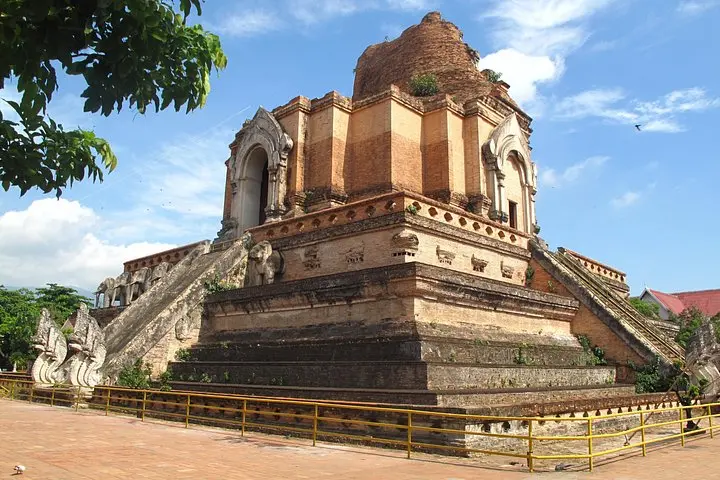
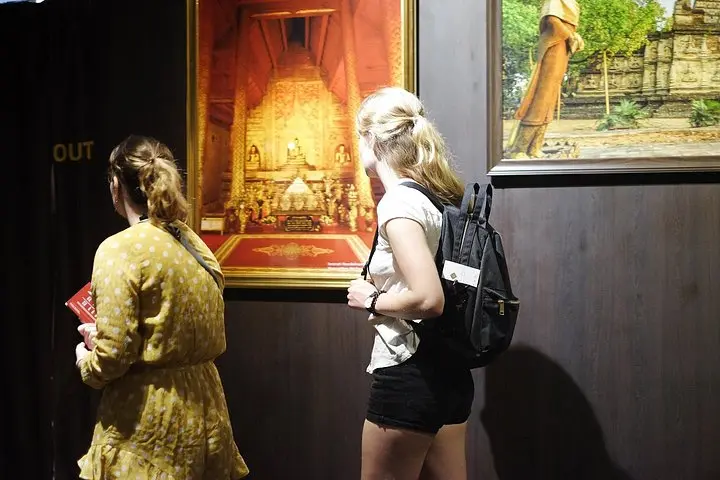
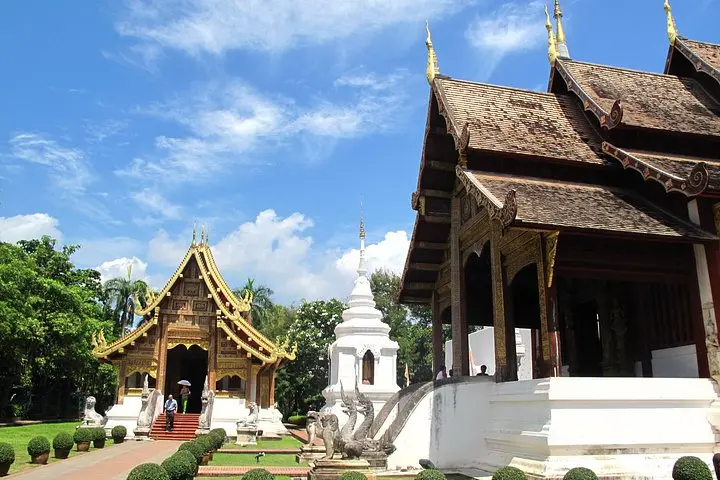
Chiang Mai was founded as the capital of the Lanna Kingdom in 1296, and its city plan and temples reflect that northern Thai heritage. Phra Singh shows classic Lanna viharn details; Chedi Luang’s massive stupa hints at the city’s seismic past and rebuilding after centuries of weather and earthquakes; Chiang Man, the oldest temple, holds city-pillars and Chiang Mai’s foundational sculptures. The Chiang Mai City Arts & Cultural Centre contextualizes these sites, displaying artifacts and maps that explain regional trade, craft traditions, and the transition from Lanna to Thai governance.
Expect mostly flat walking between close-packed sites within the old-square moat; some temple compounds have uneven stone and low thresholds. Practical notes: dress modestly (shoulders and knees covered) for shrine entry, bring a hat and water for midday sun, and allow time for shoes-on/shoes-off routines at each wihan. Photography is generally allowed but observe signs and temple etiquette.
This half-day itinerary is ideal for first-time visitors who want layered context—architecture, history, and living religious practice—delivered in four hours with an experienced local guide.
Yes—admissions listed in the itinerary are included for the visited temples and the museum on operational days.
Hotel pickup and drop-off by air-conditioned minivan are included; you’ll supply your pickup point at booking.
Yes; the tour notes stroller accessibility and infants may sit on laps, but some temple areas have steps and uneven flooring.
Shared tours cap at 18 travelers; private tours are available if you prefer a smaller group.
Touring Center operates guided outdoor trips and adventures with an emphasis on safety, stewardship, and memorable experiences.
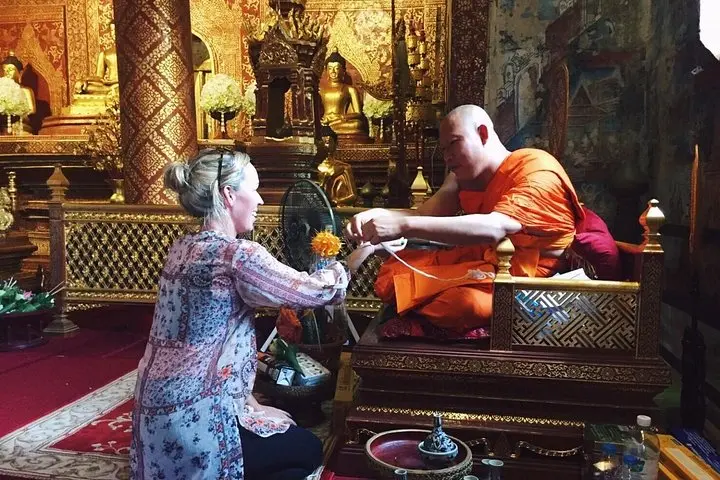
You step off the shaded minivan into Chiang Mai’s old city: the air warmed by teak and spice markets, temple roofs flashing gold under a bright sky. The tour moves at a human pace, the guide’s voice threading local stories through courtyards of carved wood and lacquered Buddha images. Prayer flags twitch; monks in saffron robes cross stone courtyards with quiet purpose.
You step off the shaded minivan into Chiang Mai’s old city: the air warmed by teak and spice markets, temple roofs flashing gold under a bright sky. The tour moves at a human pace, the guide’s voice threading local stories through courtyards of carved wood and lacquered Buddha images. Prayer flags twitch; monks in saffron robes cross stone courtyards with quiet purpose.
Chiang Mai was founded as the capital of the Lanna Kingdom in 1296, and its city plan and temples reflect that northern Thai heritage. Phra Singh shows classic Lanna viharn details; Chedi Luang’s massive stupa hints at the city’s seismic past and rebuilding after centuries of weather and earthquakes; Chiang Man, the oldest temple, holds city-pillars and Chiang Mai’s foundational sculptures. The Chiang Mai City Arts & Cultural Centre contextualizes these sites, displaying artifacts and maps that explain regional trade, craft traditions, and the transition from Lanna to Thai governance.
Expect mostly flat walking between close-packed sites within the old-square moat; some temple compounds have uneven stone and low thresholds. Practical notes: dress modestly (shoulders and knees covered) for shrine entry, bring a hat and water for midday sun, and allow time for shoes-on/shoes-off routines at each wihan. Photography is generally allowed but observe signs and temple etiquette.
This half-day itinerary is ideal for first-time visitors who want layered context—architecture, history, and living religious practice—delivered in four hours with an experienced local guide.