THE ADVENTURE COLLECTIVE® · Independent discovery and booking for outdoor travel

Walk four centuries of history in Santo Domingo’s Colonial Zone: from Parque Colón and the city’s first cathedral to the lighthouse monument Faro a Colón and the cavern lakes of Los Tres Ojos. This compact half-day tour pairs urban history with a quick escape into limestone caves.
Walk four centuries of history in Santo Domingo’s Colonial Zone: from Parque Colón and the city’s first cathedral to the lighthouse monument Faro a Colón and the cavern lakes of Los Tres Ojos. This compact half-day tour pairs urban history with a quick escape into limestone caves.
Morning light hits the flagstones of Parque Colón and the city wakes in a slow, historic rhythm: vendors set up along Calle El Conde, a street musician fills the square, and the cathedral’s stone face throws angled shadows across the plaza.
Verified experiences and guided adventures in the surrounding area.
Operated by Coprixa Travels · Santo Domingo, Distrito Nacional
Morning light hits the flagstones of Parque Colón and the city wakes in a slow, historic rhythm: vendors set up along Calle El Conde, a street musician fills the square, and the cathedral’s stone face throws angled shadows across the plaza.
This half-day walking tour threads through the oldest streets of Santo Domingo’s Colonial Zone—America’s first European city—moving from Parque Colón to the Primate Cathedral, the Alcázar de Colón and the National Pantheon before a short drive to Faro a Colón and the subterranean lakes of Los Tres Ojos.
Geology shows itself at the Three Eyes: collapsed limestone caverns that formed shallow, mineral-streaked lakes, their cool surfaces reflecting palm fronds. Architecture tells another story—Mudejar and early Renaissance stonework at the Alcázar, coral-rock masonry in walls that have weathered five centuries of trade winds off the Caribbean.
Culturally, the route is a compact lesson in colonial administration, ecclesiastical power and modern Dominican identity: plazas that once hosted governors are now cafés and meeting points for locals. The Faro a Colón, a late-20th-century monument, throws a cross-shaped illumination on special nights and reminds visitors of contested histories.
Practical notes: the meeting point is Plaza España by the Ovando statue; the tour lasts roughly four hours with covered transportation between distant sites. Expect cobblestones, short staircases and intermittent sun—good walking shoes, sun protection and a small bottle of water are essential. Many entrances are included; bring a camera, a modest tip for guides and an appetite for short stops at markets or cafés along the way.
The guide meets guests in Plaza España in front of the statue of Nicolás de Ovando; the tour also ends at the same plaza.
Yes—entrances listed (Alcázar de Colón, Tres Ojos, Faro a Colón, Primate Cathedral, National Pantheon) are included in the tour price.
Infants can ride in a stroller, but expect cobblestones and some short stairs; children should be supervised during caverns and water features.
Tipping is customary—consider a small amount per person if service was good; local guides rely on tips as part of their income.
Coprixa Travels operates guided outdoor trips and adventures with an emphasis on safety, stewardship, and memorable experiences.
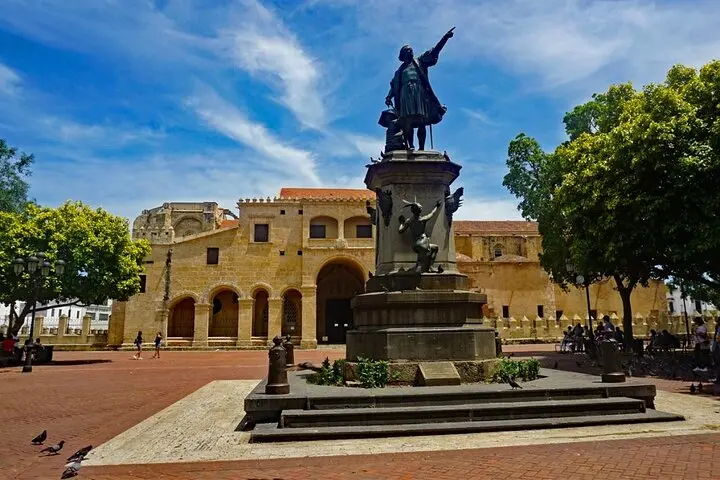
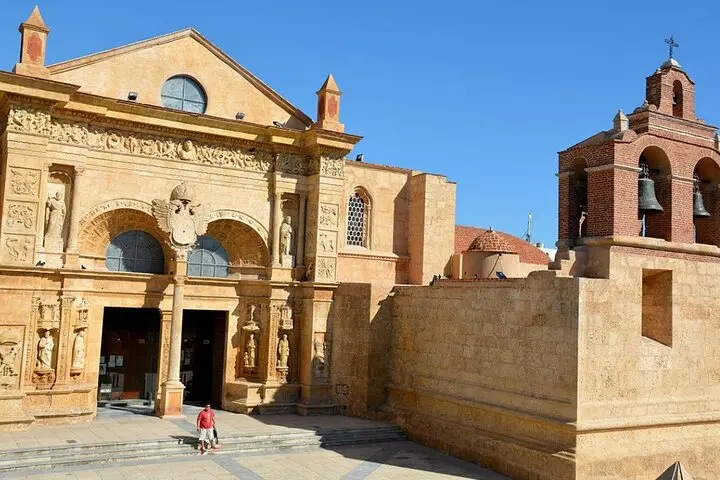
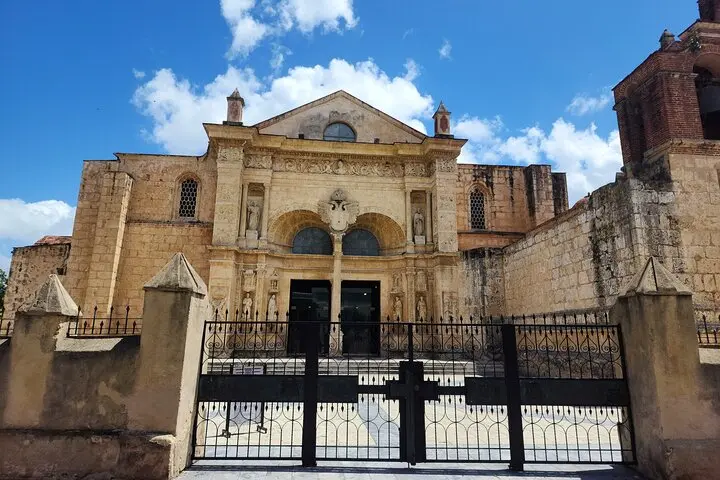
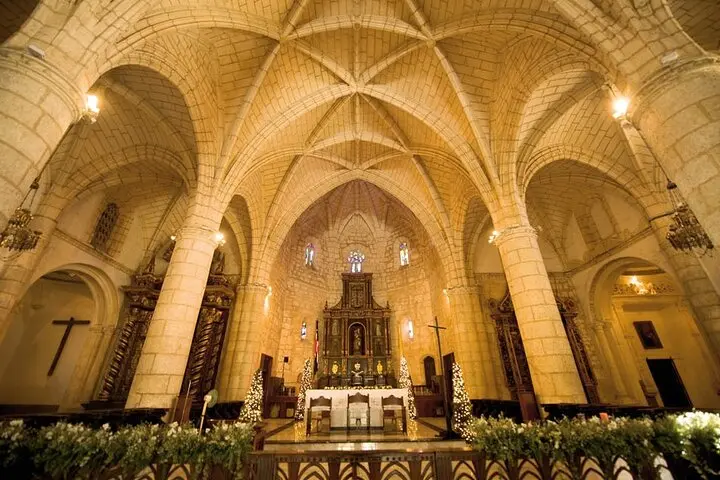
Morning light hits the flagstones of Parque Colón and the city wakes in a slow, historic rhythm: vendors set up along Calle El Conde, a street musician fills the square, and the cathedral’s stone face throws angled shadows across the plaza.
Morning light hits the flagstones of Parque Colón and the city wakes in a slow, historic rhythm: vendors set up along Calle El Conde, a street musician fills the square, and the cathedral’s stone face throws angled shadows across the plaza.
This half-day walking tour threads through the oldest streets of Santo Domingo’s Colonial Zone—America’s first European city—moving from Parque Colón to the Primate Cathedral, the Alcázar de Colón and the National Pantheon before a short drive to Faro a Colón and the subterranean lakes of Los Tres Ojos.
Geology shows itself at the Three Eyes: collapsed limestone caverns that formed shallow, mineral-streaked lakes, their cool surfaces reflecting palm fronds. Architecture tells another story—Mudejar and early Renaissance stonework at the Alcázar, coral-rock masonry in walls that have weathered five centuries of trade winds off the Caribbean.
Culturally, the route is a compact lesson in colonial administration, ecclesiastical power and modern Dominican identity: plazas that once hosted governors are now cafés and meeting points for locals. The Faro a Colón, a late-20th-century monument, throws a cross-shaped illumination on special nights and reminds visitors of contested histories.
Practical notes: the meeting point is Plaza España by the Ovando statue; the tour lasts roughly four hours with covered transportation between distant sites. Expect cobblestones, short staircases and intermittent sun—good walking shoes, sun protection and a small bottle of water are essential. Many entrances are included; bring a camera, a modest tip for guides and an appetite for short stops at markets or cafés along the way.