THE ADVENTURE COLLECTIVE® · Independent discovery and booking for outdoor travel

Walk the stones where the Inca met the Spanish: a concise half-day that links Plaza de Armas with Qoricancha, Sacsayhuamán, and the nearby ritual sites. Ideal for acclimatizing and understanding Cusco’s layered history before heading to the Sacred Valley or Machu Picchu.
Walk the stones where the Inca met the Spanish: a concise half-day that links Plaza de Armas with Qoricancha, Sacsayhuamán, and the nearby ritual sites. Ideal for acclimatizing and understanding Cusco’s layered history before heading to the Sacred Valley or Machu Picchu.
The air is thin and bright as you step from a colonial arcade into Plaza de Armas, where church bells cut through mountain light and vendors arrange colorful textiles. This half-day tour moves at a steady, reflective pace—hotel pickup, a measured walk through cobbled streets, then a short drive up to the high terraces that watch over the city.
Verified experiences and guided adventures in the surrounding area.
Operated by Ecos Peru Trek · Cusco, Cusco
The air is thin and bright as you step from a colonial arcade into Plaza de Armas, where church bells cut through mountain light and vendors arrange colorful textiles. This half-day tour moves at a steady, reflective pace—hotel pickup, a measured walk through cobbled streets, then a short drive up to the high terraces that watch over the city.
Cusco was the political and spiritual heart of the Inca Empire; its foundations—finely cut stone fitted without mortar—speak to seismic intelligence and engineering that still surprises visitors. From Qoricancha’s polished rock and the Santo Domingo overlay to Sacsayhuamán’s megaliths carved from volcanic stone, the route traces a collision of indigenous cosmology and Spanish colonial order. Secondary sites like Q’enqo and Tambomachay reveal ritual channels, carved altars, and aqueducts that highlight Inca mastery of water and astronomy.
The tour balances cultural immersion with practical rhythm: short walks, viewpoints, and time to breathe at each ruin. Expect high-altitude exertion rather than technical hiking—paths are mostly compacted soil, flagstone and gentle terraces, but stair sections and uneven surfaces are common.
Bring layers, sunscreen, and a bottle of water; move slowly on stair sections and allow time to absorb the vistas over Cusco’s red roofs. If you’ve just arrived, prioritize a light breakfast and avoid heavy alcohol; the guide will help with historical context, ticket logistics, and safe pacing. This half-day is designed to orient you to the city’s archaeology and prepare you—physically and culturally—for further exploration of the Sacred Valley or Machu Picchu.
Yes—this half-day is paced for acclimatization with short walks and rests, and the operator provides oxygen and basic first aid; still consult a doctor if you have significant cardiopulmonary issues.
The Partial Tourist Ticket required for Sacsayhuamán, Q’enqo, Puca Pucara and Tambomachay is provided as part of the tour inclusions noted in the booking.
Bring your passport for entrance validation at some sites and for your hotel pickup; digital copies can be useful but carry the original if possible.
The tour includes a bilingual professional guide in English and Spanish, ensuring historical context and logistics are clear.
Ecos Peru Trek operates guided outdoor trips and adventures with an emphasis on safety, stewardship, and memorable experiences.


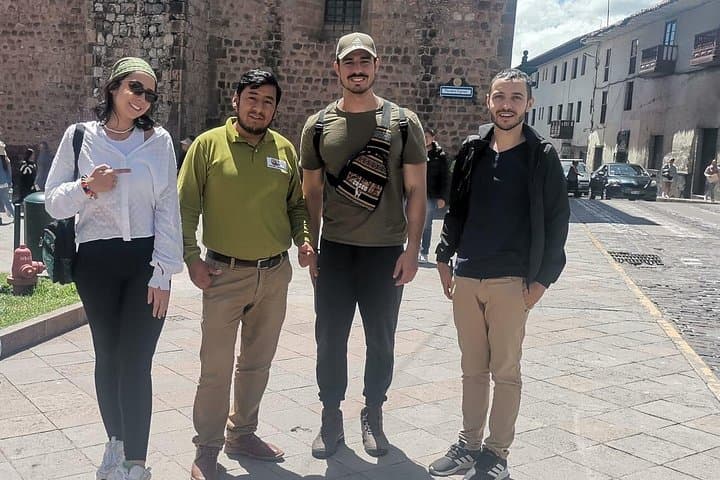

The air is thin and bright as you step from a colonial arcade into Plaza de Armas, where church bells cut through mountain light and vendors arrange colorful textiles. This half-day tour moves at a steady, reflective pace—hotel pickup, a measured walk through cobbled streets, then a short drive up to the high terraces that watch over the city.
The air is thin and bright as you step from a colonial arcade into Plaza de Armas, where church bells cut through mountain light and vendors arrange colorful textiles. This half-day tour moves at a steady, reflective pace—hotel pickup, a measured walk through cobbled streets, then a short drive up to the high terraces that watch over the city.
Cusco was the political and spiritual heart of the Inca Empire; its foundations—finely cut stone fitted without mortar—speak to seismic intelligence and engineering that still surprises visitors. From Qoricancha’s polished rock and the Santo Domingo overlay to Sacsayhuamán’s megaliths carved from volcanic stone, the route traces a collision of indigenous cosmology and Spanish colonial order. Secondary sites like Q’enqo and Tambomachay reveal ritual channels, carved altars, and aqueducts that highlight Inca mastery of water and astronomy.
The tour balances cultural immersion with practical rhythm: short walks, viewpoints, and time to breathe at each ruin. Expect high-altitude exertion rather than technical hiking—paths are mostly compacted soil, flagstone and gentle terraces, but stair sections and uneven surfaces are common.
Bring layers, sunscreen, and a bottle of water; move slowly on stair sections and allow time to absorb the vistas over Cusco’s red roofs. If you’ve just arrived, prioritize a light breakfast and avoid heavy alcohol; the guide will help with historical context, ticket logistics, and safe pacing. This half-day is designed to orient you to the city’s archaeology and prepare you—physically and culturally—for further exploration of the Sacred Valley or Machu Picchu.