THE ADVENTURE COLLECTIVE® · Independent discovery and booking for outdoor travel

Travel north from Hue for a compact, six-hour tour of the Vietnamese DMZ: cross the historic Ben Hai River, walk through wartime bunkers, and explore the multi-level Vinh Moc Tunnels. Practical, guided, and accessible for most travelers.
Travel north from Hue for a compact, six-hour tour of the Vietnamese DMZ: cross the historic Ben Hai River, walk through wartime bunkers, and explore the multi-level Vinh Moc Tunnels. Practical, guided, and accessible for most travelers.
A low concrete bridge crosses a slow river; wind pulls at salt-scented air while a guide points out faded fortifications along the bank. On a half-day DMZ tour from Hue, travelers move north through flat rice plains into the once-severed heart of Vietnam’s twentieth-century front line, arriving at sites that still carry the geometry of conflict: the Ben Hai River and Hien Luong Bridge, wartime bases, and the subterranean lattice of Vinh Moc.
Verified experiences and guided adventures in the surrounding area.
Operated by Dmz Private Tour · Vinh Linh, Quảng Trị Province
A low concrete bridge crosses a slow river; wind pulls at salt-scented air while a guide points out faded fortifications along the bank. On a half-day DMZ tour from Hue, travelers move north through flat rice plains into the once-severed heart of Vietnam’s twentieth-century front line, arriving at sites that still carry the geometry of conflict: the Ben Hai River and Hien Luong Bridge, wartime bases, and the subterranean lattice of Vinh Moc.
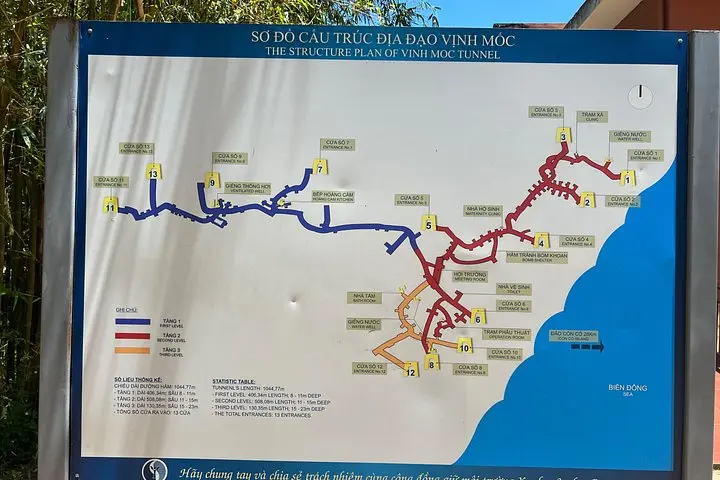
The places visited are compact history lessons. Vinh Moc Tunnels were excavated by villagers to survive aerial bombardment—three levels cut into soft coastal limestone and silt, with living spaces, wells, and birthing rooms. The Highway of Horror markers and Long Hung Church speak to strategic routes and local civilian hardship. Geologically the coastline here is recent, shaped by river deposits and coastal currents that feed Cua Tung Beach’s thin ribbon of sand.
Practicalities matter: expect 6 hours round-trip from Hue with hotel pickup, short walks and low, narrow tunnel passages—headroom is limited. Wear closed-toe shoes for uneven boards and damp tunnel floors; carry water and a headlamp if claustrophobia is a concern. Photography is allowed at most outdoor sites, though some memorial areas ask for respectful distance. Plan mornings to avoid mid-day heat and keep in mind basic comforts are available but limited at stops.
This is a history-forward excursion for travelers who want an accessible, grounded encounter with Vietnam’s DMZ—an hour of travel that yields a tangible sense of place, resilience, and coastline still reshaped by tides and memory.
The tour is approximately six hours with hotel pickup and drop-off in Hue included in the booking.
The tunnels have low ceilings and narrow sections but short in length; visitors should be reasonably mobile and comfortable bending or crouching.
Photography is generally allowed outdoors, but follow posted signs and requests at memorials and in sensitive areas.
Basic restroom facilities and small local eateries are available at some stops, but plan for limited options and bring water and snacks as needed.
Dmz Private Tour operates guided outdoor trips and adventures with an emphasis on safety, stewardship, and memorable experiences.
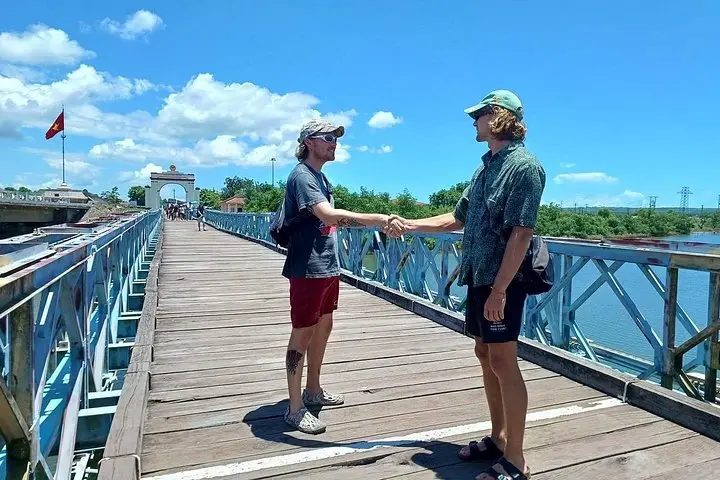
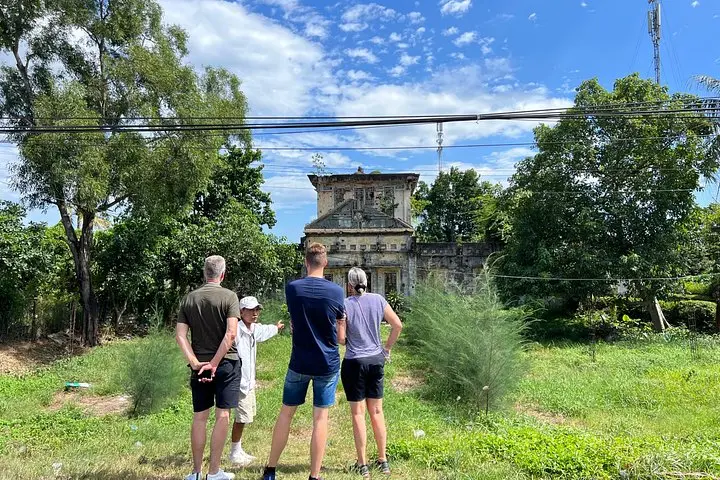
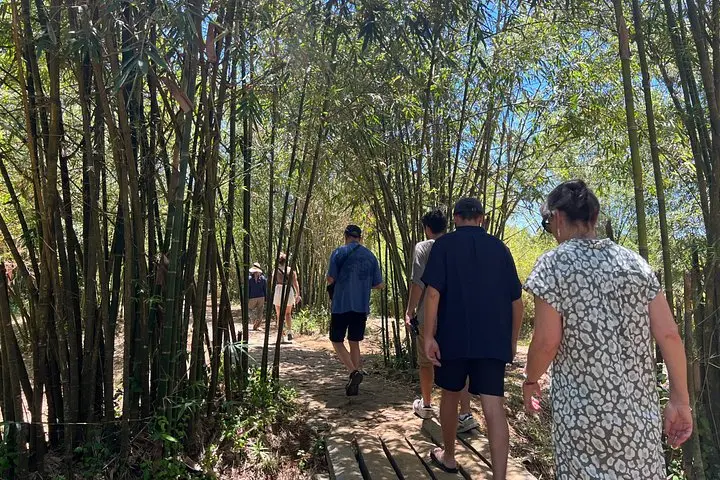
A low concrete bridge crosses a slow river; wind pulls at salt-scented air while a guide points out faded fortifications along the bank. On a half-day DMZ tour from Hue, travelers move north through flat rice plains into the once-severed heart of Vietnam’s twentieth-century front line, arriving at sites that still carry the geometry of conflict: the Ben Hai River and Hien Luong Bridge, wartime bases, and the subterranean lattice of Vinh Moc.
A low concrete bridge crosses a slow river; wind pulls at salt-scented air while a guide points out faded fortifications along the bank. On a half-day DMZ tour from Hue, travelers move north through flat rice plains into the once-severed heart of Vietnam’s twentieth-century front line, arriving at sites that still carry the geometry of conflict: the Ben Hai River and Hien Luong Bridge, wartime bases, and the subterranean lattice of Vinh Moc.
The places visited are compact history lessons. Vinh Moc Tunnels were excavated by villagers to survive aerial bombardment—three levels cut into soft coastal limestone and silt, with living spaces, wells, and birthing rooms. The Highway of Horror markers and Long Hung Church speak to strategic routes and local civilian hardship. Geologically the coastline here is recent, shaped by river deposits and coastal currents that feed Cua Tung Beach’s thin ribbon of sand.
Practicalities matter: expect 6 hours round-trip from Hue with hotel pickup, short walks and low, narrow tunnel passages—headroom is limited. Wear closed-toe shoes for uneven boards and damp tunnel floors; carry water and a headlamp if claustrophobia is a concern. Photography is allowed at most outdoor sites, though some memorial areas ask for respectful distance. Plan mornings to avoid mid-day heat and keep in mind basic comforts are available but limited at stops.
This is a history-forward excursion for travelers who want an accessible, grounded encounter with Vietnam’s DMZ—an hour of travel that yields a tangible sense of place, resilience, and coastline still reshaped by tides and memory.