THE ADVENTURE COLLECTIVE® · Independent discovery and booking for outdoor travel

Spend half a day above Chiang Mai at Wat Phra That Doi Suthep and the Hmong village on Doi Pui. This compact cultural tour pairs a mountaintop temple visit with a short village walk and museum, ideal for morning travelers.
Spend half a day above Chiang Mai at Wat Phra That Doi Suthep and the Hmong village on Doi Pui. This compact cultural tour pairs a mountaintop temple visit with a short village walk and museum, ideal for morning travelers.
You climb into an air-conditioned minivan at dawn, the city shrinking behind you as the road slices into green slopes. By the time the temple bell calls, fog has retreated from the ridge and the gilded chedi catches light—white stucco and gold glinting against northern Thai forest. The stairs and winding paths lead you through incense-scented courtyards where prayer flags move like quiet conversations.
Verified experiences and guided adventures in the surrounding area.
Operated by Touring Center · Chiang Mai, Chiang Mai
You climb into an air-conditioned minivan at dawn, the city shrinking behind you as the road slices into green slopes. By the time the temple bell calls, fog has retreated from the ridge and the gilded chedi catches light—white stucco and gold glinting against northern Thai forest. The stairs and winding paths lead you through incense-scented courtyards where prayer flags move like quiet conversations.
Wat Phra That Doi Suthep dates to the 14th century and holds a relic that made it a regional pilgrimage point; its architecture blends Lanna motifs with later restorations. Nearby Doi Pui is a Hmong village whose museum and stalls show how highland communities have adapted traditional textiles and agriculture to a tourist economy. Geologically the summit sits on older metamorphic foothills of the Shan-Thai range—steep ridgelines, quick-draining soil, and pockets of montane scrub that feed streams down into the Ping River valley.
Expect structured stops: an interpretive walk of the temple compound, a viewpoint over Chiang Mai, then the Hmong village museum and market for handicrafts. The pace is gentle—short uphill sections, many steps, and some uneven ground in the village. Bring modest clothing to cover shoulders and knees for monastery entry, a small bottle of water, and cash for local goods.
Practical timing matters: mornings are cooler and less crowded; afternoons bring bus groups. Respect photography rules near worship areas, follow your guide’s advice when interacting with villagers, and leave no trace—pack out wrappers and receipts to keep trails and stalls welcoming.
Yes—infants may sit on laps and child rates apply when sharing with two paying adults; child supervision is required.
No—this tour includes admission to Doi Suthep and the Hmong Museum as stated, but bring cash for optional purchases.
Yes—access to the main chedi involves stairs (or a lift is sometimes available); the guide will advise on alternatives if needed.
Pickup is provided for hotels within about 6 km of the Three Kings Monument; confirm your pickup point during booking.
Touring Center operates guided outdoor trips and adventures with an emphasis on safety, stewardship, and memorable experiences.
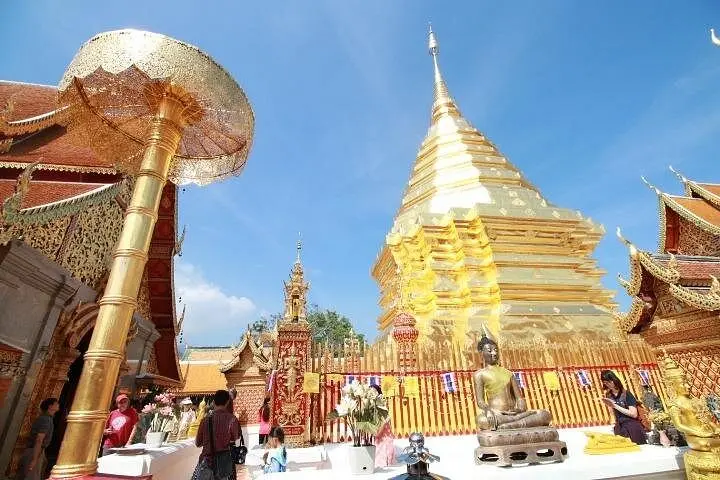
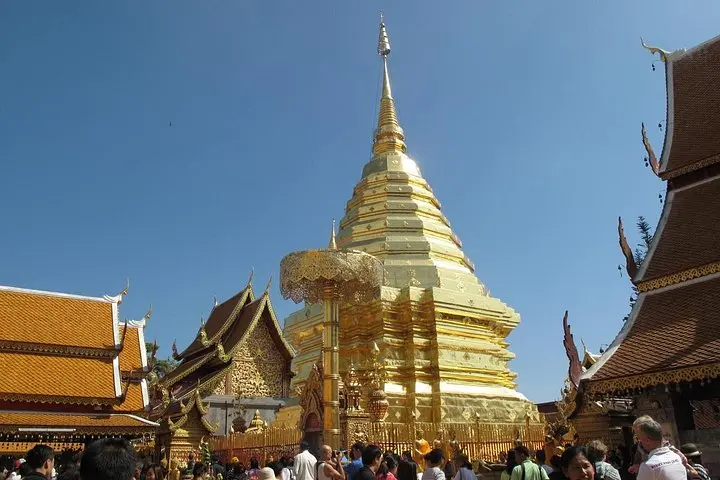
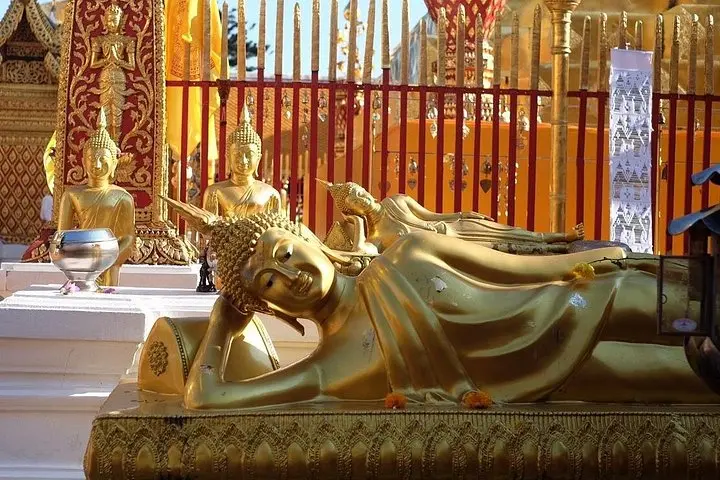
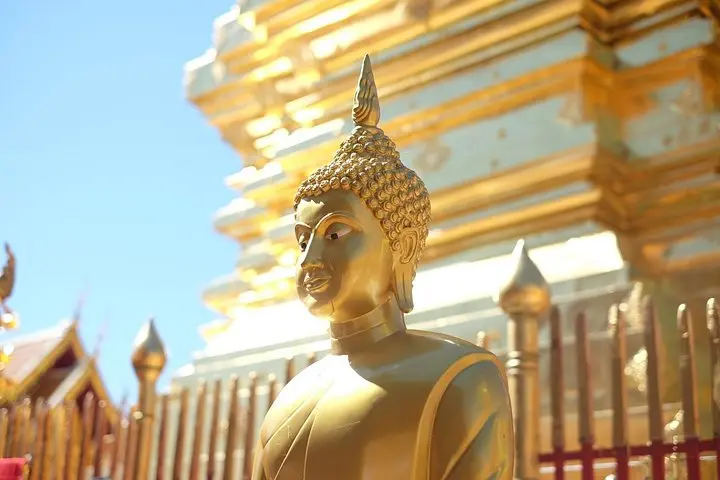
You climb into an air-conditioned minivan at dawn, the city shrinking behind you as the road slices into green slopes. By the time the temple bell calls, fog has retreated from the ridge and the gilded chedi catches light—white stucco and gold glinting against northern Thai forest. The stairs and winding paths lead you through incense-scented courtyards where prayer flags move like quiet conversations.
You climb into an air-conditioned minivan at dawn, the city shrinking behind you as the road slices into green slopes. By the time the temple bell calls, fog has retreated from the ridge and the gilded chedi catches light—white stucco and gold glinting against northern Thai forest. The stairs and winding paths lead you through incense-scented courtyards where prayer flags move like quiet conversations.
Wat Phra That Doi Suthep dates to the 14th century and holds a relic that made it a regional pilgrimage point; its architecture blends Lanna motifs with later restorations. Nearby Doi Pui is a Hmong village whose museum and stalls show how highland communities have adapted traditional textiles and agriculture to a tourist economy. Geologically the summit sits on older metamorphic foothills of the Shan-Thai range—steep ridgelines, quick-draining soil, and pockets of montane scrub that feed streams down into the Ping River valley.
Expect structured stops: an interpretive walk of the temple compound, a viewpoint over Chiang Mai, then the Hmong village museum and market for handicrafts. The pace is gentle—short uphill sections, many steps, and some uneven ground in the village. Bring modest clothing to cover shoulders and knees for monastery entry, a small bottle of water, and cash for local goods.
Practical timing matters: mornings are cooler and less crowded; afternoons bring bus groups. Respect photography rules near worship areas, follow your guide’s advice when interacting with villagers, and leave no trace—pack out wrappers and receipts to keep trails and stalls welcoming.