THE ADVENTURE COLLECTIVE® · Independent discovery and booking for outdoor travel

Combine a gentle Mae Ping river cruise to a Thai farmer’s house with a visit to the 14th-century Doi Suthep temple in a private half-day tour. Expect river views, a golden chedi above the city and practical tips for stairs, dress code and timing.
Combine a gentle Mae Ping river cruise to a Thai farmer’s house with a visit to the 14th-century Doi Suthep temple in a private half-day tour. Expect river views, a golden chedi above the city and practical tips for stairs, dress code and timing.
The boat eases away from the city’s bridges and the Mae Ping widens, green banks sliding by like pages in a slow book. Herbal drinks and the hum of a small outboard set the rhythm before you step onto land at a Thai farmer’s house, where rural life meets the river’s steady push.
Verified experiences and guided adventures in the surrounding area.
Operated by AP Good@travel · Chiang Mai, Chiang Mai Province
The boat eases away from the city’s bridges and the Mae Ping widens, green banks sliding by like pages in a slow book. Herbal drinks and the hum of a small outboard set the rhythm before you step onto land at a Thai farmer’s house, where rural life meets the river’s steady push.
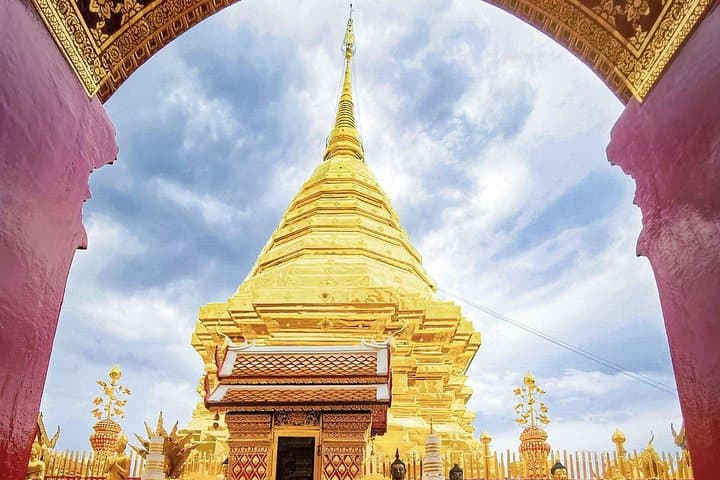
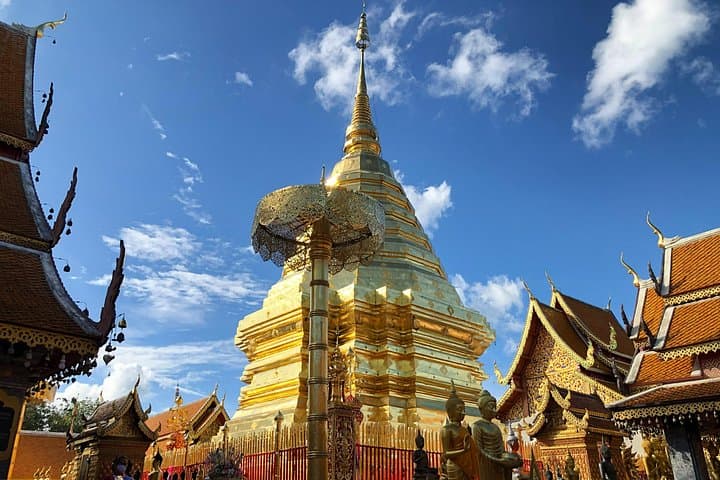
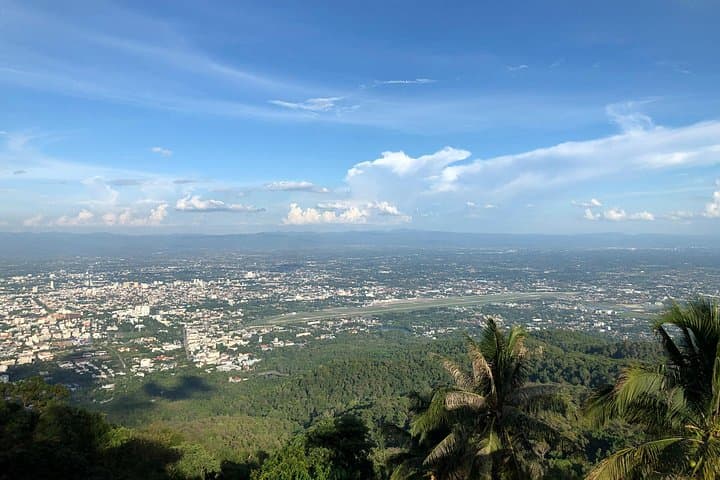
From water to mountain in a half day: Doi Suthep’s golden chedi crowns a ridge above Chiang Mai, its stairway of 306 steps inviting both pilgrims and visitors. The shrine dates to the 14th century and carries local legends—one story holds that a relic led the temple’s founding and gave the hill its sacred status. Geologically, Mount Suthep is part of the western ranges that frame the Chiang Mai basin, offering soils and viewpoints shaped by old uplift and erosion.
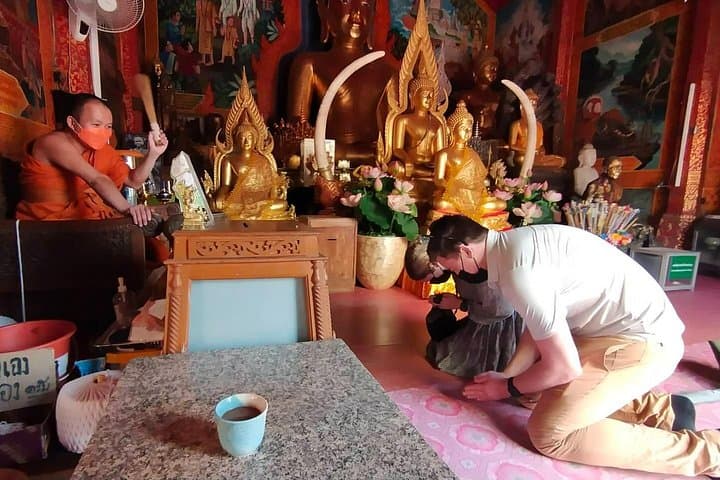
Culturally, the itinerary balances quiet temple rituals with informal riverside life—farmhouses, rice plots and floating birds that treat the river as a corridor. Expect warm wooden boat decks, the scent of river mud after rain, and the sharp, metallic flash of kingfishers.
Practical guidance: the tour runs about 4–5 hours with private transport, bottled water and a licensed English-speaking guide. Dress respectfully for the temple—shoulders and knees covered—and prepare for stairs (or take the cable car). Wear grippy shoes, bring sun protection and carry cash for small stalls. Morning departures avoid midday heat and late-afternoon traffic. This half-day pairs cultural depth with easy, accessible scenery—ideal if you want Chiang Mai’s city views, a riverine glimpse of northern Thailand and a compact but layered experience.
Yes — the tour includes pickup and drop-off inside Chiang Mai city limits using a private air-conditioned vehicle.
Entrance fees to Doi Suthep and the river cruise to the Thai farmer’s house are included in the tour price.
Yes — there’s a cable car option to reach the temple if you prefer to skip the 306-step staircase.
Children can usually participate, but the tour is not recommended for pregnant travelers or those with serious heart or spinal conditions due to stairs and limited medical facilities on-site.
AP Good@travel operates guided outdoor trips and adventures with an emphasis on safety, stewardship, and memorable experiences.
The boat eases away from the city’s bridges and the Mae Ping widens, green banks sliding by like pages in a slow book. Herbal drinks and the hum of a small outboard set the rhythm before you step onto land at a Thai farmer’s house, where rural life meets the river’s steady push.
The boat eases away from the city’s bridges and the Mae Ping widens, green banks sliding by like pages in a slow book. Herbal drinks and the hum of a small outboard set the rhythm before you step onto land at a Thai farmer’s house, where rural life meets the river’s steady push.
From water to mountain in a half day: Doi Suthep’s golden chedi crowns a ridge above Chiang Mai, its stairway of 306 steps inviting both pilgrims and visitors. The shrine dates to the 14th century and carries local legends—one story holds that a relic led the temple’s founding and gave the hill its sacred status. Geologically, Mount Suthep is part of the western ranges that frame the Chiang Mai basin, offering soils and viewpoints shaped by old uplift and erosion.
Culturally, the itinerary balances quiet temple rituals with informal riverside life—farmhouses, rice plots and floating birds that treat the river as a corridor. Expect warm wooden boat decks, the scent of river mud after rain, and the sharp, metallic flash of kingfishers.
Practical guidance: the tour runs about 4–5 hours with private transport, bottled water and a licensed English-speaking guide. Dress respectfully for the temple—shoulders and knees covered—and prepare for stairs (or take the cable car). Wear grippy shoes, bring sun protection and carry cash for small stalls. Morning departures avoid midday heat and late-afternoon traffic. This half-day pairs cultural depth with easy, accessible scenery—ideal if you want Chiang Mai’s city views, a riverine glimpse of northern Thailand and a compact but layered experience.