THE ADVENTURE COLLECTIVE® · Independent discovery and booking for outdoor travel

Explore the dense mangrove channels near Puerto El Morro with a marine biologist guide and watch a resident population of bottlenose dolphins alongside dozens of coastal bird species. This six-hour, research-minded boat tour combines wildlife viewing with local fishing culture and estuarine ecology.
Explore the dense mangrove channels near Puerto El Morro with a marine biologist guide and watch a resident population of bottlenose dolphins alongside dozens of coastal bird species. This six-hour, research-minded boat tour combines wildlife viewing with local fishing culture and estuarine ecology.
The motor slips from the estuary into a cathedral of roots and shadow: mangrove prop roots carve dark channels, egrets flash white, and the water surface ripples as a bottlenose dolphin arcs and vanishes.
Verified experiences and guided adventures in the surrounding area.
Operated by Fernando Félix · Naranjal, Guayas
The motor slips from the estuary into a cathedral of roots and shadow: mangrove prop roots carve dark channels, egrets flash white, and the water surface ripples as a bottlenose dolphin arcs and vanishes.
This half-day trip launches from fishing hamlets around Puerto El Morro and Naranjal, roughly 60 miles (90 km) south of Guayaquil, and explores an inner estuary that has shaped a distinct, resident dolphin population. The coastline here is defined by a high tidal range, strong currents and low salinity where sediment and nutrients feed dense birdlife—pelicans, roseate spoonbills, frigates and kingfishers are common companions.
Human history is evident along the banks: small-scale crab and clam harvests continue the region’s coastal livelihood, and local skiffs still follow tidal rhythms the way they have for generations. Geologically, the Gulf of Guayaquil’s estuarine flats were built by riverine sediments, creating extensive mangrove platforms that trap organic matter and sustain rich food webs.
Practical guidance: tours are typically boat-based and designed for all fitness levels; expect six hours including transfers. Bring binoculars, sun protection and waterproof layers—conditions change quickly with tides and wind. Respect the research-led approach: the guide often records sightings for conservation, so keep noise low and avoid feeding wildlife. Photography is rewarded but use a steady grip on a moving boat.
This trip suits travelers who want close, ethical encounters with coastal wildlife and a clear window into how mangroves, tides and people interlock along Ecuador’s productive coast.
The full activity runs about six hours including transfers; boat time typically takes a few hours depending on sightings and tidal conditions.
Sightings are likely but not guaranteed—this tour visits habitat of a resident bottlenose population studied by guides, increasing chances compared with open-coast trips.
Yes; the tour is rated easy and appropriate for most ages, though boarding the boat requires stepping over a low gunwale and staying seated during transit.
Bring drinking water (some tours supply it), motion-sickness medication if prone, insect repellent for shore stops, and your passport for booking verification.
Fernando Félix operates guided outdoor trips and adventures with an emphasis on safety, stewardship, and memorable experiences.
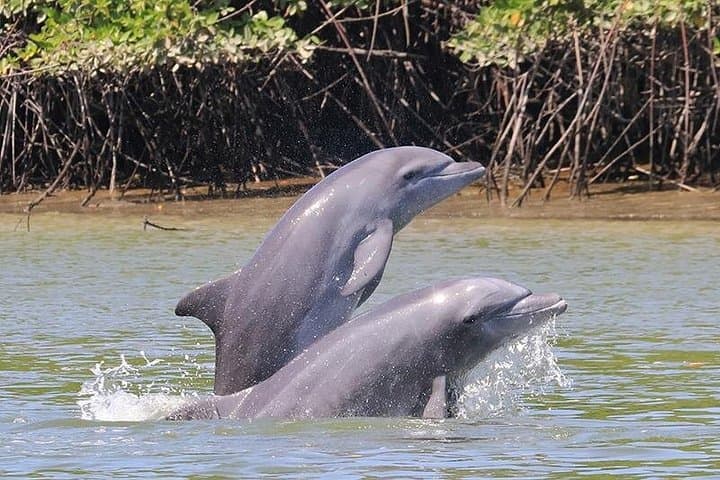


The motor slips from the estuary into a cathedral of roots and shadow: mangrove prop roots carve dark channels, egrets flash white, and the water surface ripples as a bottlenose dolphin arcs and vanishes.
The motor slips from the estuary into a cathedral of roots and shadow: mangrove prop roots carve dark channels, egrets flash white, and the water surface ripples as a bottlenose dolphin arcs and vanishes.
This half-day trip launches from fishing hamlets around Puerto El Morro and Naranjal, roughly 60 miles (90 km) south of Guayaquil, and explores an inner estuary that has shaped a distinct, resident dolphin population. The coastline here is defined by a high tidal range, strong currents and low salinity where sediment and nutrients feed dense birdlife—pelicans, roseate spoonbills, frigates and kingfishers are common companions.
Human history is evident along the banks: small-scale crab and clam harvests continue the region’s coastal livelihood, and local skiffs still follow tidal rhythms the way they have for generations. Geologically, the Gulf of Guayaquil’s estuarine flats were built by riverine sediments, creating extensive mangrove platforms that trap organic matter and sustain rich food webs.
Practical guidance: tours are typically boat-based and designed for all fitness levels; expect six hours including transfers. Bring binoculars, sun protection and waterproof layers—conditions change quickly with tides and wind. Respect the research-led approach: the guide often records sightings for conservation, so keep noise low and avoid feeding wildlife. Photography is rewarded but use a steady grip on a moving boat.
This trip suits travelers who want close, ethical encounters with coastal wildlife and a clear window into how mangroves, tides and people interlock along Ecuador’s productive coast.