THE ADVENTURE COLLECTIVE® · Independent discovery and booking for outdoor travel

Board a traditional Omani dhow in Khasab and cruise the dramatic Musandam fjords on a 3–4 hour trip that combines dolphin watching, snorkeling off Telegraph Island, and views of small fishing villages. The trip includes gear, towels, and light refreshments — ideal for a compact sea-based adventure.
Board a traditional Omani dhow in Khasab and cruise the dramatic Musandam fjords on a 3–4 hour trip that combines dolphin watching, snorkeling off Telegraph Island, and views of small fishing villages. The trip includes gear, towels, and light refreshments — ideal for a compact sea-based adventure.
You step off the quay in Khasab and onto a low-slung Omani dhow, cushions piled where benches might be, the smell of salt and diesel in the air. Narrow fjords cut into the landscape like seams, cliffs dropping into glassy channels while the dhow eases out into open water. Dolphins often meet the bow, arcing and chattering as the boat threads between inlets and small fishing villages.
Verified experiences and guided adventures in the surrounding area.
Operated by Khasab Tours · Khasab, Musandam Governorate
You step off the quay in Khasab and onto a low-slung Omani dhow, cushions piled where benches might be, the smell of salt and diesel in the air. Narrow fjords cut into the landscape like seams, cliffs dropping into glassy channels while the dhow eases out into open water. Dolphins often meet the bow, arcing and chattering as the boat threads between inlets and small fishing villages.
The route skirts Telegraph Island, a Victorian relic where a 19th-century undersea cable once connected Persia to Bombay. Geologically the Musandam peninsula is rugged carbonate rock — steep limestone ridges scored by ancient rivers now drowned by the sea — which creates the narrow fjord channels and hidden coves you’ll pass. Local communities still fish from dhows and small launches; culture here feels maritime and practical rather than tourist-driven.
Expect clear, warm water for snorkeling around Telegraph Island, with rocky reef edges and pockets of schooling fish. Guides typically provide snorkel gear, towels, bottled water, and light refreshments; trips run about 3–4 hours with morning and afternoon departures. Practical tips: secure loose items during dolphin watching, bring reef‑safe sunscreen, and take seasickness prevention if you’re prone to it. The dhow is accessible for most travelers, but mobility on and off deck requires a steady step.
This half-day cruise balances spectacle and simplicity: wildlife encounters, a short historical stop, and easy snorkeling in a landscape that feels unexpectedly remote just hours from Muscat. For a compact introduction to the “Norway of Arabia,” it’s hard to beat.
No — sightings are frequent but not guaranteed; mornings often offer calmer seas and better chances for active pods.
Yes — operators typically supply masks, snorkels, fins, and towels for use during the trip.
The operator lists wheelchair accessibility for certain areas and transport; check at booking for specific boarding assistance and pickup options.
Bring a swimsuit, reef‑safe sunscreen, a hat, cash for souvenirs, and any personal medication; bottled water and light refreshments are usually provided.
Khasab Tours operates guided outdoor trips and adventures with an emphasis on safety, stewardship, and memorable experiences.
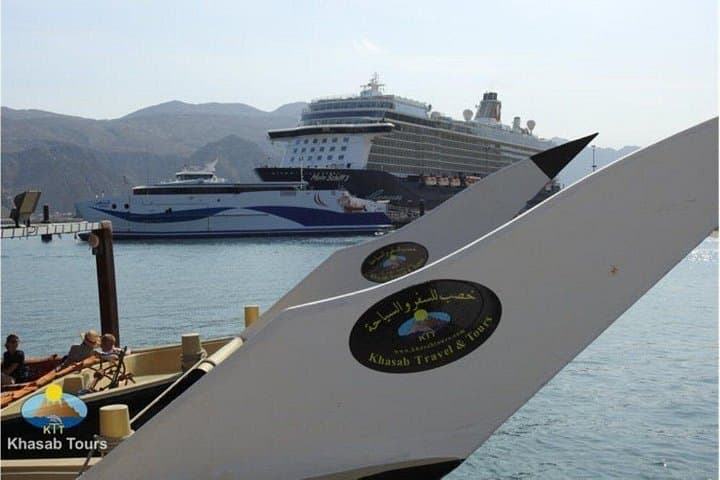


You step off the quay in Khasab and onto a low-slung Omani dhow, cushions piled where benches might be, the smell of salt and diesel in the air. Narrow fjords cut into the landscape like seams, cliffs dropping into glassy channels while the dhow eases out into open water. Dolphins often meet the bow, arcing and chattering as the boat threads between inlets and small fishing villages.
You step off the quay in Khasab and onto a low-slung Omani dhow, cushions piled where benches might be, the smell of salt and diesel in the air. Narrow fjords cut into the landscape like seams, cliffs dropping into glassy channels while the dhow eases out into open water. Dolphins often meet the bow, arcing and chattering as the boat threads between inlets and small fishing villages.
The route skirts Telegraph Island, a Victorian relic where a 19th-century undersea cable once connected Persia to Bombay. Geologically the Musandam peninsula is rugged carbonate rock — steep limestone ridges scored by ancient rivers now drowned by the sea — which creates the narrow fjord channels and hidden coves you’ll pass. Local communities still fish from dhows and small launches; culture here feels maritime and practical rather than tourist-driven.
Expect clear, warm water for snorkeling around Telegraph Island, with rocky reef edges and pockets of schooling fish. Guides typically provide snorkel gear, towels, bottled water, and light refreshments; trips run about 3–4 hours with morning and afternoon departures. Practical tips: secure loose items during dolphin watching, bring reef‑safe sunscreen, and take seasickness prevention if you’re prone to it. The dhow is accessible for most travelers, but mobility on and off deck requires a steady step.
This half-day cruise balances spectacle and simplicity: wildlife encounters, a short historical stop, and easy snorkeling in a landscape that feels unexpectedly remote just hours from Muscat. For a compact introduction to the “Norway of Arabia,” it’s hard to beat.