THE ADVENTURE COLLECTIVE® · Independent discovery and booking for outdoor travel

A focused half-day escape from Port Angeles to Lake Crescent and Marymere Falls. Expect old-growth forest, a 90-foot cascade, and a shoreline stop at the historic Lake Crescent Lodge — all with a local naturalist guide.
A focused half-day escape from Port Angeles to Lake Crescent and Marymere Falls. Expect old-growth forest, a 90-foot cascade, and a shoreline stop at the historic Lake Crescent Lodge — all with a local naturalist guide.
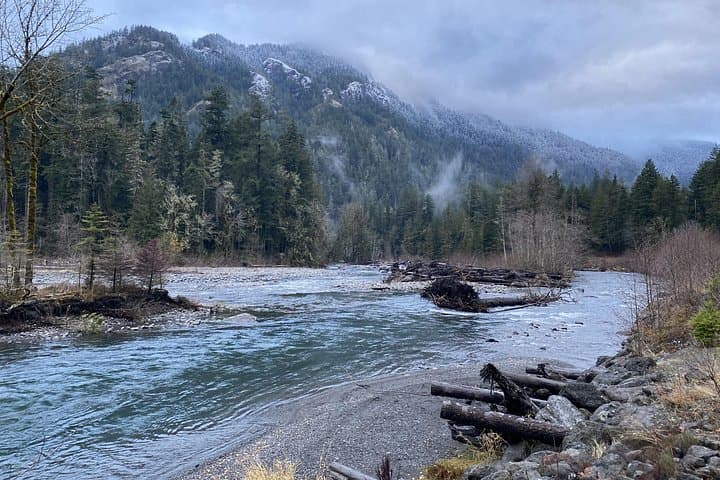
The van slips away from Port Angeles and the world narrows to cedar-scented air and a ribbon of highway that climbs toward the Olympic spine. Within 40 minutes the trees close in and the noise of the city is replaced by water: first the spare chatter of the Elwha River, then the broader, glassy hush of Lake Crescent. On this half-day outing you move with a guide who reads the landscape — a short waterfall walk to Madison Creek, a 2–3 mile guided ramble to Marymere Falls, and a shoreline stop at the historic Lake Crescent Lodge — all arranged so the day feels like a focused escape rather than a full-on expedition.
Verified experiences and guided adventures in the surrounding area.
Operated by Olympic Hiking Co. · Port Angeles, Washington
The van slips away from Port Angeles and the world narrows to cedar-scented air and a ribbon of highway that climbs toward the Olympic spine. Within 40 minutes the trees close in and the noise of the city is replaced by water: first the spare chatter of the Elwha River, then the broader, glassy hush of Lake Crescent. On this half-day outing you move with a guide who reads the landscape — a short waterfall walk to Madison Creek, a 2–3 mile guided ramble to Marymere Falls, and a shoreline stop at the historic Lake Crescent Lodge — all arranged so the day feels like a focused escape rather than a full-on expedition.
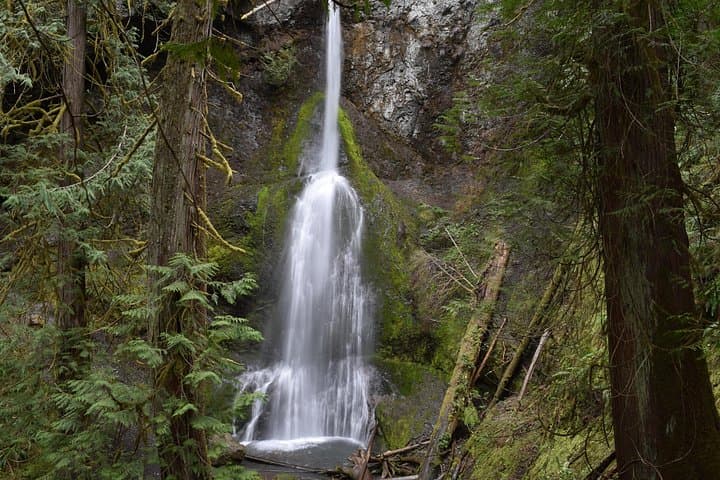
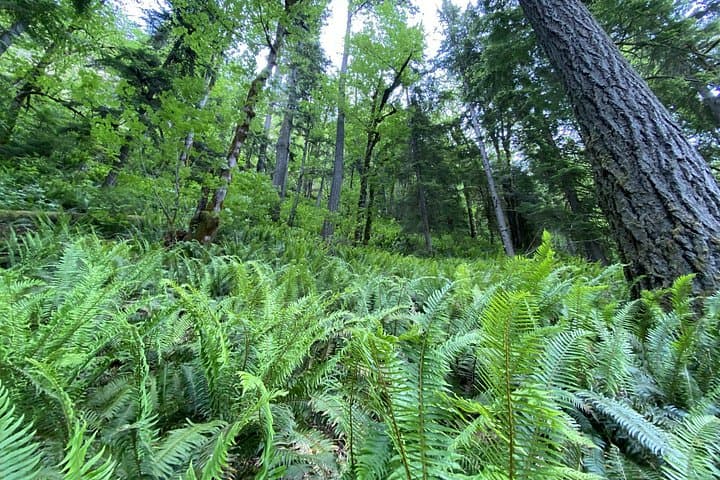
Geology here is straightforward and dramatic. Lake Crescent sits in an over-deepened glacial basin; its water is famously clear because it drains slowly through glacial till and springs, giving that deep blue-green clarity. Marymere Falls drops roughly 90 feet after Barnes Creek negotiates a series of stair-stepped ledges; the trail threads through old-growth firs and hemlock, where moss and ferns claim the damp understory.
The human history is layered: the area has long been part of the S’Klallam and other Coast Salish peoples’ homelands, and the Lake Crescent Lodge, built in 1916, speaks to the early 20th-century push to bring visitors to the park by rail and road. A short detour down the Elwha Valley on this tour also touches a recent conservation story — dam removal in the Elwha has been one of the largest ecological restorations in the Lower 48, reshaping streams and reviving salmon runs.
What you actually do is simple to picture and easy to prepare for. Madison Creek Falls requires 0.1 mile of level walking; the Marymere Falls loop is 2–3 miles round-trip with modest elevation gain (roughly 150–250 feet) and two scenic bridge crossings. Terrain is well-maintained singletrack and boardwalks in places, with damp roots and occasional muddy sections after rain.
Practical edge: the tour departs from Olympic Hiking Co. at 720 Marine Drive in Port Angeles and runs about four hours including van transport in a 12–15 passenger vehicle. The company operates rain or shine, so plan waterproof layers; weather on the peninsula changes fast. Bring sturdy footwear (trail shoes or light boots), a water bottle, and a camera with a wide lens for the waterfall and lake viewpoints. If you’re coming from Seattle, the itinerary pairs cleanly with the Bainbridge ferry and the Strait Shot bus — email the operator to arrange a Port Angeles pick-up.
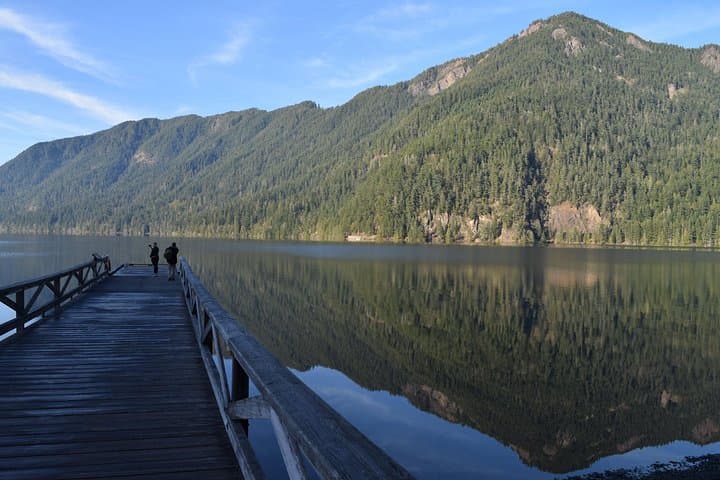
By mid-afternoon the lake catches light low and flat, offering mirror-still reflections or dramatic wind-swept ripples depending on the day. The tour is compact but purposeful: a naturalist guide folds geology, ecology, and local history into the walk, leaving you with a clear sense of place and a shortlist of spots to return to on a longer expedition.
Meet at Olympic Hiking Co., 720 Marine Drive, Port Angeles, WA; the tour departs from this location and returns here.
The Marymere Falls portion is about 2–3 miles round-trip with roughly 150–250 feet of elevation gain depending on route and stops.
Children are allowed but must be accompanied by an adult; consider their comfort with wet, rooty trails and short climbs.
No technical experience required; a moderate level of fitness and comfort on uneven terrain is sufficient.
Tours operate rain or shine; guides recommend waterproof clothing and sturdy footwear since cancellations for weather are not permitted.
Yes — you can take the Bainbridge ferry and the Strait Shot bus; email [email protected] to arrange a pick-up from the Port Angeles Gateway Transit Center.
Olympic Hiking Co. operates guided outdoor trips and adventures with an emphasis on safety, stewardship, and memorable experiences.
The van slips away from Port Angeles and the world narrows to cedar-scented air and a ribbon of highway that climbs toward the Olympic spine. Within 40 minutes the trees close in and the noise of the city is replaced by water: first the spare chatter of the Elwha River, then the broader, glassy hush of Lake Crescent. On this half-day outing you move with a guide who reads the landscape — a short waterfall walk to Madison Creek, a 2–3 mile guided ramble to Marymere Falls, and a shoreline stop at the historic Lake Crescent Lodge — all arranged so the day feels like a focused escape rather than a full-on expedition.
The van slips away from Port Angeles and the world narrows to cedar-scented air and a ribbon of highway that climbs toward the Olympic spine. Within 40 minutes the trees close in and the noise of the city is replaced by water: first the spare chatter of the Elwha River, then the broader, glassy hush of Lake Crescent. On this half-day outing you move with a guide who reads the landscape — a short waterfall walk to Madison Creek, a 2–3 mile guided ramble to Marymere Falls, and a shoreline stop at the historic Lake Crescent Lodge — all arranged so the day feels like a focused escape rather than a full-on expedition.
Geology here is straightforward and dramatic. Lake Crescent sits in an over-deepened glacial basin; its water is famously clear because it drains slowly through glacial till and springs, giving that deep blue-green clarity. Marymere Falls drops roughly 90 feet after Barnes Creek negotiates a series of stair-stepped ledges; the trail threads through old-growth firs and hemlock, where moss and ferns claim the damp understory.
The human history is layered: the area has long been part of the S’Klallam and other Coast Salish peoples’ homelands, and the Lake Crescent Lodge, built in 1916, speaks to the early 20th-century push to bring visitors to the park by rail and road. A short detour down the Elwha Valley on this tour also touches a recent conservation story — dam removal in the Elwha has been one of the largest ecological restorations in the Lower 48, reshaping streams and reviving salmon runs.
What you actually do is simple to picture and easy to prepare for. Madison Creek Falls requires 0.1 mile of level walking; the Marymere Falls loop is 2–3 miles round-trip with modest elevation gain (roughly 150–250 feet) and two scenic bridge crossings. Terrain is well-maintained singletrack and boardwalks in places, with damp roots and occasional muddy sections after rain.
Practical edge: the tour departs from Olympic Hiking Co. at 720 Marine Drive in Port Angeles and runs about four hours including van transport in a 12–15 passenger vehicle. The company operates rain or shine, so plan waterproof layers; weather on the peninsula changes fast. Bring sturdy footwear (trail shoes or light boots), a water bottle, and a camera with a wide lens for the waterfall and lake viewpoints. If you’re coming from Seattle, the itinerary pairs cleanly with the Bainbridge ferry and the Strait Shot bus — email the operator to arrange a Port Angeles pick-up.
By mid-afternoon the lake catches light low and flat, offering mirror-still reflections or dramatic wind-swept ripples depending on the day. The tour is compact but purposeful: a naturalist guide folds geology, ecology, and local history into the walk, leaving you with a clear sense of place and a shortlist of spots to return to on a longer expedition.