THE ADVENTURE COLLECTIVE® · Independent discovery and booking for outdoor travel

See Bonaire’s salt flats, 19th-century Slave Huts, 1000 Steps and Gotomeer on a focused 3.5-hour tour. Ideal for travelers who want a compact introduction to the island’s landscapes, wildlife and history.
See Bonaire’s salt flats, 19th-century Slave Huts, 1000 Steps and Gotomeer on a focused 3.5-hour tour. Ideal for travelers who want a compact introduction to the island’s landscapes, wildlife and history.
A low, briny wind greets visitors as the van eases out of Kralendijk and the island unfolds: white salt pans rimmed in pink, solitary stone huts set against a cobalt sea, and a coastline that turns suddenly rugged where waves find their voice. The half-day Highlights of Bonaire tour stitches these scenes together in about 3.5 hours, moving from the industrial geometry of Cargill’s salt works to the quiet of Gotomeer and the lookout at Seru Largo.
Verified experiences and guided adventures in the surrounding area.
Operated by Bonaire Tours and Vacations · Kralendijk, Bonaire
A low, briny wind greets visitors as the van eases out of Kralendijk and the island unfolds: white salt pans rimmed in pink, solitary stone huts set against a cobalt sea, and a coastline that turns suddenly rugged where waves find their voice. The half-day Highlights of Bonaire tour stitches these scenes together in about 3.5 hours, moving from the industrial geometry of Cargill’s salt works to the quiet of Gotomeer and the lookout at Seru Largo.
Geology here is plain and honest — an uplifted coral plateau peppered with alkali flats and wind-sculpted limestone. The salt industry shaped both landscape and labor history: the small stone Slave Huts, built in the 19th century, are stark reminders of that past. Rincon, the island’s oldest settlement, preserves Arawak and colonial threads in its buildings and festivals.
Wildlife is direct: flamingos forage the shallow pans, shorebirds patrol Gotomeer, and sunbaked lizards skirt the rocks. Culture shows in roadside stalls, the cadushy distillery’s bitter cactus liqueur, and slow, practical island life that values shade and a cold drink.
Practical side: expect several short stops (10–30 minutes) and a comfortable air-conditioned vehicle. Morning light is best for photos and for spotting flamingos; mid-morning breezes make hot midday more tolerable. Bring sun protection, a refillable water bottle, sturdy sandals or low hikers, and a camera with a zoom for birds. The tour is suitable for most fitness levels and offers an efficient way to read the island’s natural and human story in a single, well-paced outing.
The tour lasts about 3.5 hours and includes stops at Salt Flats, Slave Huts, 1000 Steps, Gotomeer, Rincon, Cadushy Distillery (view/taste depending on timing), Washington Park Museum viewpoint, and Seru Largo.
Yes — the itinerary is rated easy and suitable for children, though child fares depend on booking terms and a supervising adult is required.
Some stops like Sorobon Beach offer swim access but many stops are viewpoints or salt flats where swimming isn’t appropriate; bring swimwear if you plan to use beach stops.
Flamingos are commonly seen at Gotomeer and the salt pans, especially in the morning, but wildlife sightings are never guaranteed.
Bonaire Tours and Vacations operates guided outdoor trips and adventures with an emphasis on safety, stewardship, and memorable experiences.
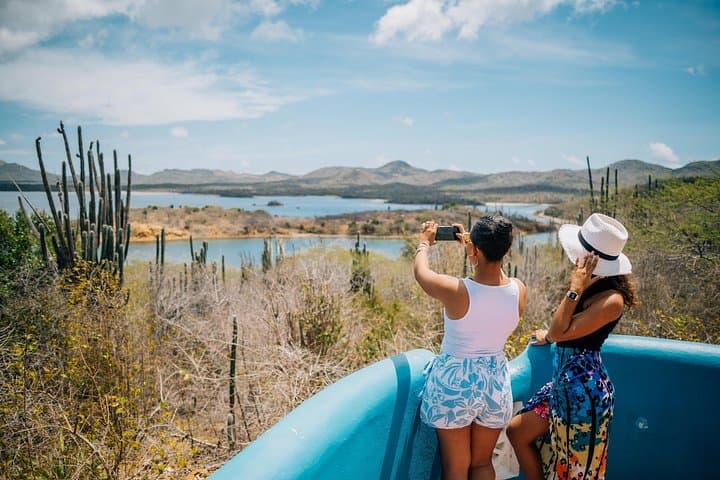


A low, briny wind greets visitors as the van eases out of Kralendijk and the island unfolds: white salt pans rimmed in pink, solitary stone huts set against a cobalt sea, and a coastline that turns suddenly rugged where waves find their voice. The half-day Highlights of Bonaire tour stitches these scenes together in about 3.5 hours, moving from the industrial geometry of Cargill’s salt works to the quiet of Gotomeer and the lookout at Seru Largo.
A low, briny wind greets visitors as the van eases out of Kralendijk and the island unfolds: white salt pans rimmed in pink, solitary stone huts set against a cobalt sea, and a coastline that turns suddenly rugged where waves find their voice. The half-day Highlights of Bonaire tour stitches these scenes together in about 3.5 hours, moving from the industrial geometry of Cargill’s salt works to the quiet of Gotomeer and the lookout at Seru Largo.
Geology here is plain and honest — an uplifted coral plateau peppered with alkali flats and wind-sculpted limestone. The salt industry shaped both landscape and labor history: the small stone Slave Huts, built in the 19th century, are stark reminders of that past. Rincon, the island’s oldest settlement, preserves Arawak and colonial threads in its buildings and festivals.
Wildlife is direct: flamingos forage the shallow pans, shorebirds patrol Gotomeer, and sunbaked lizards skirt the rocks. Culture shows in roadside stalls, the cadushy distillery’s bitter cactus liqueur, and slow, practical island life that values shade and a cold drink.
Practical side: expect several short stops (10–30 minutes) and a comfortable air-conditioned vehicle. Morning light is best for photos and for spotting flamingos; mid-morning breezes make hot midday more tolerable. Bring sun protection, a refillable water bottle, sturdy sandals or low hikers, and a camera with a zoom for birds. The tour is suitable for most fitness levels and offers an efficient way to read the island’s natural and human story in a single, well-paced outing.