THE ADVENTURE COLLECTIVE® · Independent discovery and booking for outdoor travel

Trek from Puerto Villamil to the yellow-streaked fumaroles of Sierra Negra on Isabela Island. This half-day guided hike reveals active volcanic terrain, endemic plants, and a firsthand look at geothermal vents.
Trek from Puerto Villamil to the yellow-streaked fumaroles of Sierra Negra on Isabela Island. This half-day guided hike reveals active volcanic terrain, endemic plants, and a firsthand look at geothermal vents.
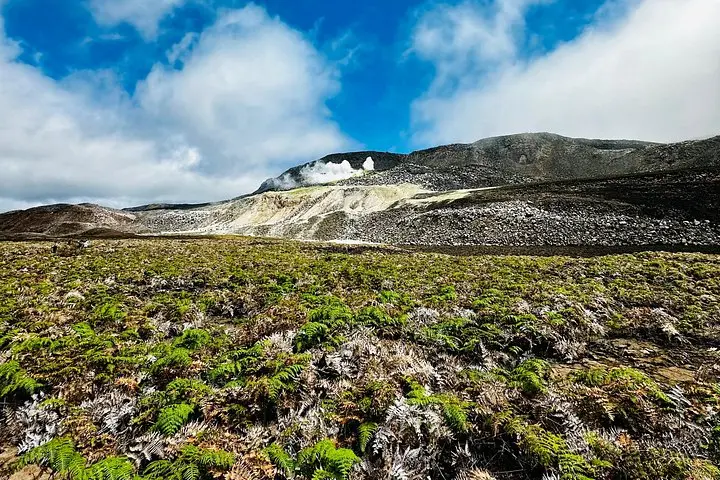
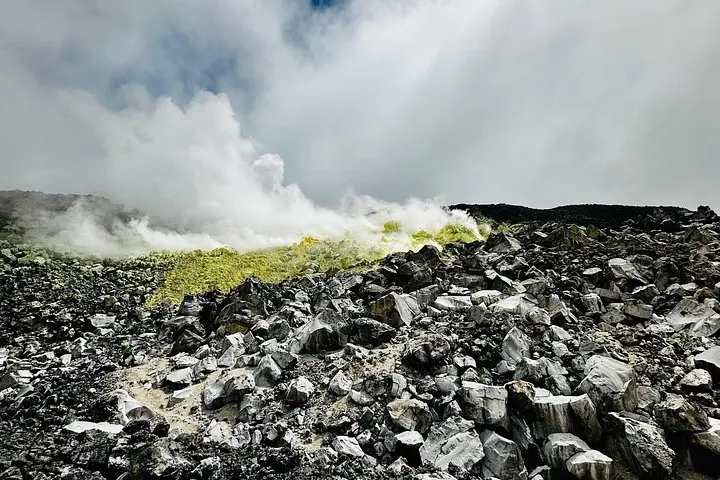
You crest a dark, ragged ridge and the air changes: a warm, sharp scent of sulfur rides the wind and the ground hisses in small, yellow-streaked pockets. The trail from Puerto Villamil climbs through humid highland scrub, then opens onto the raw, lava-scarred slopes of Sierra Negra where fumaroles puncture the plain like a breathing machine.
Verified experiences and guided adventures in the surrounding area.
Operated by Galapagos Outdoors CL · Puerto Villamil, Galápagos
You crest a dark, ragged ridge and the air changes: a warm, sharp scent of sulfur rides the wind and the ground hisses in small, yellow-streaked pockets. The trail from Puerto Villamil climbs through humid highland scrub, then opens onto the raw, lava-scarred slopes of Sierra Negra where fumaroles puncture the plain like a breathing machine.
Geology here is immediate. Sierra Negra is a large, active shield volcano born of the Galápagos hotspot; the lava fields you walk on are young in geological terms and still settling. Human history around the fumaroles is practical—miners once collected sulfur for local use, and guides today interpret how thermal vents and past eruptions shaped both the land and island life.
Culturally the route threads small settlements and endemic plant communities—low shrubs and hardy grasses that have adapted to the heat and salt. Keep an eye for wild tortoises moving slowly across the plain; birds such as Darwin’s finches are common near the verdant approach.
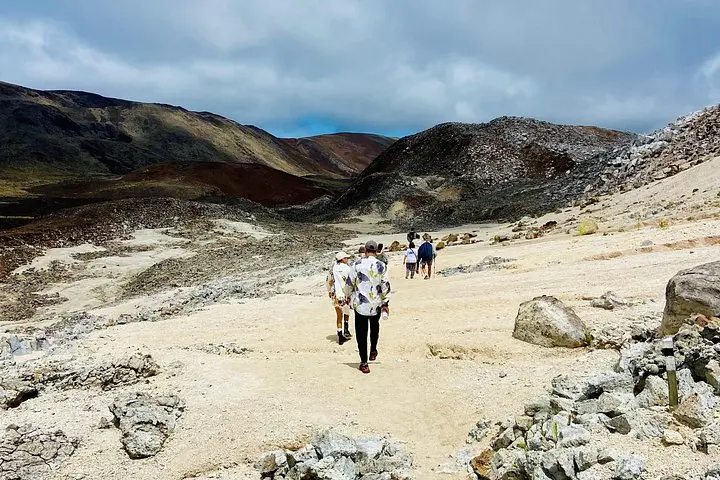
Practical guidance: this is a moderately challenging, 3–4 hour guided hike over uneven, rocky terrain and old lava. Wear sturdy hiking shoes with good traction, bring 1–2 liters of water, sun protection, and a light wind shell. The sulfur fumes are strong near vents—any respiratory concerns should be discussed with your guide. Follow marked paths and keep a respectful distance from fumaroles; the ground can be brittle and unstable.
Timing a morning or late-afternoon hike reduces heat and often provides the best light on the crater rim. The experience is part geological classroom, part raw wilderness—a compact Galápagos encounter that shows the islands still being made.
The tour takes about 3–4 hours and is rated moderate—expect uneven lava fields, short steep sections and exposed terrain.
Facilities are limited; use restrooms in Puerto Villamil before departure and be prepared for minimal options on the route.
Guides allow safe viewing distances; do not approach vents due to unstable ground and hot gases.
Not recommended for those with spinal or serious cardiovascular issues; children should be capable hikers and supervised closely.
Galapagos Outdoors CL operates guided outdoor trips and adventures with an emphasis on safety, stewardship, and memorable experiences.
You crest a dark, ragged ridge and the air changes: a warm, sharp scent of sulfur rides the wind and the ground hisses in small, yellow-streaked pockets. The trail from Puerto Villamil climbs through humid highland scrub, then opens onto the raw, lava-scarred slopes of Sierra Negra where fumaroles puncture the plain like a breathing machine.
You crest a dark, ragged ridge and the air changes: a warm, sharp scent of sulfur rides the wind and the ground hisses in small, yellow-streaked pockets. The trail from Puerto Villamil climbs through humid highland scrub, then opens onto the raw, lava-scarred slopes of Sierra Negra where fumaroles puncture the plain like a breathing machine.
Geology here is immediate. Sierra Negra is a large, active shield volcano born of the Galápagos hotspot; the lava fields you walk on are young in geological terms and still settling. Human history around the fumaroles is practical—miners once collected sulfur for local use, and guides today interpret how thermal vents and past eruptions shaped both the land and island life.
Culturally the route threads small settlements and endemic plant communities—low shrubs and hardy grasses that have adapted to the heat and salt. Keep an eye for wild tortoises moving slowly across the plain; birds such as Darwin’s finches are common near the verdant approach.
Practical guidance: this is a moderately challenging, 3–4 hour guided hike over uneven, rocky terrain and old lava. Wear sturdy hiking shoes with good traction, bring 1–2 liters of water, sun protection, and a light wind shell. The sulfur fumes are strong near vents—any respiratory concerns should be discussed with your guide. Follow marked paths and keep a respectful distance from fumaroles; the ground can be brittle and unstable.
Timing a morning or late-afternoon hike reduces heat and often provides the best light on the crater rim. The experience is part geological classroom, part raw wilderness—a compact Galápagos encounter that shows the islands still being made.