THE ADVENTURE COLLECTIVE® · Independent discovery and booking for outdoor travel

A short, easy-paced hike from Pokhara to the World Peace Stupa delivers sweeping views of Phewa Lake, Himalayan panoramas, and close-up encounters with rural Nepali village life. This half-day walk is ideal for travelers seeking big landscapes with modest effort.
A short, easy-paced hike from Pokhara to the World Peace Stupa delivers sweeping views of Phewa Lake, Himalayan panoramas, and close-up encounters with rural Nepali village life. This half-day walk is ideal for travelers seeking big landscapes with modest effort.
The path climbs out of Pokhara’s humid valley air and into a quiet green bowl where the sound of distant temple bells and birdsong replaces city noise. Within an hour of steady walking the trail opens to sweeping views of Phewa Lake carved into the valley floor and the jagged white teeth of the Annapurna range beyond.
Verified experiences and guided adventures in the surrounding area.
Operated by AM Travels and Tours · Pokhara, Gandaki Province
The path climbs out of Pokhara’s humid valley air and into a quiet green bowl where the sound of distant temple bells and birdsong replaces city noise. Within an hour of steady walking the trail opens to sweeping views of Phewa Lake carved into the valley floor and the jagged white teeth of the Annapurna range beyond.
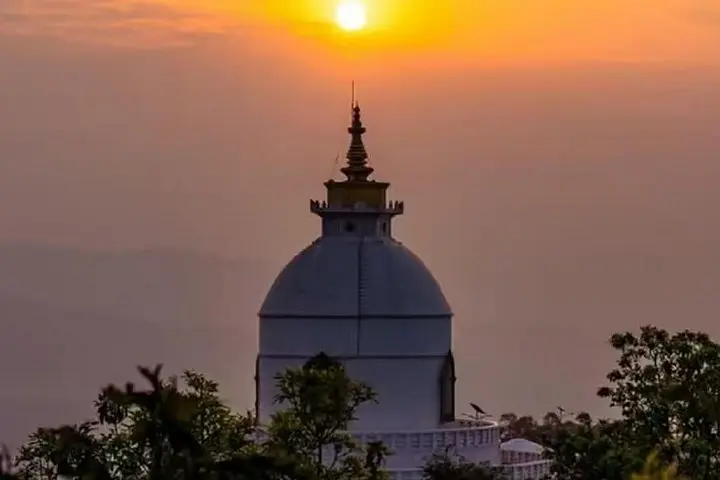
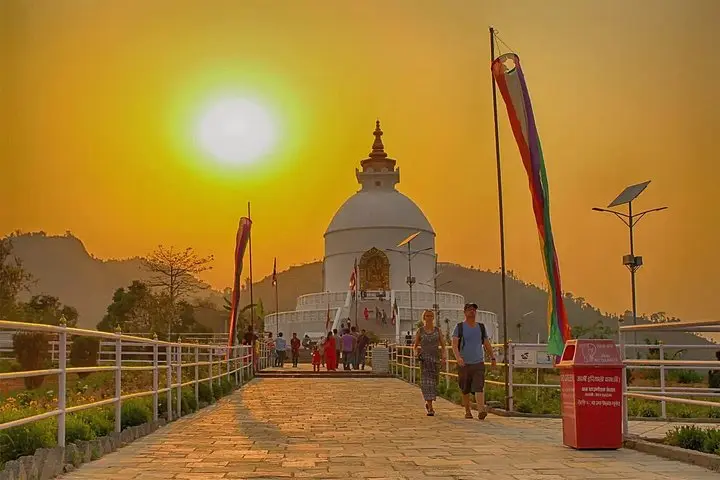
The World Peace Stupa (Shanti Stupa) was established by Japanese Buddhist practitioners as a hilltop monument promoting peace; its white dome and brass prayer wheels have become a modern landmark overlooking a centuries-old agrarian landscape. Geologically the ridge is a gentle outcrop of weathered schist and river-deposited soils, terraced by local farmers who still grow maize and vegetables along the ascent.
Culturally, the route threads several small Gurung and Brahmin villages where stone houses, prayer flags, and seasonal fields offer opportunities to observe everyday rural life. Local guides often point out traditional farming practices and explain the stupa’s role as a pilgrimage and photo vantage.
Practically, the hike is easy-paced: expect roughly 3–4 km round trip with about 200–350 m of elevation gain depending on where you start, usually completed in 2–3 hours including time at the stupa. Trails are a mix of dirt steps and compact footpaths—good footwear and water are essential. Morning or late afternoon provides the best light and cooler temperatures; mid-day can be hot and dusty.
Travelers should plan for modest altitude change, respect religious spaces at the stupa, and carry cash for small tea houses on the trail. Guides and hotel pickup simplify logistics and leave hikers free to focus on the views and village encounters.
Most groups take 2–3 hours round trip covering about 3–4 km with 200–350 m of elevation gain; sections are steady but not technical.
No—trail is well-used and signposted, but a local guide adds cultural context and handles pickup logistics.
Yes, if they can manage a steady uphill walk for up to an hour; take breaks and avoid peak heat hours.
Clear mountain views are likeliest October to December and March to May; monsoon (June–September) brings heavy rain and limited vistas.
AM Travels and Tours operates guided outdoor trips and adventures with an emphasis on safety, stewardship, and memorable experiences.
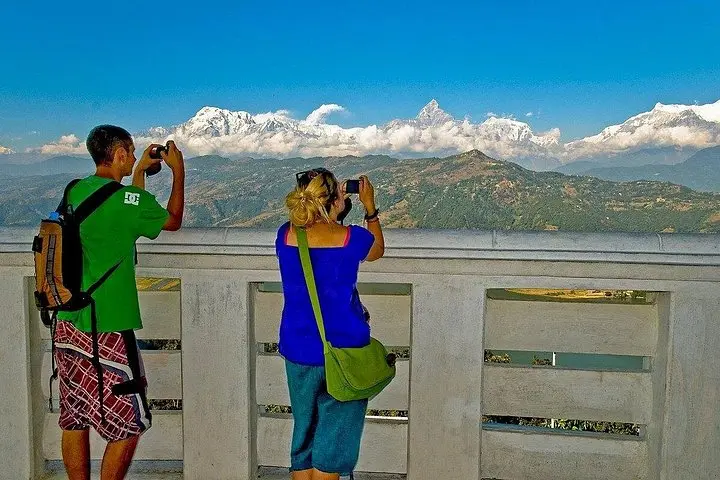
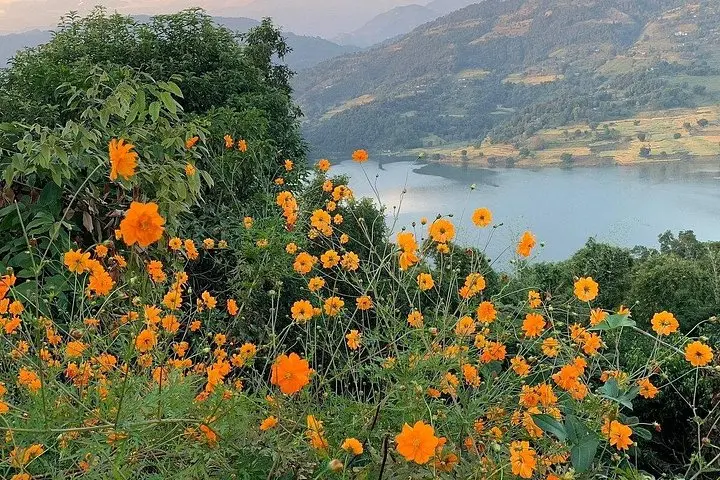
The path climbs out of Pokhara’s humid valley air and into a quiet green bowl where the sound of distant temple bells and birdsong replaces city noise. Within an hour of steady walking the trail opens to sweeping views of Phewa Lake carved into the valley floor and the jagged white teeth of the Annapurna range beyond.
The path climbs out of Pokhara’s humid valley air and into a quiet green bowl where the sound of distant temple bells and birdsong replaces city noise. Within an hour of steady walking the trail opens to sweeping views of Phewa Lake carved into the valley floor and the jagged white teeth of the Annapurna range beyond.
The World Peace Stupa (Shanti Stupa) was established by Japanese Buddhist practitioners as a hilltop monument promoting peace; its white dome and brass prayer wheels have become a modern landmark overlooking a centuries-old agrarian landscape. Geologically the ridge is a gentle outcrop of weathered schist and river-deposited soils, terraced by local farmers who still grow maize and vegetables along the ascent.
Culturally, the route threads several small Gurung and Brahmin villages where stone houses, prayer flags, and seasonal fields offer opportunities to observe everyday rural life. Local guides often point out traditional farming practices and explain the stupa’s role as a pilgrimage and photo vantage.
Practically, the hike is easy-paced: expect roughly 3–4 km round trip with about 200–350 m of elevation gain depending on where you start, usually completed in 2–3 hours including time at the stupa. Trails are a mix of dirt steps and compact footpaths—good footwear and water are essential. Morning or late afternoon provides the best light and cooler temperatures; mid-day can be hot and dusty.
Travelers should plan for modest altitude change, respect religious spaces at the stupa, and carry cash for small tea houses on the trail. Guides and hotel pickup simplify logistics and leave hikers free to focus on the views and village encounters.