THE ADVENTURE COLLECTIVE® · Independent discovery and booking for outdoor travel

Ascend Sugarloaf’s coastal granite on a half-day hike that mixes steep walking with a short guided climb and a cable-car descent. Ideal for fit hikers who want exclusive viewpoints and a compact, safety-focused climb above Guanabara Bay.
Ascend Sugarloaf’s coastal granite on a half-day hike that mixes steep walking with a short guided climb and a cable-car descent. Ideal for fit hikers who want exclusive viewpoints and a compact, safety-focused climb above Guanabara Bay.
You step off the sand at Praia Vermelha and the granite face of Sugarloaf rises like a blunt fist against the sky — sun on stone, Atlantic wind pushing at your shoulders. The route climbs through coastal scrub and exposed slabs, alternating walking sections with short, protected climbs that end at exclusive viewpoints few visitors see.
Verified experiences and guided adventures in the surrounding area.
Operated by EcotuRio · Rio de Janeiro, Rio de Janeiro
You step off the sand at Praia Vermelha and the granite face of Sugarloaf rises like a blunt fist against the sky — sun on stone, Atlantic wind pushing at your shoulders. The route climbs through coastal scrub and exposed slabs, alternating walking sections with short, protected climbs that end at exclusive viewpoints few visitors see.
Geologically, Sugarloaf is a hard, weather-resistant granite inselberg formed during the Cretaceous; its steep faces were polished by millennia of wind and salt. Culturally the peak is intertwined with Rio’s identity: fishermen, early tram builders and modern climbers have all used its routes. Along the way guides point out native restinga plants and seabirds, and share the mountain’s role in the city’s maritime history.
The activity pairs roughly 2.5 hours of ascending with a guided 25-meter climb using UIAA-standard equipment, then a cable car descent to Morro da Urca and a final walk back to sea level. Expect exposed sections with short, secured pitches rather than full multi-pitch roped climbs; guides manage belays and safety.
Practical guidance: arrive hydrated, wear sturdy footwear with good grip, and plan for sun and wind exposure. The group is kept small and physically demanding sections mean this is best for fit hikers comfortable with exposure. Reserve morning slots to avoid midday heat and enjoy clearer views across Guanabara Bay.
No technical lead-climbing experience is required; guides provide ropes and instruction, but participants should be comfortable with exposure and short climbs.
Meet at Claudio Coutinho street entrance near Praia Vermelha; after the climb you typically descend by cable car to Morro da Urca and walk back to sea level.
The itinerary commonly uses the cable car for descent to Morro da Urca; confirm inclusion at booking since logistics may vary by operator.
This tour is not recommended for those with serious cardiovascular, spinal conditions, pregnancy, or for people without prior hiking experience; travellers should disclose health issues when booking.
EcotuRio operates guided outdoor trips and adventures with an emphasis on safety, stewardship, and memorable experiences.
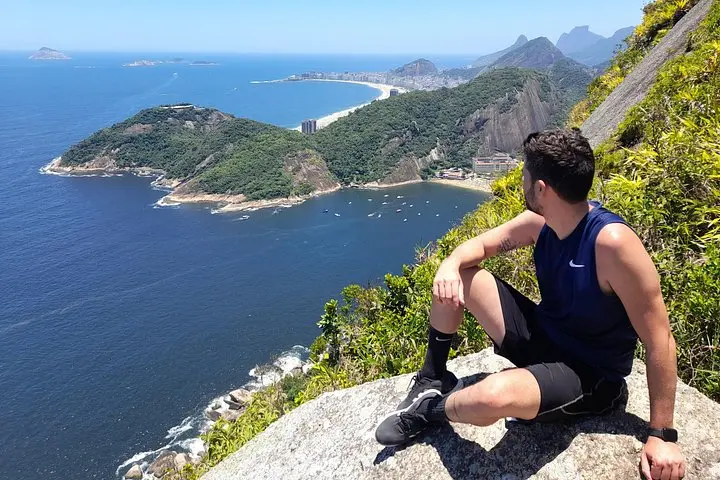
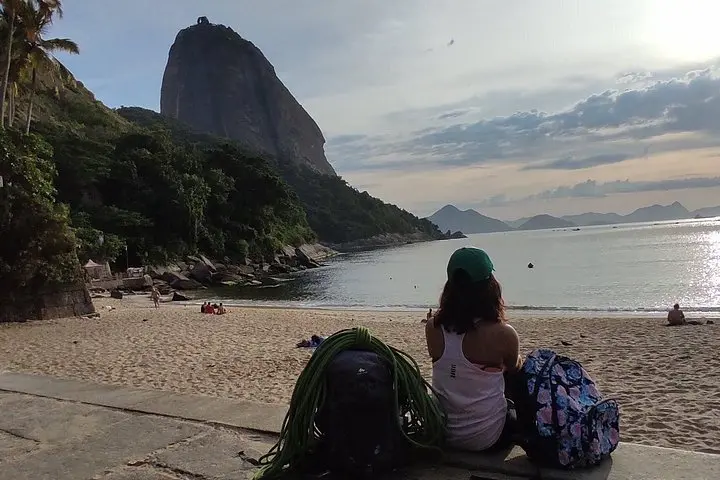
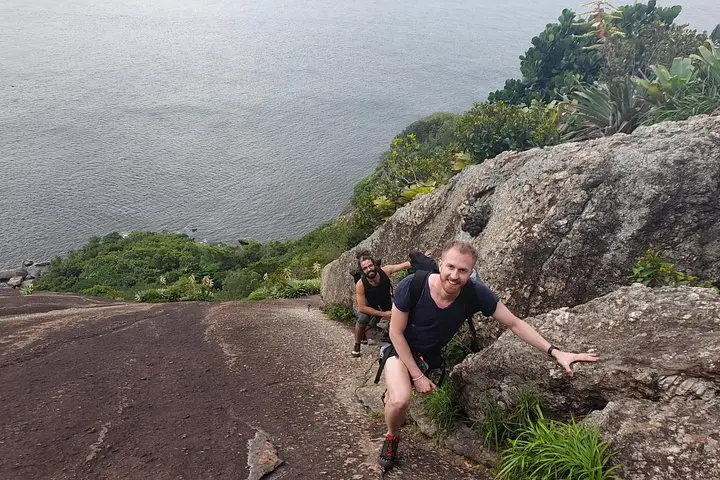
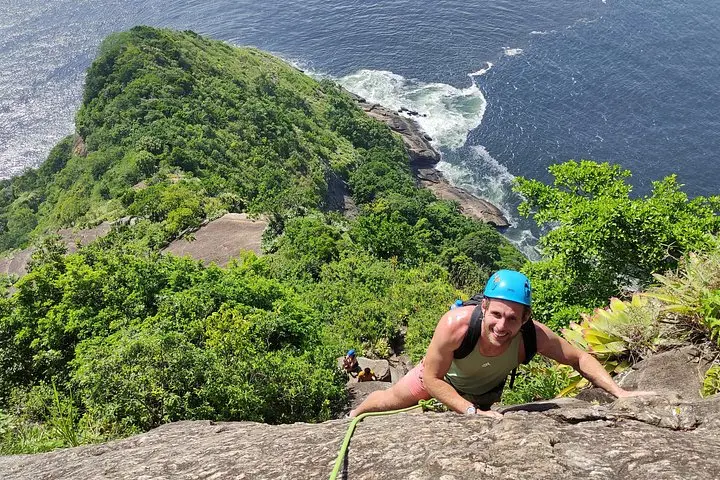
You step off the sand at Praia Vermelha and the granite face of Sugarloaf rises like a blunt fist against the sky — sun on stone, Atlantic wind pushing at your shoulders. The route climbs through coastal scrub and exposed slabs, alternating walking sections with short, protected climbs that end at exclusive viewpoints few visitors see.
You step off the sand at Praia Vermelha and the granite face of Sugarloaf rises like a blunt fist against the sky — sun on stone, Atlantic wind pushing at your shoulders. The route climbs through coastal scrub and exposed slabs, alternating walking sections with short, protected climbs that end at exclusive viewpoints few visitors see.
Geologically, Sugarloaf is a hard, weather-resistant granite inselberg formed during the Cretaceous; its steep faces were polished by millennia of wind and salt. Culturally the peak is intertwined with Rio’s identity: fishermen, early tram builders and modern climbers have all used its routes. Along the way guides point out native restinga plants and seabirds, and share the mountain’s role in the city’s maritime history.
The activity pairs roughly 2.5 hours of ascending with a guided 25-meter climb using UIAA-standard equipment, then a cable car descent to Morro da Urca and a final walk back to sea level. Expect exposed sections with short, secured pitches rather than full multi-pitch roped climbs; guides manage belays and safety.
Practical guidance: arrive hydrated, wear sturdy footwear with good grip, and plan for sun and wind exposure. The group is kept small and physically demanding sections mean this is best for fit hikers comfortable with exposure. Reserve morning slots to avoid midday heat and enjoy clearer views across Guanabara Bay.