THE ADVENTURE COLLECTIVE® · Independent discovery and booking for outdoor travel

Walk the cool canyon of Ihlara Valley and end at the cathedral-size Selime Monastery on this private half-day tour. Expect riverside paths, carved rock churches and a compact dose of Cappadocia’s layered history.
Walk the cool canyon of Ihlara Valley and end at the cathedral-size Selime Monastery on this private half-day tour. Expect riverside paths, carved rock churches and a compact dose of Cappadocia’s layered history.
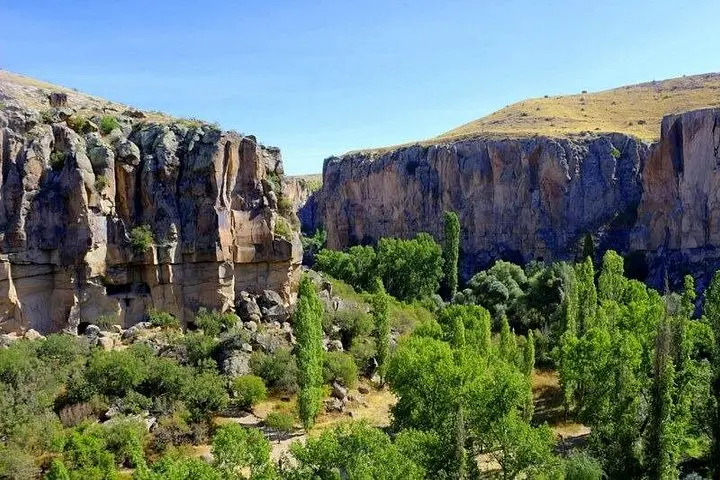
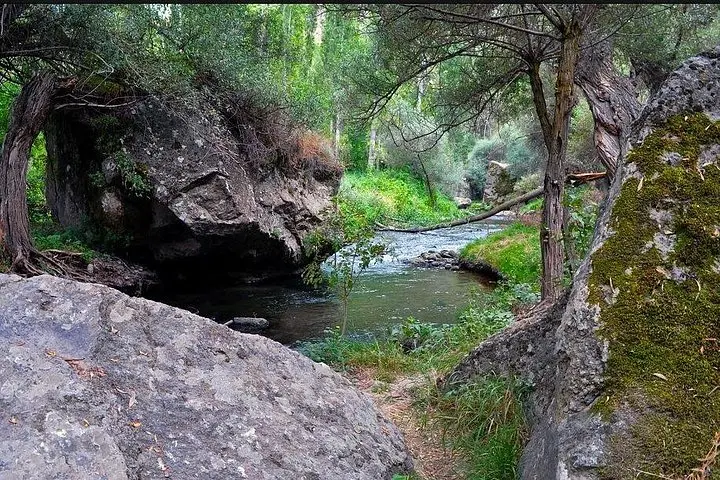
You step down into cool shadow: the Ihlara Valley narrows, a ribbon of river daring you onward as tuff cliffs rise like weathered pages. The trail threads along the Melendiz stream under poplars and plane trees; light slips through leaves and paints the cave churches in slow-moving strips.
Verified experiences and guided adventures in the surrounding area.
Operated by Flame Travel and Events · Ihlara, Aksaray Province
You step down into cool shadow: the Ihlara Valley narrows, a ribbon of river daring you onward as tuff cliffs rise like weathered pages. The trail threads along the Melendiz stream under poplars and plane trees; light slips through leaves and paints the cave churches in slow-moving strips.
This route follows a human story carved into volcanic ash. Over millennia Hittites, Romans, early Christians, Byzantines, Seljuk Turks and Ottomans used these cliffs for shelter and worship. Selime Monastery at the valley’s head is the region’s largest rock-cut religious complex—a cathedral-sized interior gouged from tuff, with traces of frescoes that speak to centuries of devotion and weather-worn craft.
Geology here is immediate: soft volcanic tuff shaped by eruptions and erosion into cliffs, fairy chimneys and cave niches. The valley’s microclimate keeps the trail cooler than the surrounding steppe; the stream pushes the air forward and the canyon seems to breathe.
Practical guidance: expect 7–10 km of walking over uneven dirt paths, stone steps and occasional narrow ledges with roughly 200–300 m cumulative elevation change. Wear sturdy shoes with grip, bring 1–2 liters of water, sun protection and layered clothing for shifting shade and wind on exposed ridges. Plan for morning or late-afternoon to avoid midday heat and to catch better light on frescoes. Respect fragile interiors—no flash photography where signs prohibit it—and stay on marked routes to protect archaeological surfaces.
A private guide and air-conditioned vehicle typically handle logistics on this half-day tour, leaving you free to focus on the canyon’s scale and the human traces carved into its walls.
Admissions are typically not included—check booking details; your guide can advise on current ticket costs at the sites.
Expect roughly 7–10 km of walking with ~200–300 m cumulative elevation change; stairs and uneven surfaces make it moderately strenuous.
Yes—this private tour commonly includes pickup and drop-off in Göreme or nearby towns in an air-conditioned vehicle.
Infants and small children are possible but uneven terrain and stairs make strollers impractical; infants are usually required to sit on laps during transport.
Flame Travel and Events operates guided outdoor trips and adventures with an emphasis on safety, stewardship, and memorable experiences.
You step down into cool shadow: the Ihlara Valley narrows, a ribbon of river daring you onward as tuff cliffs rise like weathered pages. The trail threads along the Melendiz stream under poplars and plane trees; light slips through leaves and paints the cave churches in slow-moving strips.
You step down into cool shadow: the Ihlara Valley narrows, a ribbon of river daring you onward as tuff cliffs rise like weathered pages. The trail threads along the Melendiz stream under poplars and plane trees; light slips through leaves and paints the cave churches in slow-moving strips.
This route follows a human story carved into volcanic ash. Over millennia Hittites, Romans, early Christians, Byzantines, Seljuk Turks and Ottomans used these cliffs for shelter and worship. Selime Monastery at the valley’s head is the region’s largest rock-cut religious complex—a cathedral-sized interior gouged from tuff, with traces of frescoes that speak to centuries of devotion and weather-worn craft.
Geology here is immediate: soft volcanic tuff shaped by eruptions and erosion into cliffs, fairy chimneys and cave niches. The valley’s microclimate keeps the trail cooler than the surrounding steppe; the stream pushes the air forward and the canyon seems to breathe.
Practical guidance: expect 7–10 km of walking over uneven dirt paths, stone steps and occasional narrow ledges with roughly 200–300 m cumulative elevation change. Wear sturdy shoes with grip, bring 1–2 liters of water, sun protection and layered clothing for shifting shade and wind on exposed ridges. Plan for morning or late-afternoon to avoid midday heat and to catch better light on frescoes. Respect fragile interiors—no flash photography where signs prohibit it—and stay on marked routes to protect archaeological surfaces.
A private guide and air-conditioned vehicle typically handle logistics on this half-day tour, leaving you free to focus on the canyon’s scale and the human traces carved into its walls.